Culinary Explorer
A cooking platform built around craft, culture, and the stories behind what we eat.
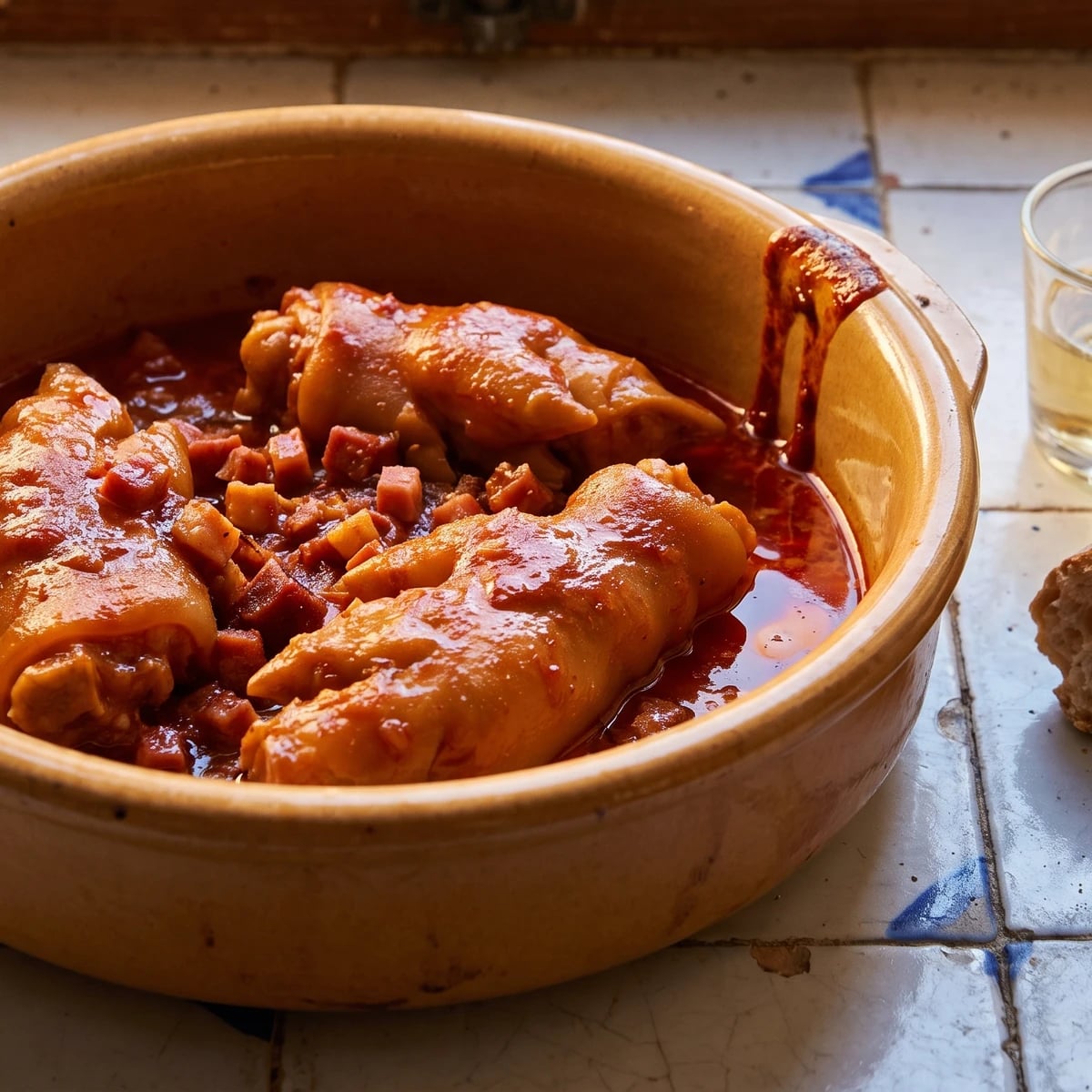
Manitas de Cerdo a la Andaluza
Created by Chef Isabel
Andalusian pig's trotters become proper cocina de cuchara after a long, quiet simmer, with dark tomato sofrito, jamón, chorizo, pimentón, and fino holding their rich gelatine in a glossy sauce.
Manitas de cerdo en salsa are Andalucía's casquería, the careful cooking of the pig's humbler parts. The trotters are simmered until their bones loosen, then settled into a dark sofrito, the slow onion base, with tomato, jamón, chorizo, pimentón, and dry fino from Jerez. The result is proper cocina de cuchara, spoon food: rich, lightly smoky, and sticky enough for bread.
The one thing that decides the dish is the heat. Keep it low from beginning to end. A hard boil tears the skin and clouds the cooking liquor, while a bare tremble slowly releases the gelatine that later binds the sauce without flour. Finish the sofrito until the tomato is brick-red and almost dry before adding the trotters. Rush that base and the sauce tastes sharp and thin, however long the pot sits afterward.
Ask the butcher to clean and split the feet for you. Frozen cleaned trotters work well if fresh ones are scarce; thaw them overnight and blanch them exactly as written, knowing they may release a little more water. If fino is hard to find, use dry white wine with a measured spoonful of sherry vinegar. You lose a little of Jerez's nutty edge, but the sauce keeps its balance. The Margin beside mine says only, "a tremble, never a boil." Siempre sale, si lo sigues. It turns out if you follow it.
Ingredients
pig's trotters
Quantity
4 whole (about 1.8kg)
cleaned, split lengthwise, and cut once across the joint by the butcher
cold water, for blanching
Quantity
3 litres
cold water, for simmering
Quantity
2.5 litres, plus up to 500ml if needed
| Ingredient | Quantity |
|---|---|
| pig's trotterscleaned, split lengthwise, and cut once across the joint by the butcher | 4 whole (about 1.8kg) |
| cold water, for blanching | 3 litres |
| cold water, for simmering | 2.5 litres, plus up to 500ml if needed |
Where cooking meets culture.
Culinary guides, cultural storytelling, and the editorial depth that makes cooking meaningful.
Discover Culinary Explorer