
Chef Lupita
Aguascalientes Beef Tongue Pozole (Pozole de Lengua)
Aguascalientes' Bajio pozole de lengua, built with cacahuazintle hominy, tender beef tongue, chile ancho and guajillo, with xoconostle brightness and table garnishes.
A cooking platform built around craft, culture, and the stories behind what we eat.
Created by
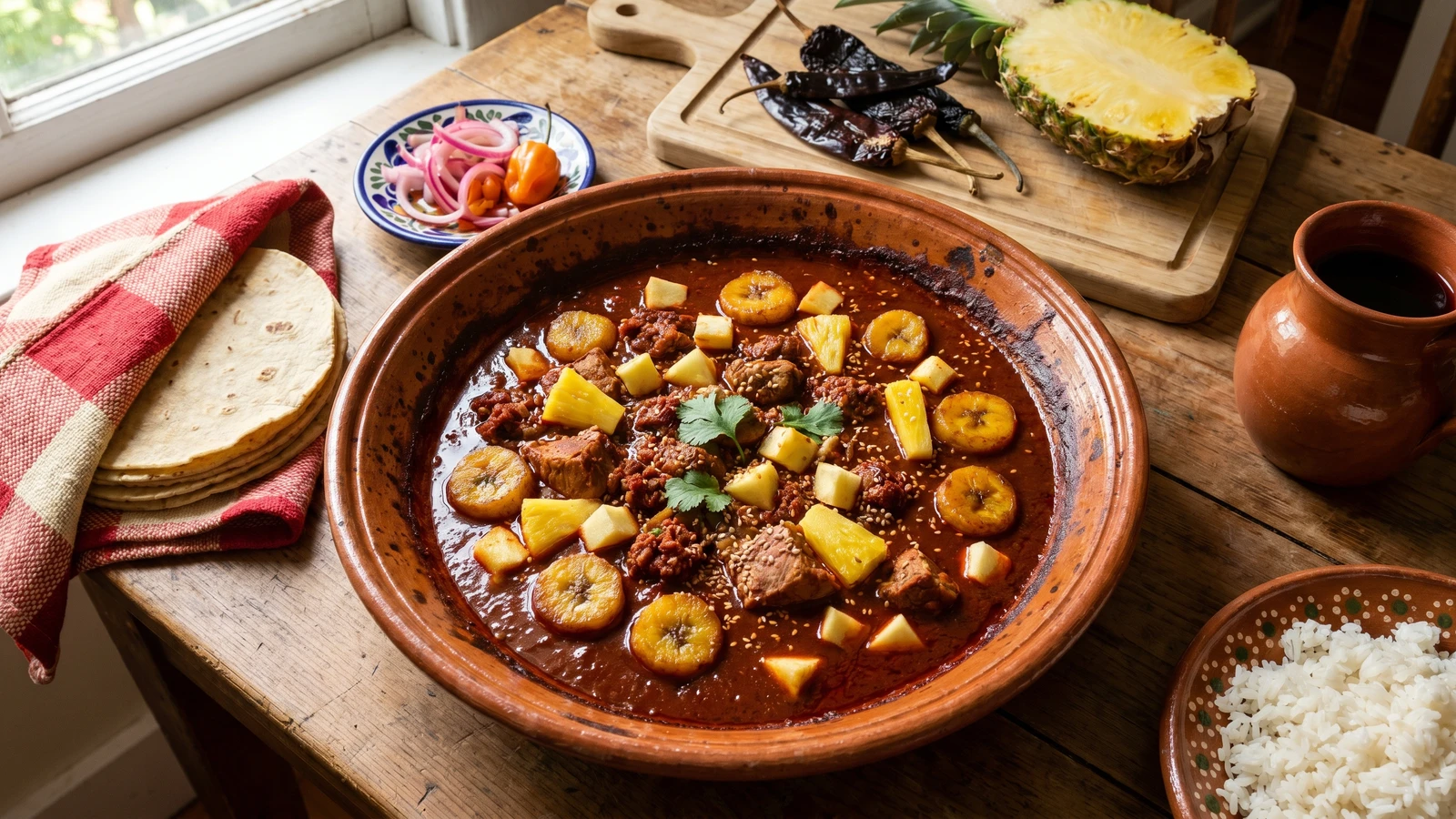
Puebla's tablecloth-stainer, a brick-red mole of ancho and pasilla simmered with pork, pineapple, plantain, and apple. Smoky chile against tropical fruit, finished with a quiet sweetness that the chile holds in check.
Manchamanteles is Puebla's. Oaxaca claims a version too, and Oaxacan cooks will argue that manchamanteles belongs to their seven moles, but the dish as most Mexicans know it, with the pineapple and the plantain and the apple folded into a brick-red chile base, lives in Puebla's central highlands. This is a colonial-era mole, born in the convents where Spanish fruit met Mexican chile and somebody decided they belonged in the same pot.
The name tells you everything. Manchamanteles. Tablecloth-stainer. The mole is so red, so generous, so unconcerned with restraint that it will get on the cloth and stay there. That is the dish's promise. A timid manchamanteles is not manchamanteles. The chile ancho gives it the sweetness and the deep red color. The pasilla gives it the smoky depth. The guajillo adds a little brightness at the top. Together they build a sauce that can hold pork and chorizo and fruit without falling apart.
The fruit is what makes people nervous. Pineapple in a mole? Plantain in a mole? Apple? Yes. All of it. Mexican cuisine has used fruit in savory dishes since long before the Spanish arrived, and the convent cooks of 17th-century Puebla took that tradition and ran with it when European fruit arrived in the markets. Manchamanteles is a baroque composition. Sweet and savory in the same spoonful. The pineapple cuts through the richness of the pork. The plantain thickens the sauce and gives it a custardy soft note. The apple holds its shape and gives the cook something to bite through.
My mother did not cook manchamanteles. She was from Jalisco and her moles were rancho moles, simpler and meatier. I learned this one in San Pedro Cholula from a señora named Doña Concha who served it at every baptism in her family for forty years. She told me, very seriously, that if the tablecloth is not stained at the end of the meal, the cook did not make enough. Cada estado, su propia cocina. This one belongs to Puebla.
Manchamanteles is one of the seven moles traditionally codified in 20th-century Mexican culinary classification, though its origins are firmly colonial. The dish emerged in the 17th and 18th centuries in the convent kitchens of Puebla and Oaxaca, where Indigenous chile-grinding traditions met the newly arrived Spanish, Asian, and Caribbean fruits, pineapple from the tropics, apple from European stock, plantain via the Atlantic slave trade and the Manila galleons. The 17th-century Dominican nun Sor Juana Inés de la Cruz, herself raised near Puebla, included a recipe described as 'manchamanteles' in her recipe collection from the Convento de San Jerónimo, evidence that the dish was already a recognized convent specialty by the late 1600s. Both Puebla and Oaxaca claim the dish today, with the Poblano version typically emphasizing pineapple and plantain, and the Oaxacan version sometimes incorporating chilcosle chile and additional spices.
Quantity
3 pounds
cut into 2-inch chunks
Quantity
1 pound
casings removed
Quantity
1 medium
halved, plus 1/2 onion roughly chopped for the sauce
Quantity
1
halved crosswise, plus 4 cloves for the sauce
Quantity
2
Quantity
1 tablespoon, plus more to taste
Quantity
8
stemmed and seeded
Quantity
4
stemmed and seeded
Quantity
2
stemmed and seeded
Quantity
3 tablespoons
Quantity
1/2 cup
Quantity
2 tablespoons
Quantity
1
peeled and sliced into 1-inch rounds
Quantity
2 medium
cored
Quantity
2
husked and rinsed
Quantity
1 stick (about 2 inches)
Quantity
4
Quantity
1/4 teaspoon
Quantity
1
torn into pieces
Quantity
1 small (about 3 cups)
peeled, cored, and cut into 1-inch chunks
Quantity
1 large
peeled, cored, and cut into 1-inch chunks
Quantity
1
peeled and sliced into 1-inch rounds
Quantity
1 tablespoon
Quantity
1 teaspoon, or to taste
Quantity
for serving
warmed
Quantity
for serving
| Ingredient | Quantity |
|---|---|
| bone-in pork shouldercut into 2-inch chunks | 3 pounds |
| chorizo poblano or fresh chorizocasings removed | 1 pound |
| white onionhalved, plus 1/2 onion roughly chopped for the sauce | 1 medium |
| head of garlichalved crosswise, plus 4 cloves for the sauce | 1 |
| bay leaves | 2 |
| kosher salt | 1 tablespoon, plus more to taste |
| dried chile anchostemmed and seeded | 8 |
| dried chile pasillastemmed and seeded | 4 |
| dried chile guajillostemmed and seeded | 2 |
| manteca de cerdo (pork lard) | 3 tablespoons |
| blanched almonds | 1/2 cup |
| sesame seeds | 2 tablespoons |
| ripe plátano macho (plantain) for the saucepeeled and sliced into 1-inch rounds | 1 |
| tomatoescored | 2 medium |
| tomatilloshusked and rinsed | 2 |
| Mexican canela | 1 stick (about 2 inches) |
| whole cloves | 4 |
| ground allspice | 1/4 teaspoon |
| corn tortillatorn into pieces | 1 |
| piña (pineapple)peeled, cored, and cut into 1-inch chunks | 1 small (about 3 cups) |
| manzana (firm apple, such as Pink Lady)peeled, cored, and cut into 1-inch chunks | 1 large |
| ripe but firm plátano macho for the stewpeeled and sliced into 1-inch rounds | 1 |
| apple cider vinegar | 1 tablespoon |
| sugar | 1 teaspoon, or to taste |
| hand-pressed corn tortillas (optional)warmed | for serving |
| white rice (optional) | for serving |
Place the pork shoulder in a heavy stockpot. Cover with cold water by two inches. Add the halved onion, the halved head of garlic, the bay leaves, and the salt. Bring to a gentle simmer over medium heat. Skim the gray foam that rises in the first fifteen minutes. Reduce the heat and simmer partially covered for one hour, until the pork is tender but not falling apart. You are building two things at once: cooked pork and the broth that will carry the mole.
While the pork simmers, heat a dry comal or heavy skillet over medium. Toast the ancho, pasilla, and guajillo chiles separately, about 20 to 30 seconds per side. The ancho puffs first. The pasilla is thin and burns the fastest, watch it. The guajillo holds up the longest. The skins should turn fragrant and pliable, never black. The kitchen will smell like a chile vendor's stall at the Mercado de Cholula. That smell is the oils releasing.
Transfer the toasted chiles to a heatproof bowl. Cover with hot tap water, not boiling. Boiling water cooks the skin and turns the sauce bitter. Hot water softens the flesh and lets the flavor come through clean. Let them soak for 20 minutes while you work on the rest of the sauce base.
In a wide skillet, melt 2 tablespoons of the manteca over medium heat. Add the almonds and fry until golden, about 2 minutes. Push them to the side and add the sesame seeds, stirring until they turn the color of straw. Add the chopped onion and the 4 cloves of garlic, cook until soft and lightly browned. Add the plantain rounds (the riper one, for the sauce) and fry until the edges caramelize, about 3 minutes per side. The plantain is what gives manchamanteles its body and a quiet sweetness underneath the chile. Lift everything into a blender.
On the same comal you used for the chiles, char the tomatoes and tomatillos until the skins blister and blacken in spots, about 6 to 8 minutes, turning as needed. The char is flavor. Add them to the blender with the fried aromatics.
Drain the soaked chiles and add them to the blender. Add the canela, cloves, allspice, and the torn corn tortilla. Pour in 2 cups of the warm pork broth. Blend on high until completely smooth. This will take 3 to 4 minutes. Strain through a fine-mesh sieve into a bowl, pressing on the solids with the back of a ladle. Discard what stays in the sieve. You want a deep brick-red puree with no skins or seeds left in it.
In a wide cazuela or Dutch oven, melt the remaining tablespoon of manteca over medium heat. When it shimmers, pour in the strained mole base. It will sputter. Step back. Cook for 10 to 12 minutes, stirring almost constantly with a wooden spoon. The mole will darken, thicken, and the fat will start to separate around the edges of the pan. La manteca es el sabor. This step is what turns a chile puree into a mole. Skip it and you have soup.
Push the mole to one side of the cazuela. Add the chorizo in the cleared space and cook, breaking it up with the spoon, until the fat renders and the meat browns, about 5 minutes. Stir the chorizo into the mole. Add the cooked pork chunks along with 4 cups of the strained pork broth. Bring to a gentle simmer.
Add the pineapple, the apple, and the second plantain (the firmer one, for the stew). Stir gently so the fruit settles into the mole without breaking. Simmer uncovered over low heat for 30 to 40 minutes. The fruit should soften but still hold its shape. The pineapple acid sharpens the chile. The apple goes tender and the plantain turns custardy at the edges. This is where manchamanteles becomes manchamanteles.
Stir in the vinegar and the sugar. Taste. The mole should be deep, slightly sweet from the fruit, slightly tart from the vinegar, with the chile and the canela holding the center. Add more salt if it tastes shy, more sugar if the chile is winning, more vinegar if it tastes flat. The balance is the cook's signature. Recetas probadas y garantizadas, but you finish it with your own hand.
Bring the cazuela to the table. Ladle into shallow clay bowls, making sure each plate gets pork, chorizo, and a generous spoonful of the fruit. Serve with warm corn tortillas and a small bowl of white rice on the side. The name promises it will stain the tablecloth. It will. That is part of the dish. Así se hace y punto.
1 serving (about 360g)
Culinary guides, cultural storytelling, and the editorial depth that makes cooking meaningful.
Discover Culinary ExplorerChef Lupita
Aguascalientes' Bajio pozole de lengua, built with cacahuazintle hominy, tender beef tongue, chile ancho and guajillo, with xoconostle brightness and table garnishes.

Chef Lupita
Veracruz's Gulf coast rice from Alvarado, built with seafood stock, tomato, chile chipotle, epazote, shrimp, fish, jaiba, and pulpo, served loose and brothy in a clay cazuela.

Chef Lupita
Costa Chica's wet salt-beef stew, built from chile costeño, guajillo, tomato, manteca, yuca, plantain, and masa dumplings, the ranching pot of Cuajinicuilapa and Pinotepa.

Chef Lupita
Michoacán's P'urhépecha atápakua is a masa-thickened sauce and stew at once, built with pork, chile guajillo, and hierbabuena added only at the end.