
Chef Lesia
Hrechka z Hrybamy (гречка з грибами, mushroom buckwheat)
Buckwheat is the color people mistake for dull until the mushrooms give it their black forest juices, the onion turns sweet, and every grain starts shining with green sunflower oil.
A cooking platform built around craft, culture, and the stories behind what we eat.
Created by
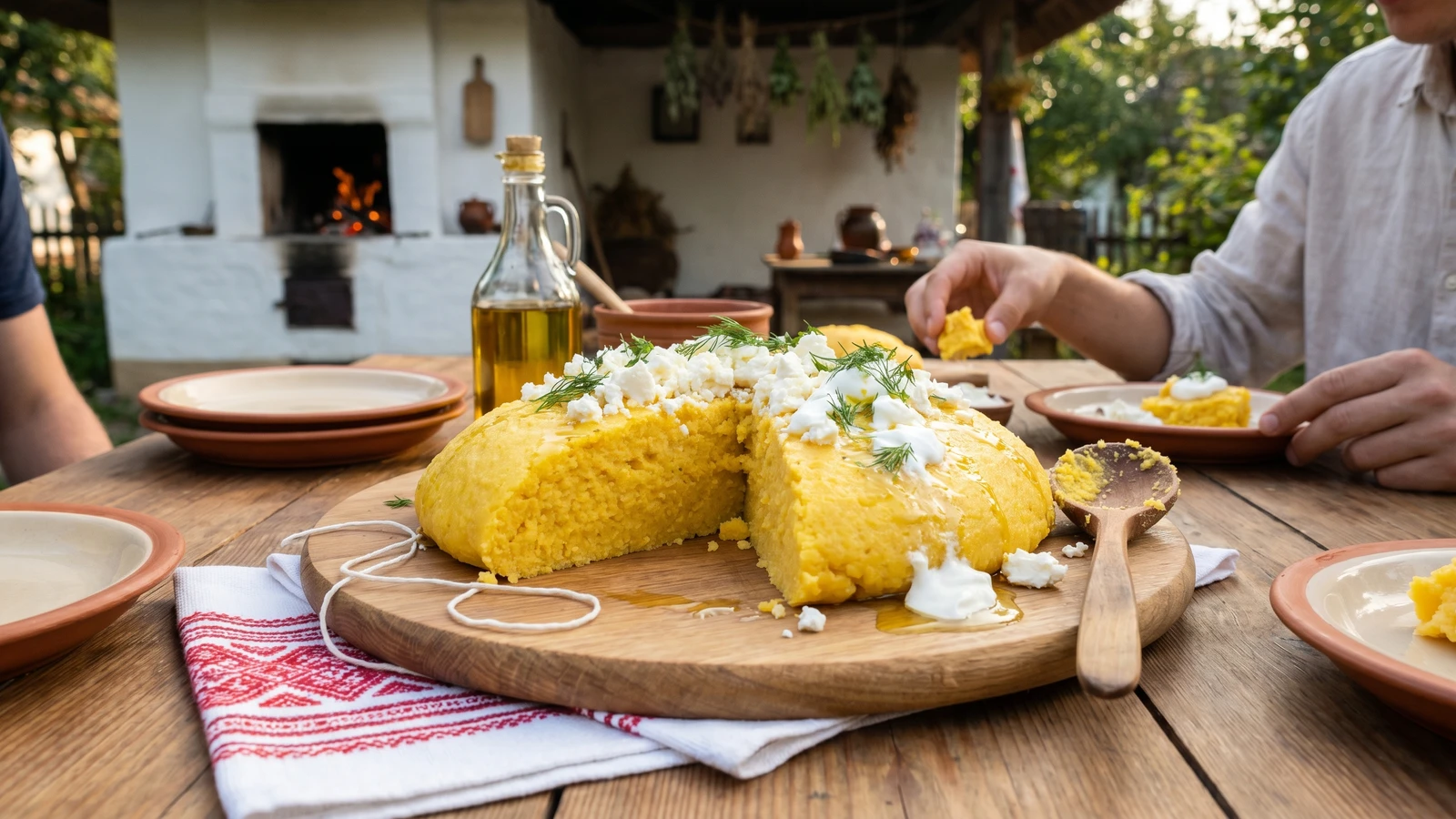
The thread is the knife: a yellow loaf of cornmeal turns out of the pot thick enough to stand, then gets buried in salty bryndza, cold smetana, and green-gold oil.
The thread is the knife. A pot of cornmeal becomes bread when it is stiff enough to turn out, yellow and proud, and cut with cotton thread pulled cleanly through the middle. No blade dragging, no fuss. Just a golden mound on the board, bryndza falling into its warm sides, smetana cold enough to make the first bite wake up.
This is Bessarabian table food, from the south where Ukraine looks toward the Danube as much as toward the steppe. In Odesa-region villages, mamalyha can stand where bread would stand, beside beans, fish, eggs, mushrooms, or just a bowl of salty sheep cheese if the week has been long and the purse is thin. Enough for eight guests or one hungry Ukrainian, as my father would say when pretending not to take a second slice.
The one why is simple: the cornmeal must go in slowly, like rain, so every grain hydrates before it clumps. After that you stir until the smell changes from raw grain to sweet toasted maize, and until it sounds right, that thick soft scrape against the bottom of the pot. A timer can help you stay nearby. Your spoon tells you when supper is ready.
Make it big. Leftovers slice beautifully the next morning and fry in sunflower oil until the outside goes crisp under your teeth, which is how a budget dish becomes breakfast without asking permission.
Maize reached the Danube and Black Sea lands after the Columbian exchange, and by the 18th century cornmeal porridges had become daily food across Moldavia, Bessarabia, and neighboring Ukrainian regions. In Ukraine, mamalyha is especially at home in Bessarabia and Bukovyna, distinct regional kitchens where corn, sheep cheese, smetana, mushrooms, and river fish all meet the pot differently. Bryndza, the salty brined sheep cheese served with it, ties the dish to pastoral routes as much as to the cornfield.
Quantity
1.2 litres
Quantity
1 1/2 teaspoons
plus more to taste
Quantity
300g
not instant
Quantity
2 tablespoons
plus more for the board
Quantity
200g
crumbled
Quantity
200g
Quantity
small handful
chopped
Quantity
to serve
| Ingredient | Quantity |
|---|---|
| water | 1.2 litres |
| fine sea saltplus more to taste | 1 1/2 teaspoons |
| medium-fine yellow cornmealnot instant | 300g |
| unrefined sunflower oilplus more for the board | 2 tablespoons |
| bryndza or other salty brined sheep cheesecrumbled | 200g |
| smetana or full-fat sour cream | 200g |
| fresh dill (optional)chopped | small handful |
| black pepper (optional) | to serve |
Choose a heavy pot, because thick cornmeal spits when it is annoyed. Bring the water to a proper boil, salt it, then lower the heat until it bubbles steadily but does not throw itself around. Oil a wooden spoon and keep it close.
Pour the cornmeal in slowly with one hand while whisking with the other, like rain falling into the pot, not a sack tipped over a wall. This is the step that decides the dish: each grain needs to swell in hot water before it grabs its neighbor, or you get hard little lumps that never quite forgive you.
Switch to the wooden spoon and stir over low heat, scraping the bottom and corners, until the raw cereal smell changes into sweet toasted corn and the spoon leaves a path that closes slowly. It will get heavy. Good. When it pulls from the sides in thick folds and the spoon must stand up straight, you are there.
Cover the pot and let the mamalyha sit off the heat for a few minutes so it gathers itself. Rub a board or wide plate with sunflower oil, then tip the pot over in one confident movement. It should land as a golden mound, matte at the edges, soft enough to eat, firm enough to slice.
Slide a clean cotton thread under the mound, cross the ends over the top, and pull. No knife smears it this neatly. The thread cuts warm slices that can be lifted straight onto plates, and this little trick is why children remember mamalyha before they remember half the meal.
Serve the slices at once with bryndza crumbled over them, spoonfuls of cold smetana, a gloss of unrefined sunflower oil, dill if you have it, and black pepper. The hot corn, the salty cheese, the cold sour cream: that is the whole argument, and it needs nothing clever from us.
1 serving (about 260g)
Culinary guides, cultural storytelling, and the editorial depth that makes cooking meaningful.
Discover Culinary ExplorerChef Lesia
Buckwheat is the color people mistake for dull until the mushrooms give it their black forest juices, the onion turns sweet, and every grain starts shining with green sunflower oil.

Chef Lesia
Buckwheat is never grey if you treat it properly: toast it until it smells nutty, then fold it through onions gone sweet and glossy in green sunflower oil.

Chef Lesia
The trick is not the potato, it's the cracked edge: rough wedges roast until golden, then drink garlic, dill, and unrefined sunflower oil while still hot.

Chef Lesia
Flour and warm water sit overnight until the bowl smells like rye bread and orchard fruit, then the batter cooks into a glossy sweet-sour pudding. Almost nobody makes it now. We will.