
Chef Jeong-sun
Agwi-jjim (Braised Monkfish with Bean Sprouts)
Firm monkfish buried under crisp soybean sprouts, minari, and a red gochugaru sauce thickened at the end; Masan's market dish asks for heat, timing, and a steady hand.
A cooking platform built around craft, culture, and the stories behind what we eat.
Created by
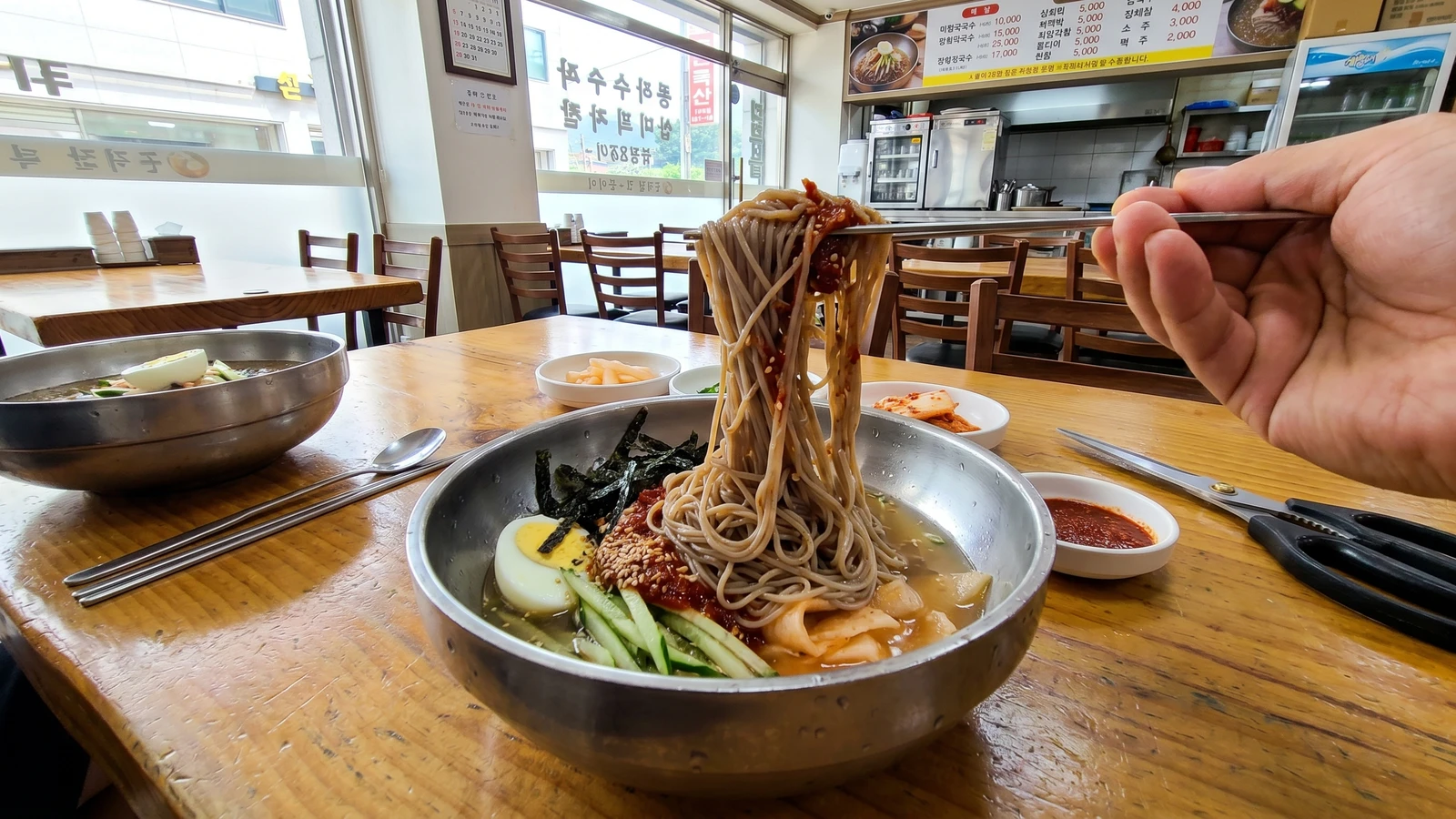
Gangwon's plain buckwheat noodle bowl, chilled hard and seasoned with restraint: chewy memil strands, dongchimi broth, cucumber, radish, sesame, and just enough sauce to wake it.
Cook the month you're standing in. Makguksu belongs most naturally to hot weather, when a cold metal bowl on the table feels like mercy, but its heart is mountain food: buckwheat grown where rice was less willing, made into noodles that taste nutty, slightly rough, and honest.
The misunderstanding is the red sauce. People bury makguksu under gochujang until it could be any noodle. Gangwon makguksu should still taste like memil (buckwheat). The sauce is there to sharpen the bowl, not paint over it. Use enough chilled dongchimi (radish water kimchi) brine or clear beef broth to loosen the noodles, and keep the seasoning light enough that the first thing you taste is grain.
Tonight this dish asks for three careful things. Chill the broth harder than you think. Rinse the noodles with your hands until the starch is gone and they feel clean. Cut the cucumber and radish thin so they cool the mouth instead of weighing down the bowl. 손맛 is real. I still measure it, so it can be handed on.
Makguksu is closely tied to Gangwon Province, especially Chuncheon and the buckwheat-growing areas around Bongpyeong, where the crop suited the mountain climate and poorer soils better than rice. The name is commonly understood as plain or roughly made noodles, a food of local markets and households before it became a restaurant specialty. Modern bowls vary by shop, some closer to bibim-guksu with spicy dressing and some served with plenty of dongchimi or meat broth, but the regional center remains buckwheat.
Quantity
200g dried
preferably at least 30 percent buckwheat
Quantity
2 cups
well chilled
Quantity
1 tablespoon
for broth, plus more to serve
Quantity
1 teaspoon
for broth
Quantity
1/4 teaspoon
only if broth tastes flat
Quantity
120g
peeled and julienned
Quantity
1/2 teaspoon
for radish
Quantity
1 teaspoon
for radish
Quantity
1/2 teaspoon
for radish
Quantity
1/2
julienned
Quantity
1
halved
Quantity
1 sheet
cut into thin strips
Quantity
1 tablespoon
lightly crushed
Quantity
1 tablespoon
Quantity
1 tablespoon
Quantity
1 tablespoon
for sauce
Quantity
2 teaspoons
for sauce
Quantity
1 teaspoon maesil-cheong or 1/2 teaspoon sugar
Quantity
1 teaspoon
Quantity
1 small clove
finely grated
Quantity
1/2 teaspoon
| Ingredient | Quantity |
|---|---|
| makguksu or memil guksu (buckwheat noodles)preferably at least 30 percent buckwheat | 200g dried |
| dongchimi brine or clear beef broth mixturewell chilled | 2 cups |
| rice vinegarfor broth, plus more to serve | 1 tablespoon |
| sugarfor broth | 1 teaspoon |
| fine sea salt (optional)only if broth tastes flat | 1/4 teaspoon |
| Korean radishpeeled and julienned | 120g |
| fine sea saltfor radish | 1/2 teaspoon |
| rice vinegarfor radish | 1 teaspoon |
| sugarfor radish | 1/2 teaspoon |
| English cucumberjulienned | 1/2 |
| hard-boiled egghalved | 1 |
| roasted gim (seaweed)cut into thin strips | 1 sheet |
| toasted sesame seedslightly crushed | 1 tablespoon |
| gochugaru (Korean chili flakes) | 1 tablespoon |
| soy sauce | 1 tablespoon |
| dongchimi brine or cold brothfor sauce | 1 tablespoon |
| rice vinegarfor sauce | 2 teaspoons |
| maesil-cheong (green plum syrup) or sugar | 1 teaspoon maesil-cheong or 1/2 teaspoon sugar |
| toasted sesame oil | 1 teaspoon |
| garlicfinely grated | 1 small clove |
| Korean mustard (optional) | 1/2 teaspoon |
Stir the chilled dongchimi brine, or the dongchimi and beef broth mixture, with 1 tablespoon rice vinegar and 1 teaspoon sugar. Taste it cold. It should be clean, lightly tart, and a little stronger than you want in the bowl, because the noodles will soften it. Add the 1/4 teaspoon salt only if it tastes flat. Refrigerate at least 2 hours, or put it in the freezer 30 minutes before serving until it is very cold but not solid.
Toss the julienned radish with 1/2 teaspoon salt, 1 teaspoon rice vinegar, and 1/2 teaspoon sugar. Let it sit 15 minutes, then squeeze lightly. This quick pickle gives crunch and brightness without turning the whole bowl sour.
Mix the gochugaru, soy sauce, 1 tablespoon dongchimi brine or broth, 2 teaspoons rice vinegar, maesil-cheong or sugar, sesame oil, grated garlic, and mustard if using. Let it stand 10 minutes so the chili flakes bloom and soften. This is a measured sauce, not a red blanket. It should taste sharp, savory, and lightly sweet, with the chili present but not heavy.
Bring a large pot of water to a hard boil. Add the buckwheat noodles and stir right away so they do not stick. Cook according to the package, usually 4 to 5 minutes for dried makguksu noodles. Taste one strand near the end. It should be cooked through but still spring back under the teeth.
Drain the noodles and rinse under cold running water, rubbing them firmly between your hands. Keep rinsing until the water runs mostly clear and the noodles feel cold and clean. This washing removes surface starch, which is the difference between a lively buckwheat noodle and a gummy knot.
Divide the noodles between two chilled stainless bowls and coil them loosely. Spoon 1 tablespoon of sauce over each bowl first, not all of it. Add cucumber, seasoned radish, half an egg, gim strips, and crushed sesame. Pour 1/2 cup chilled broth around each portion, then bring the remaining broth and sauce to the table so each person can loosen and sharpen the bowl as they eat.
Mix from the bottom with chopsticks before eating. Add more broth by the spoonful if the noodles tighten, and more sauce only after tasting. Makguksu should be cool, nutty, lightly tart, and clean. If all you taste is chili and sugar, the buckwheat has disappeared.
1 serving (about 520g)
Culinary guides, cultural storytelling, and the editorial depth that makes cooking meaningful.
Discover Culinary ExplorerChef Jeong-sun
Firm monkfish buried under crisp soybean sprouts, minari, and a red gochugaru sauce thickened at the end; Masan's market dish asks for heat, timing, and a steady hand.

Chef Jeong-sun
A quick Korean rice bowl built on contrast: warm rice, cold popping flying-fish roe, chopped vegetables, gim, sesame oil, and the crisp rice bottom a hot stone bowl gives you.

Chef Jeong-sun
Andong's guest noodles, wheat and roasted soybean flour rolled thin, boiled and rinsed cold, then set in a clear chilled anchovy broth with careful strips of beef, egg, and cucumber.

Chef Jeong-sun
Andong's ritual-table rice served on an ordinary day: separate soy-sesame namul, warm rice, and clear radish soup, mixed without gochujang so every vegetable keeps its own voice.