
Chef Dimitra
Aegean Island Kakavia (Κακαβιά)
Aegean kakavia is the fisherman’s soup named for the pot itself: small rockfish, potato, onion, lemon, and enough olive oil to turn a poor catch rich.
A cooking platform built around craft, culture, and the stories behind what we eat.
Created by
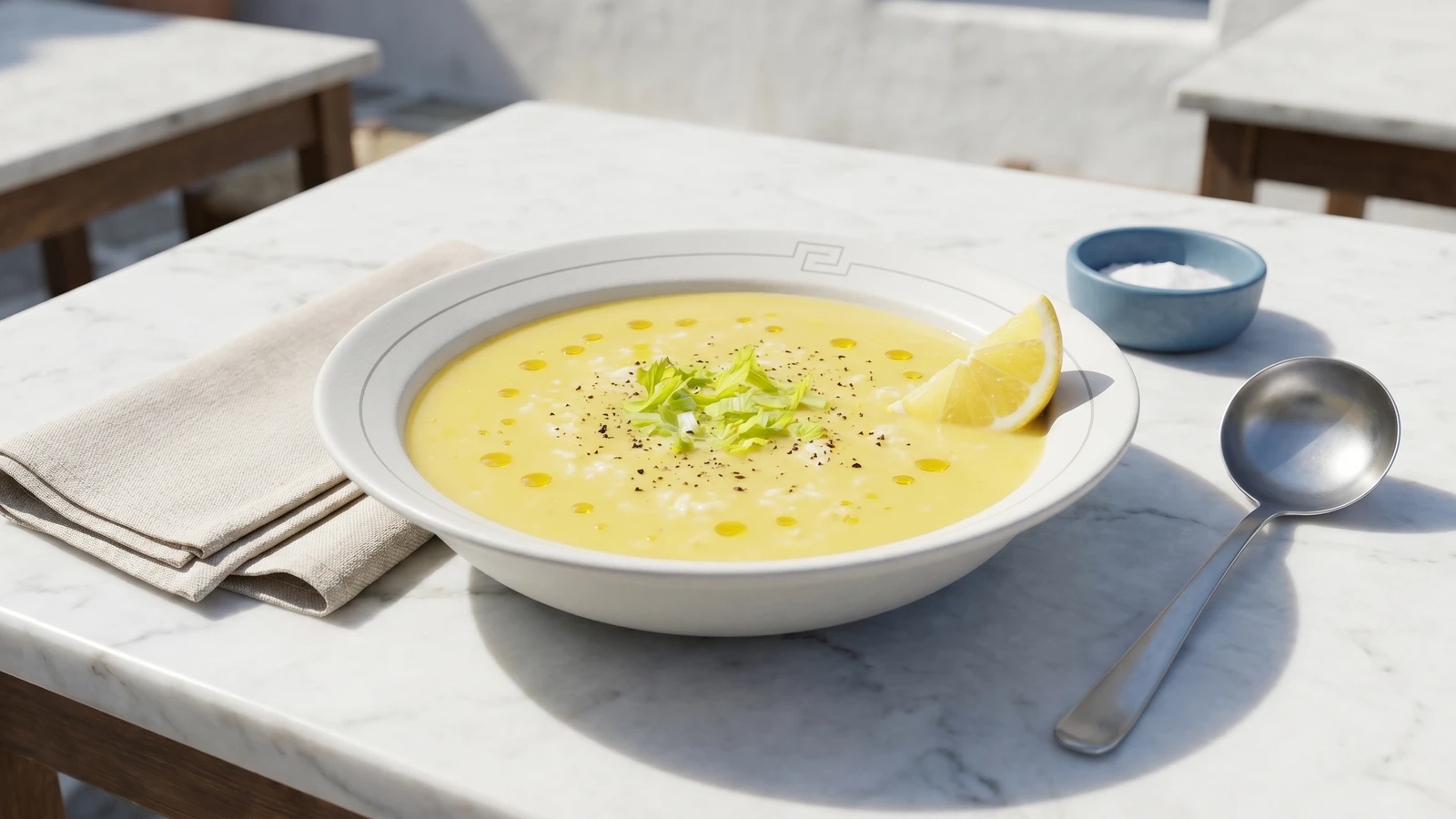
Macedonian kotosoupa avgolemono is the northern home bowl: chicken, rice, celery-scented broth, and lemon-bright eggs warmed slowly until the soup thickens like silk without a speck of scramble.
Macedonian kotosoupa avgolemono is the chicken soup of the northern home table, plain in its parts and strict in its finish: good chicken broth, rice, lemon, and eggs. In Thessaloniki and through Greek Macedonia, it is the bowl that appears when the weather turns hard, when a child is ill, or when one boiled bird needs to feed the family properly.
The method that decides it is the avgolemono, the egg-lemon finish. You take hot broth to the beaten eggs and lemon a ladle at a time, whisking until the mixture is warm, then it goes back into the pot off the boil. Do this and the soup thickens softly, bright and silky. Rush it and you get cooked egg strings, which is useful only if you wanted another soup.
I keep the rice modest, because this is soup, not pilaf in disguise. The chicken should give the broth body, the celery leaves should whisper of the north, and the lemon should wake the whole pot. The region is the dish's surname, but the care is the same everywhere: a clean broth, a patient finish, and enough restraint to let four good things do their work.
Avgolemono, egg and lemon, is one of the defining finishing techniques of Greek cookery, used for soups, stuffed vegetables, cabbage rolls, and stews. Food historians trace its sour egg-sauce family to agristada, the sauce of Sephardic Jews who settled in Ottoman cities such as Thessaloniki after 1492, where lemon gradually replaced older souring agents such as verjuice. In Macedonia and other mainland homes, chicken soup with rice became its everyday winter form, especially for Sunday and illness, because one bird could feed a family with dignity.
Quantity
1.5kg
Quantity
2.4L
Quantity
1, about 180g
peeled and halved
Quantity
2, about 180g
peeled
Quantity
2, about 120g
Quantity
1
Quantity
8
Quantity
12g
plus more to finish
Quantity
150g
unrinsed
Quantity
3
Quantity
80ml
from 2 to 3 lemons, plus wedges to serve
Quantity
to serve
Quantity
2 tablespoons
finely chopped
| Ingredient | Quantity |
|---|---|
| whole chicken | 1.5kg |
| cold water | 2.4L |
| yellow onionpeeled and halved | 1, about 180g |
| carrotspeeled | 2, about 180g |
| celery stalks with leaves | 2, about 120g |
| bay leaf | 1 |
| black peppercorns | 8 |
| fine sea saltplus more to finish | 12g |
| Greek Carolina rice or short-grain riceunrinsed | 150g |
| large eggs | 3 |
| fresh lemon juicefrom 2 to 3 lemons, plus wedges to serve | 80ml |
| freshly ground black pepper | to serve |
| tender celery leaves or dill (optional)finely chopped | 2 tablespoons |
Put the chicken in a heavy 5 to 6L pot with the cold water, onion, carrots, celery, bay leaf, peppercorns, and salt. Bring it slowly to a simmer over medium heat, skimming the gray foam as it rises. Lower the heat and let it murmur gently for 55 to 65 minutes, until the chicken is cooked through and the legs pull easily from the body.
Lift the chicken to a tray and let it cool just enough to handle. Strain the broth into a clean pot or jug, keeping the carrots if you like them in the finished soup and discarding the onion, celery, bay, and peppercorns. Pull the chicken meat from the bones in generous pieces. Measure the broth: you want about 2L. If you have less, add a little hot water. If you have much more, simmer it down for a stronger bowl.
Return 2L of broth to the pot and bring it to a gentle simmer. Add the rice and the cooked carrots, sliced if you're keeping them, and cook for 15 to 18 minutes, until the grains are tender and the broth has a little body. Stir in the shredded chicken and keep the soup hot but not boiling.
In a deep bowl, whisk the eggs until loose and a little pale, then whisk in the lemon juice. Taste your lemons first. Avgolemono should be bright, not harsh, so hold back a spoonful of juice if the lemons are fierce. You can correct at the end.
Take the soup off the heat. Ladle hot broth into the egg-lemon mixture in a thin stream, whisking all the time, and keep adding broth ladle by ladle until the bowl feels warm. Now pour the warmed avgolemono back into the pot, stirring steadily. This slow warming is the whole trick: it lets the eggs thicken the soup like silk instead of scrambling on contact.
Set the pot over the lowest heat for 2 to 3 minutes, stirring, only until the soup looks slightly thicker and glossy. Do not let it boil. Taste for salt and lemon, then let it stand for 5 minutes before serving. Ladle into warm bowls with black pepper, a little chopped celery leaf or dill if you use it, and lemon wedges at the table.
1 serving (about 540g)
Culinary guides, cultural storytelling, and the editorial depth that makes cooking meaningful.
Discover Culinary ExplorerChef Dimitra
Aegean kakavia is the fisherman’s soup named for the pot itself: small rockfish, potato, onion, lemon, and enough olive oil to turn a poor catch rich.

Chef Dimitra
Corfu's bourdeto is a red, pepper-hot fish braise, traditionally made with scorpionfish, potatoes, tomato, and enough heat to announce the Ionian table.

Chef Dimitra
Central Macedonia's spring lamb fricassee braises shoulder with romaine, dill, and spring onion, then finishes the pot with avgolemono, the egg-lemon sauce that makes it silk.

Chef Dimitra
In Chania, tsigariasto is goat or lamb browned in olive oil, softened with wine, and left to braise without water until the pot gives back only glossy meat juices.