
Chef Lupita
Acitrón de Cidra Conventual
Puebla's convent-style acitrón, made from cidra peel instead of endangered biznaga, built through repeated syrup soakings until the cubes turn firm, translucent, and ready for rosca or chiles en nogada.
A cooking platform built around craft, culture, and the stories behind what we eat.
Created by
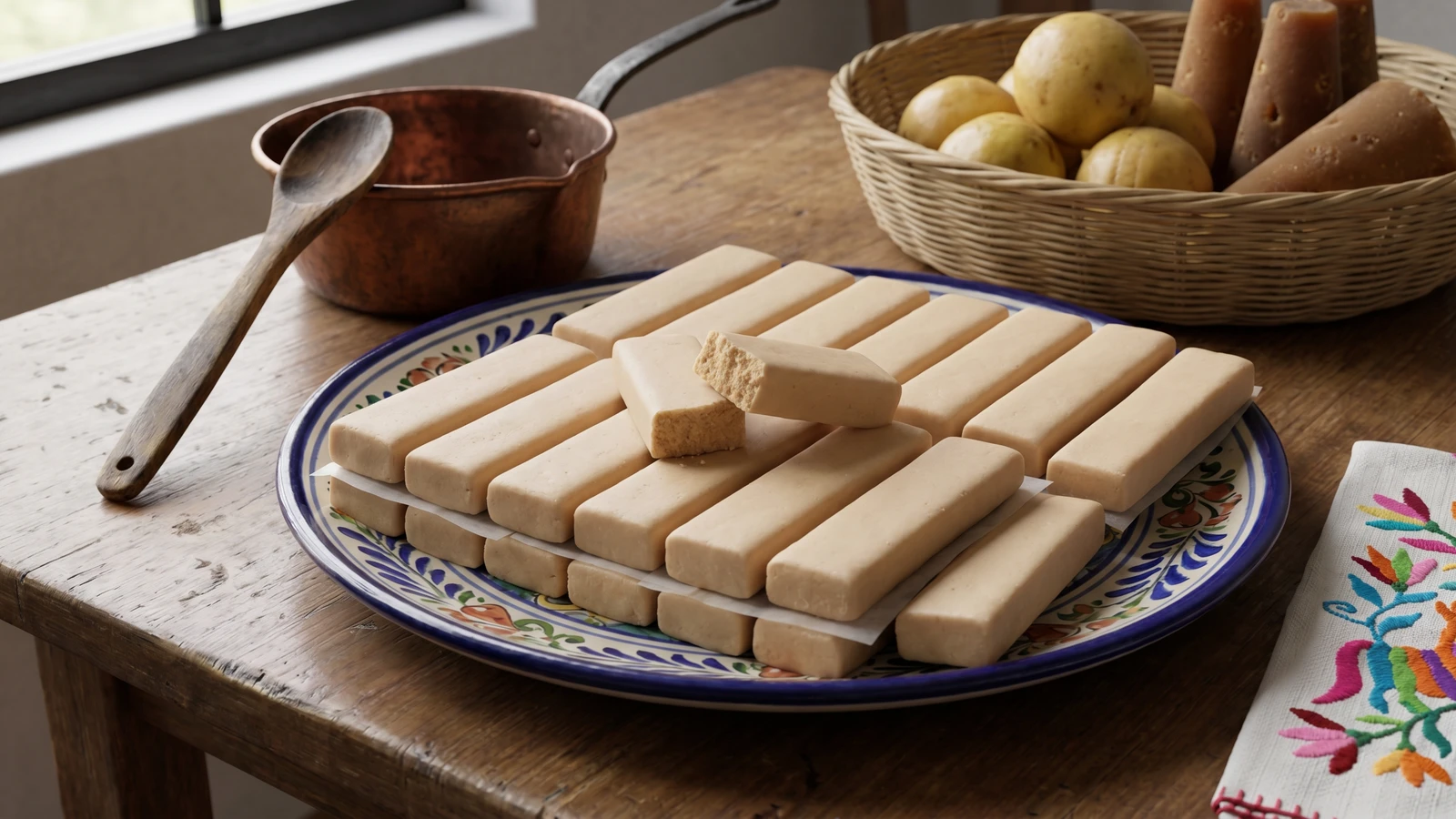
Aguascalientes fairground macarrón de leche, cooked in a copper cazo until whole milk and sugar turn into pale bars with a soft bite and a fine sandy crumb.
Aguascalientes, Barrio de San Marcos in the capital, is where this macarrón de leche lives. During the Feria Nacional de San Marcos, the sweet sits on butcher paper in dulcerías and market stalls, pale beige bars cut clean, not shiny like cajeta and not chewy like commercial fudge. Ask at Mercado Terán and the older vendors will tell you the same thing: milk, sugar, cazo, wooden spoon, patience.
The ingredient that defines it is leche entera, whole cow's milk from the dairy country around Aguascalientes. Not condensed milk. Not leche evaporada. The texture comes from reducing the milk slowly, then beating the candy at the right temperature so the sugar crystals form small and even. That fine sandy crumb is the point. If it comes out sticky, you stopped early. If it comes out hard as a tile, you bullied the sugar.
I learned this version from a dulcera who sold near San Marcos and corrected my spoon work before she corrected my recipe. She told me the hand must keep the bottom clean, because scorched milk announces laziness from across the room. My mother wrote something similar in her notebook after a trip through the Bajío: do not brown it like cajeta. She was right. Cada estado, su propia cocina.
The Feria Nacional de San Marcos in Aguascalientes began in 1828 as a harvest and livestock fair and became tied to the Barrio de San Marcos during the 19th century. Milk sweets like macarrón de leche reflect the Bajío's cattle, hacienda, and market economy: whole milk reduced with sugar in copper or heavy cazos, then beaten into a grain rather than cooked dark like cajeta. This is a feria and dulcería de barrio candy, different from the egg, almond, and convent sweets associated with Puebla or Santa Rosa.
Quantity
2 liters
preferably pasteurized, not ultra-pasteurized
Quantity
4 cups (800 grams)
Quantity
1 small
left whole
Quantity
1/8 teaspoon
Quantity
1/4 teaspoon
Quantity
1 teaspoon
preferably from Papantla
Quantity
1 teaspoon
for greasing the mold and hands
| Ingredient | Quantity |
|---|---|
| whole cow's milk (leche entera)preferably pasteurized, not ultra-pasteurized | 2 liters |
| white granulated sugar (azúcar blanca) | 4 cups (800 grams) |
| Mexican canela stickleft whole | 1 small |
| bicarbonato de sodio | 1/8 teaspoon |
| fine sea salt | 1/4 teaspoon |
| Mexican vanilla extractpreferably from Papantla | 1 teaspoon |
| unsalted butterfor greasing the mold and hands | 1 teaspoon |
Lightly butter an 8-inch square pan or a shallow wooden frame and line the bottom with parchment. Leave a little overhang so you can lift the candy out cleanly. Set a small bowl of cold water beside the stove for testing the punto. Once the milk reaches the right stage, you will not have time to go looking for anything.
Pour the leche entera into a clean copper cazo reserved for sweets, or into a wide heavy stainless pot. Add the sugar, canela, bicarbonato de sodio, and salt. Stir over medium heat with a long wooden spoon until the sugar dissolves. The bicarbonato will make the milk foam at first. That is normal. It helps the milk cook without curdling while it reduces.
Keep the milk at a steady simmer and stir every few minutes at first, scraping the bottom and corners of the cazo. After 35 to 40 minutes, remove the canela. As the mixture thickens, lower the heat to medium-low and stir constantly. The color should stay pale cream to light beige, not dark brown. This is macarrón de leche from San Marcos, not cajeta de Celaya. Cada estado, su propia cocina.
Cook until the bubbles turn slow and heavy and the spoon leaves a clean path across the bottom for two seconds before the milk closes back in. At sea level, the thermometer will read about 238F to 240F. In Aguascalientes, because the city sits high, it will arrive closer to 226F to 228F. Trust the cold water test: drop a little candy into cold water. It should form a soft ball that holds together, then flattens when pressed between your fingers.
Take the cazo off the heat. Stir in the vanilla, then leave the candy undisturbed until it cools to 110F to 115F, about 25 to 35 minutes. Do not scrape the sides into the center. Big sugar crystals stuck to the pot will make the macarrón gritty. The fine sandy crumb comes from patience here, not muscle.
Beat the cooled candy firmly with the wooden spoon for 6 to 10 minutes. It will go from glossy and pourable to matte, thick, and heavy. The spoon will start to drag and the surface will look like damp sand. That is the moment. No me vengas con atajos. If you pour it while it is shiny, it will set sticky. If you beat after it is stiff, it will crumble before you shape it.
Scrape the candy into the prepared pan. With lightly buttered hands or a buttered piece of parchment, press it into an even slab about 3/4 inch thick. Score it into 24 bars while it is still warm, wiping the knife between cuts. If you want the fairground look, drag the back of the knife lightly across each bar to make shallow ridges.
Let the macarrón set at room temperature for at least 3 hours. Cut along the scored lines and wrap each bar in wax paper. The texture should be tender, matte, and finely sandy under your teeth, not chewy like caramel. Serve on a clay or talavera platón with coffee de olla or a glass of cold milk. Recetas probadas y garantizadas.
1 serving (about 50g)
Culinary guides, cultural storytelling, and the editorial depth that makes cooking meaningful.
Discover Culinary ExplorerChef Lupita
Puebla's convent-style acitrón, made from cidra peel instead of endangered biznaga, built through repeated syrup soakings until the cubes turn firm, translucent, and ready for rosca or chiles en nogada.

Chef Lupita
Ciudad de México's Tulyehualco alegría is popped huautli folded into piloncillo honey, pressed with peanuts, pepitas, and raisins, then cut into the rectangular bars that built a pueblo's identity.

Chef Lupita
Oaxaca's pre-Columbian amaranth bar, popped on a hot comal and bound with piloncillo, honey, and the sacred Zapotec grain that the Spanish tried, and failed, to outlaw.

Chef Lupita
Querétaro's mercado candy of popped amaranto pressed with dark piloncillo syrup, pepitas, pecans, and cacahuate, a Bajío sweet that respects the seed before it decorates the table.