Culinary Explorer
A cooking platform built around craft, culture, and the stories behind what we eat.
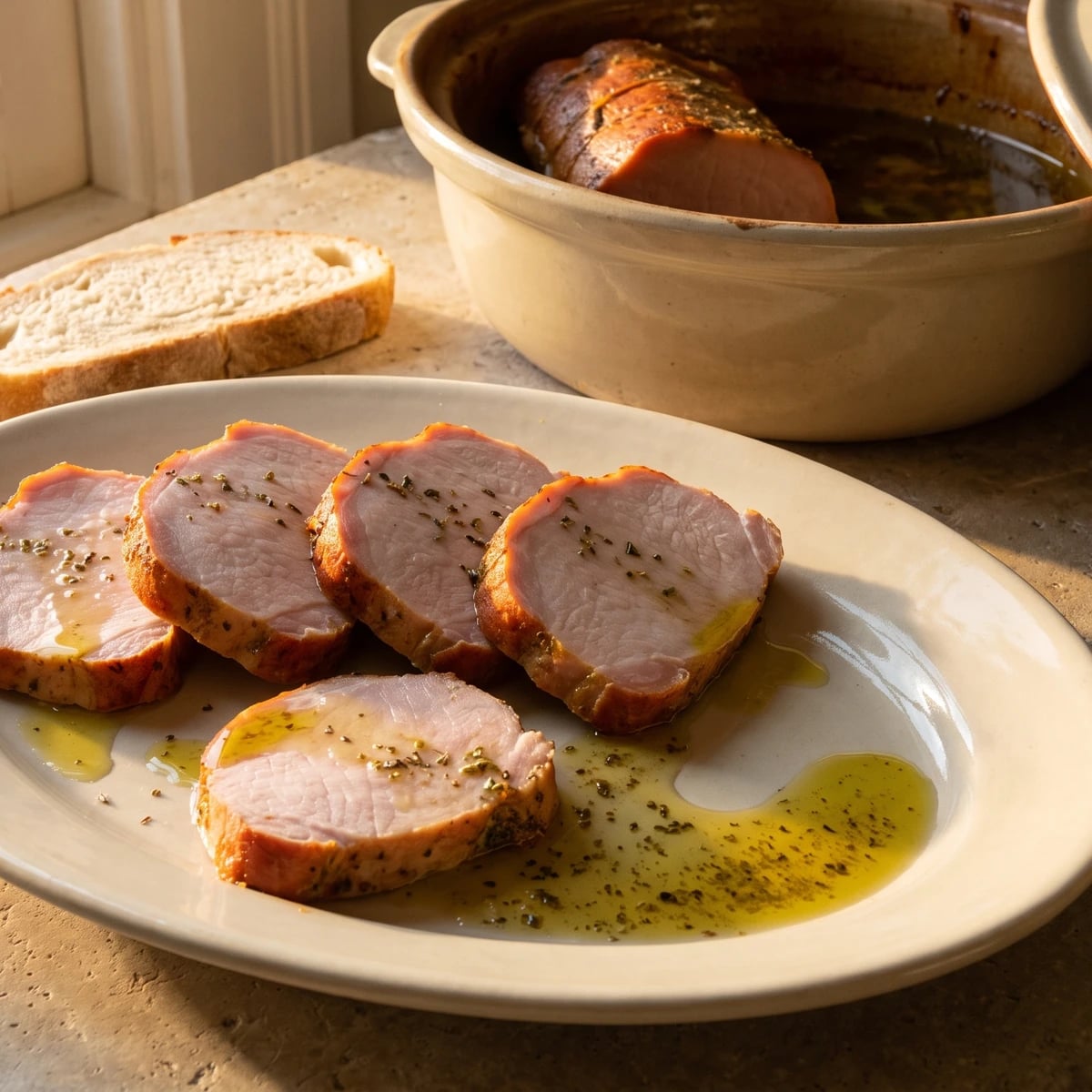
Lomo de Orza Manchego
Created by Chef Isabel
La Mancha keeps pork loin the old household way: a garlicky oregano adobo, gentle cooking in olive oil, then a clean covering of oil that seasons every tender slice for tomorrow's table.
Lomo de orza manchego is La Mancha's old way with pork loin: large pieces rested in an adobo of garlic, oregano, pimentón, wine and vinegar, fried gently, then kept beneath olive oil or lard in a glazed clay orza. It isn't simply lomo adobado. The rest under the fat is half the dish, carrying the seasoning through the meat and leaving every slice supple.
The heat decides it. Keep the oil between 105 and 115°C, turning the loin until its centre reaches 65°C. A fierce fry gives you a handsome brown outside and dry pork within, which is poor payment for a day's marinating. Quiet oil cooks the lean loin evenly without squeezing out its juices.
No hace falta haber pisado España. An ordinary boneless centre-cut pork loin from a good butcher is exactly what you need, provided it hasn't been injected with brine. If that much olive oil is costly, use rendered pork lard. It is an old inland choice, not a lesser one, though it sets white in the refrigerator and gives the meat a fuller pork flavour.
Give the cooked loin a full day beneath the fat before cutting it. The old orza was a pantry preserve, but this home recipe is not shelf-stable: refrigerate it and freeze anything you won't eat within four days of cooking. The Margin beside mine says only, "dry meat, quiet oil." That is enough. Siempre sale, si lo sigues.
Ingredients
boneless centre-cut pork loin
Quantity
1.2kg
trimmed and cut crosswise into 4 equal pieces
fine sea salt
Quantity
18g
garlic
Quantity
6 medium cloves (about 24g)
peeled
| Ingredient | Quantity |
|---|---|
| boneless centre-cut pork lointrimmed and cut crosswise into 4 equal pieces | 1.2kg |
| fine sea salt | 18g |
| garlicpeeled | 6 medium cloves (about 24g) |
Where cooking meets culture.
Culinary guides, cultural storytelling, and the editorial depth that makes cooking meaningful.
Discover Culinary Explorer