Culinary Explorer

A cooking platform built around craft, culture, and the stories behind what we eat.
Discover Culinary Explorer
Licuado de Mango Ataulfo Sinaloense

Licuado de Mango Ataulfo Sinaloense

Created by

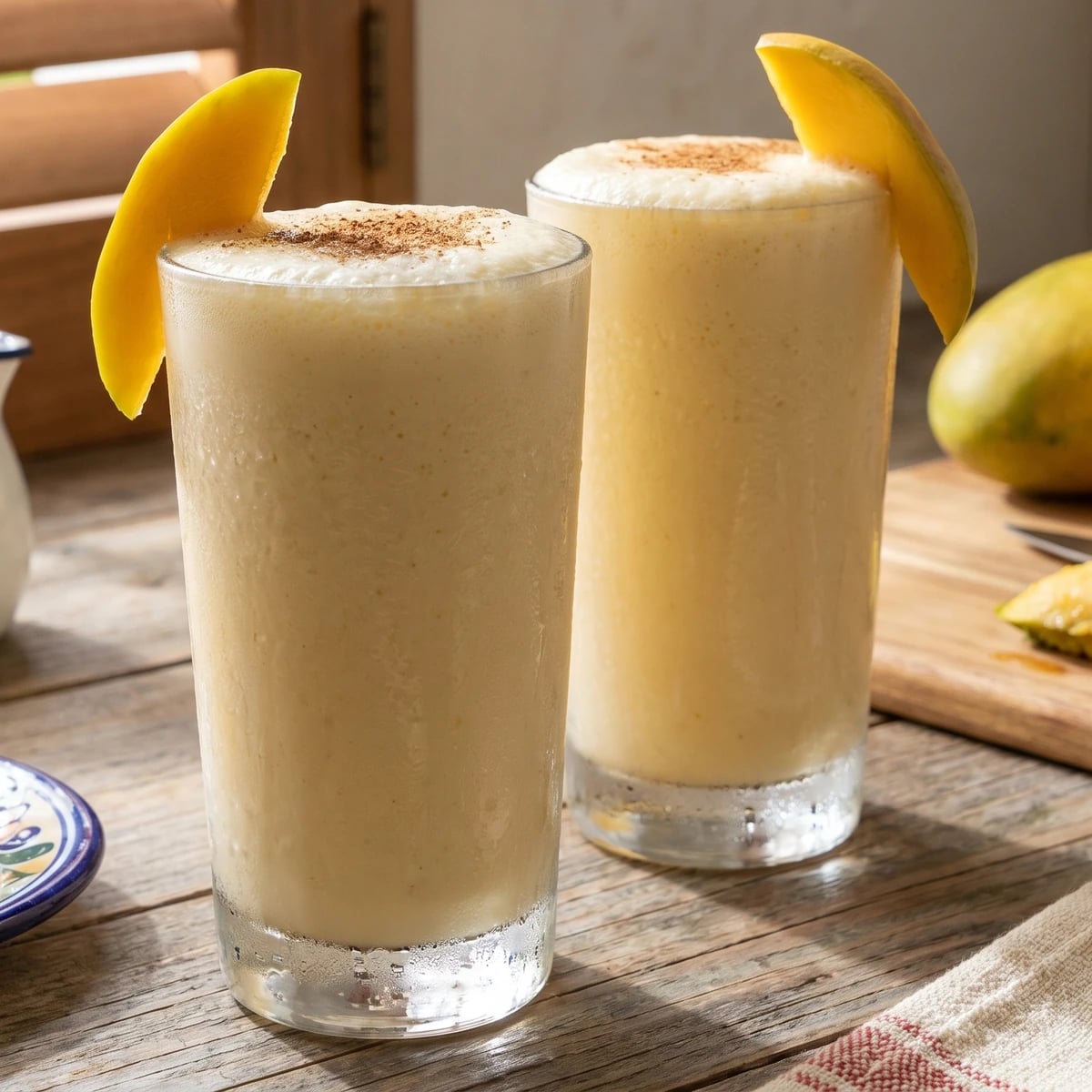
Sinaloa's coastal breakfast licuado, built on the sweetest mango in Mexico, cold whole milk, and a pinch of salt that makes the ataulfo taste like itself only more so.

Beverages
Mexican
Weeknight
Quick Meal
Meal Prep
10 min
Active Time
0 min cook10 min total
Yield2 servings

This is from Sinaloa, from the irrigated valleys around Culiacan and Escuinapa where Mexico's ataulfo mangos ripen under the dry Pacific heat. The ataulfo is the sweetest mango in the country and Sinaloa is where it lives. Other states grow it. Nobody grows it like Sinaloa.

A licuado is not a smoothie. The English word does not translate. A licuado is a working breakfast, the thing a fisherman drinks on the way out to the boat, the thing a market vendor pours into a plastic bag for her kid before school, the thing a tia hands you when you arrive at the house at eight in the morning with no time to sit down. It is milk, fruit, a little sugar, and the conviction that breakfast should feed you, not photograph well.

The ataulfo carries this drink. Use the right mango and the licuado almost makes itself. Use a fibrous, sour Tommy Atkins from a supermarket bin in February and you will wonder why yours tastes nothing like the one you drank in Mazatlan. Cook with what the mercado is selling today. In Sinaloa, from March to July, the mercado is selling ataulfo. The rest of the year, drink something else. La cocina no es decoracion, es trabajo.

My mother kept a page in her notebook for licuados, copied from a woman she met in Mazatlan in the late seventies. Mango ataulfo, leche entera, azucar, hielo, una pizca de sal. Five ingredients. The salt was underlined. Saber cocinar es saber vivir.

The ataulfo mango was developed in Mexico in the mid-20th century, named for Ataulfo Morales Gordillo, a Soconusco grower in Chiapas who propagated the variety from a tree on his property in the 1950s. Sinaloa adopted the cultivar aggressively in the following decades and became, by output and reputation, the dominant producer of ataulfo in Mexico, with the state's certified-origin ataulfos granted federal protection in 2003. The licuado as a breakfast format has older roots, tracing to the late 19th-century arrival of industrial dairy in Mexican cities and the convergence of imported blenders in the mid-20th century with the pre-existing tradition of aguas frescas, producing a drink that was at once modern, indigenous in its fruit, and unmistakably Mexican in its directness.

The technique, the tradition, and the story behind every dish.

Discover Culinary Explorer

Ingredients

ripe mango ataulfo sinaloense

Quantity

2

peeled and flesh cut off the pit

cold whole milk (leche entera)

Quantity

2 cups

granulated sugar

Quantity

2 tablespoons, plus more to taste

Mexican vanilla extract (optional)

Quantity

1/2 teaspoon

ice cubes

Quantity

1 cup

fine sea salt

Quantity

a pinch

ground canela (Mexican cinnamon) (optional)

Quantity

for finishing

Equipment Needed

  • High-powered blender (a basic blender works; this is not a complicated drink)
  • Sharp paring knife for peeling the mango
  • Tall heavy glass tumblers (vasos jarocheros)

Instructions

  1. 1

    Choose the right mango

    The mango has to be ataulfo and it has to be from Sinaloa, the small yellow one with the kidney shape and the thin skin. Not Tommy Atkins, not Kent, not Haden. Those are different fruits with different sugar profiles and they will not give you this licuado. The ataulfo should feel heavy for its size and yield to gentle pressure at the stem end. The skin should smell like honey and turpentine and summer. If you press it and it does not give a little, leave it on the counter for another day. A hard mango is a sad mango.

    Sinaloa's ataulfo season runs roughly March through July. Outside those months, ataulfos from Chiapas or Nayarit will work but they carry a different sweetness. The Sinaloan ones are the sweetest in Mexico because of the dry coastal heat and the irrigated valleys around Culiacan and Escuinapa.
  2. 2

    Peel and cut the mango

    Stand each mango on its narrow end. The pit runs flat and long down the center. Slice down along one flat side of the pit, then the other, then trim the cheeks off the sides. Peel the skin off each piece with a paring knife or scoop the flesh out with a spoon. Work over the blender jar so you catch the juice. Discard the pit, or chew on it standing over the sink the way every Sinaloan child has done since the beginning of the mango harvest. That is the cook's tax.

  3. 3

    Build the licuado

    Drop the mango flesh into the blender. Pour in the cold whole milk. Add the sugar, the vanilla if using, the pinch of salt, and the ice. Whole milk, not skim, not almond, not oat. La leche entera is what gives the licuado its body and what carries the fat-soluble flavor of the ataulfo. A licuado made with thin milk tastes thin. Asi se hace y punto.

  4. 4

    Blend until smooth and frothy

    Blend on high for 45 seconds to a minute, until the mixture is completely smooth and a thick foam builds at the top. The color should be a pale, milky gold. Taste it. If the mango was at peak ripeness, you may need no extra sugar at all. If it was caught a day early, add another teaspoon. The salt is not optional. A pinch of salt sharpens the mango and makes the sweetness land. My mother wrote in the margin of her notebook: 'una pizca de sal al licuado, siempre.' She was right.

  5. 5

    Serve cold and immediately

    Pour into tall heavy glass tumblers, vasos jarocheros if you have them. The foam should crown the top. Dust with a little ground canela if you like, the way they do it in the marisquerias and loncherias along the coast. Drink it while it is cold and frothy. A licuado that sits separates within minutes, and the second pour is never as good as the first. Recetas probadas y garantizadas.

Chef Tips

  • If the only ataulfos you can find are slightly underripe, leave them on the counter at room temperature for two to four days until the skin turns deep yellow and wrinkles slightly at the stem. Do not refrigerate an unripe mango. The cold kills the ripening enzymes and the fruit will never sweeten properly.
  • Whole milk is the recipe. Not low-fat, not plant milk. The fat in the milk dissolves the carotenoids in the ataulfo and that is where the flavor lives. If you cannot tolerate dairy, this is not your licuado. Sinaloa has agua de mango, made with water instead of milk, which is a different drink with its own dignity.
  • Do not add yogurt, banana, protein powder, chia seed, or anything else the internet will tell you to add. A licuado de mango is mango, milk, sugar, salt, ice. No me vengas con atajos and no me vengas with additions either.

Advance Preparation

  • The mango can be peeled, cut, and frozen in a single layer on a sheet pan, then transferred to a freezer bag for up to three months. Frozen mango chunks blended directly into cold milk eliminate the need for ice and give a thicker licuado. This is how Sinaloan cooks stretch ataulfo season past July.
  • A licuado does not hold. Make it and drink it. Past 10 minutes the foam collapses, the mango settles, and the texture turns gluey. This is a drink that lives in the moment of its making.

Frequently Asked Questions

Nutrition Information

1 serving (about 525g)

Calories
290 calories
Total Fat
9 g
Saturated Fat
5 g
Trans Fat
0 g
Unsaturated Fat
3 g
Cholesterol
25 mg
Sodium
180 mg
Total Carbohydrates
47 g
Dietary Fiber
3 g
Sugars
46 g
Protein
9 g

Note: Chef personas and recipes are created with AI assistance. Cook with care: follow safe food-handling practices, check doneness with a thermometer when needed, and adapt for allergies and your kitchen.

Where cooking meets culture.

Culinary guides, cultural storytelling, and the editorial depth that makes cooking meaningful.

Discover Culinary Explorer

More from Noroeste Beverages

Browse the full collection