Culinary Explorer
A cooking platform built around craft, culture, and the stories behind what we eat.
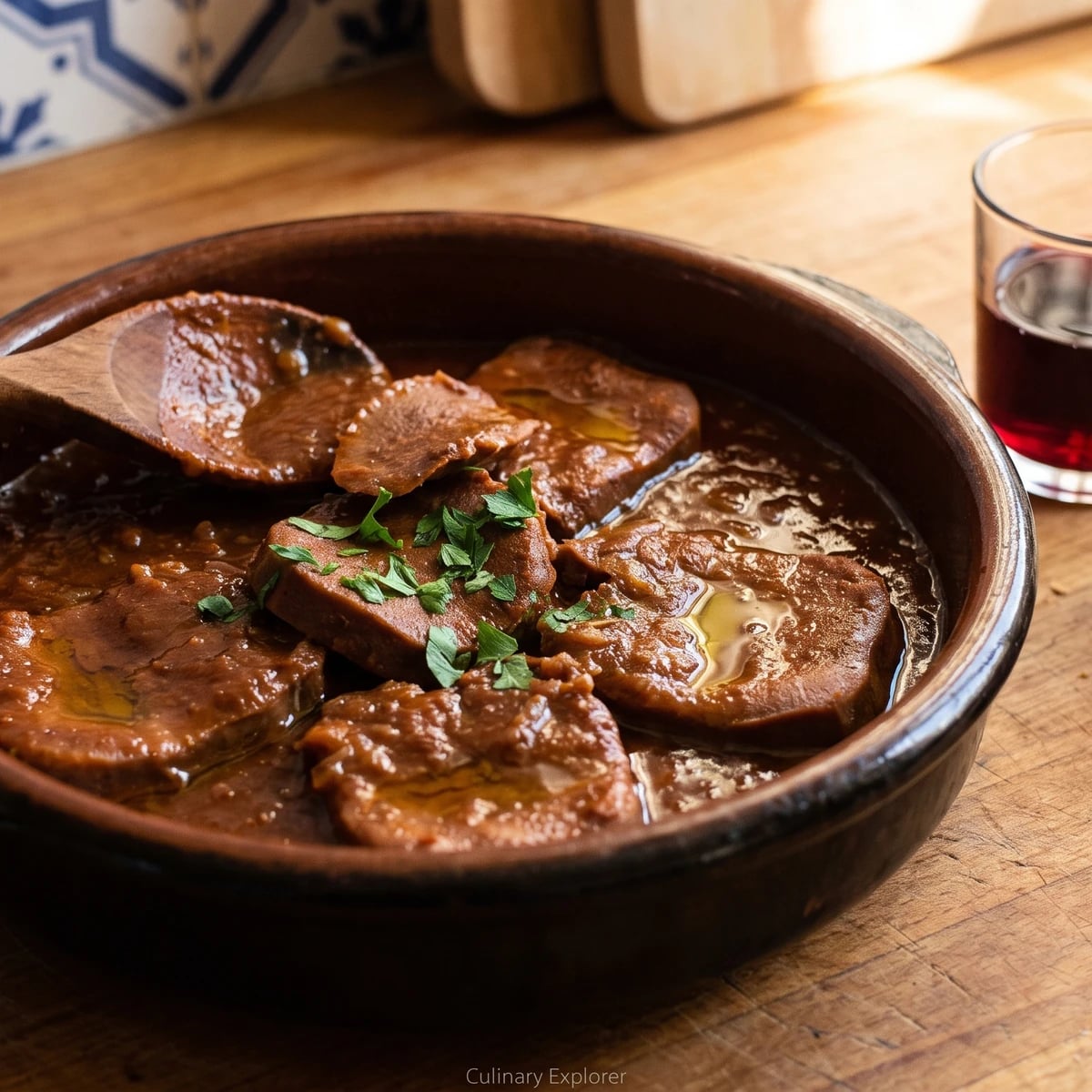
Lengua en Salsa Riojana
Created by Chef Isabel
Lengua en salsa is La Rioja's patient way with beef tongue: cook it tender first, peel it while warm, then let the slices settle into a deep onion and wine sauce.
Lengua en salsa Riojana belongs to La Rioja, where the wine is not decoration and the sauce is built slowly: onion, garlic, tomato, pimentón, and red wine cooked down until it tastes round and dark. The tongue is not fried hard, not hidden under tricks. It is boiled tender, peeled clean, sliced thick, and finished in the sauce until it gives under the fork.
The method that decides it is the first cooking. Tongue has a stubborn skin, and it only lifts away easily when the meat is fully tender and still warm. Pull it too soon and you fight it. Let it go cold and you fight it again. Cook it until a skewer slides into the thick end with little resistance, peel it while your hands can bear the heat, and the rest is simple.
If you are far from La Rioja, use a good dry red wine you would drink at the table, not a sweet one and not a cooking bottle that tastes tired. If you cannot find pimiento choricero, use a dried ñora or a little more sweet pimentón de la Vera; the sauce will be less Riojan in its depth, but it will still know where it is going. No hace falta haber pisado España. Pésalo, no lo adivines, and this comes out right.
Ingredients
beef tongue
Quantity
1, about 1.2kg to 1.5kg
rinsed well
leek
Quantity
1
cleaned and halved
carrot
Quantity
1
peeled and halved, for the broth
| Ingredient | Quantity |
|---|---|
| beef tonguerinsed well | 1, about 1.2kg to 1.5kg |
| leekcleaned and halved | 1 |
| carrotpeeled and halved, for the broth | 1 |
Where cooking meets culture.
Culinary guides, cultural storytelling, and the editorial depth that makes cooking meaningful.
Discover Culinary Explorer