
Chef Lesia
Hrechka z Hrybamy (гречка з грибами, mushroom buckwheat)
Buckwheat is the color people mistake for dull until the mushrooms give it their black forest juices, the onion turns sweet, and every grain starts shining with green sunflower oil.
A cooking platform built around craft, culture, and the stories behind what we eat.
Created by
Buckwheat flour hits salted water and turns from dust to a dark, nutty porridge so thick the spoon has to fight its way through.
Buckwheat flour looks like ash until heat wakes it up. Toast it gently and the kitchen fills with a smell like roasted nuts, dry hay, and the bottom of an old grain sack, which sounds unromantic until you're hungry and the pot begins to pull together. Then it makes sense.
Lemishka belongs to Slobozhanshchyna, the north-eastern forest-steppe, where buckwheat was not a health-food packet but ordinary food: cheap, filling, fast-day friendly, and ready to carry whatever the house had. On fasting days it takes unrefined sunflower oil, green-gold and peppery, Ukraine in a bottle of oil. On other days someone will add fried onion, mushrooms, or cracklings. That's not a scandal. That's supper.
The one thing that decides the dish is the stirring before the oven. Pour the toasted flour in slowly, beat out the dry pockets, and keep going until the mass turns smooth and heavy, until it sounds right against the spoon. The oven does not rescue lumps. It only softens what your hand has already made.
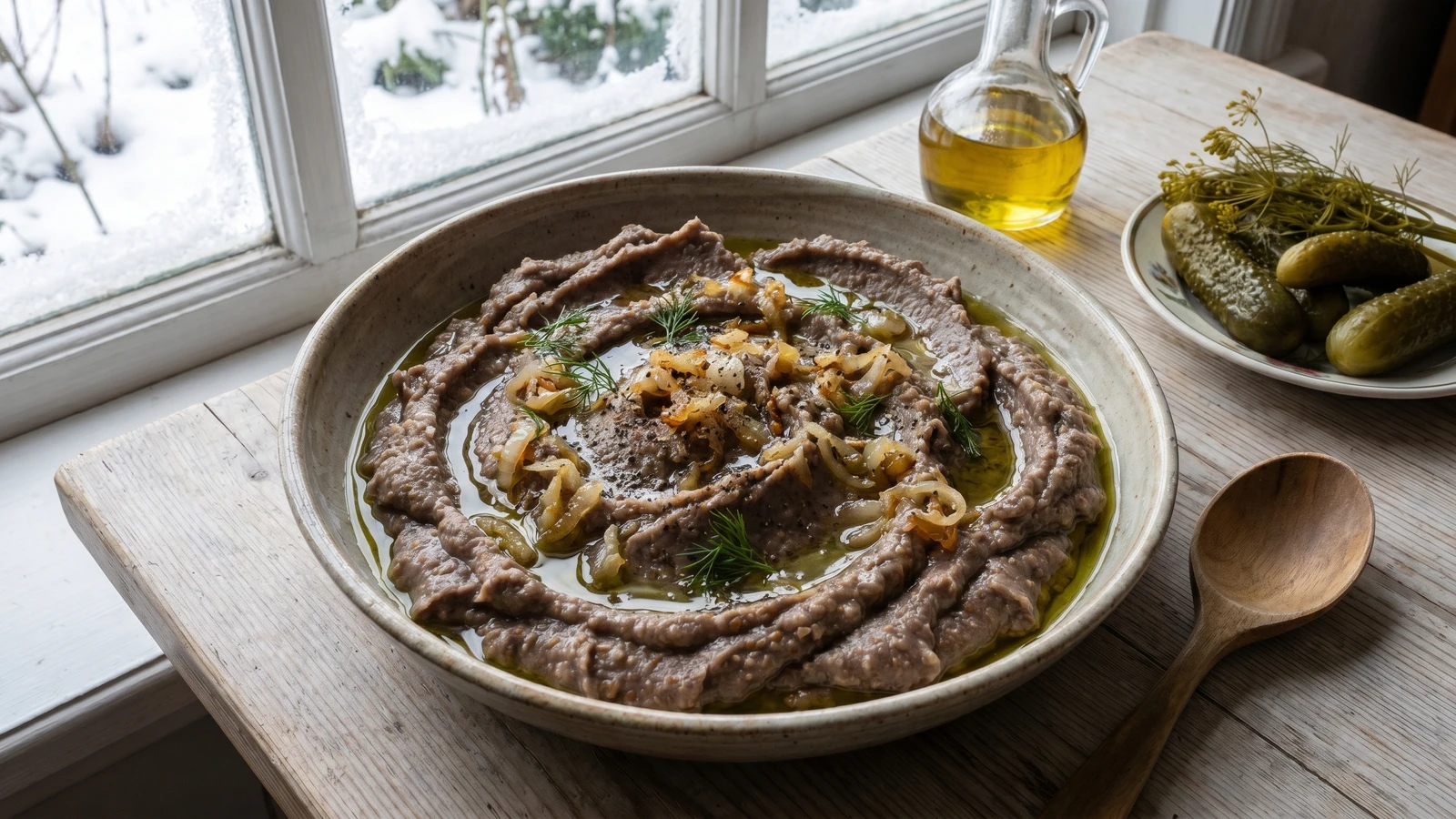
Serve it in big spoonfuls, glossy with oil and sharp with onion if you like. It is plain food, yes, but plain is not grey. Plain can smell of buckwheat, shine with sunflower oil, and keep a table quiet for five minutes because everyone is eating.
Lemishka is especially associated with Slobozhanshchyna and the forest-steppe belt where buckwheat grew well and flour porridges fed households through fast days and lean weeks. Nineteenth-century descriptions of Ukrainian home cooking place it among dishes made from milled grain rather than whole groats, a practical branch of the same buckwheat culture that also gave the table hrechanyky and kasha. Soviet-era standardization preferred smoother, more uniform porridges, so dishes like lemishka survived most clearly in village memory and regional cookery notes.
Quantity
300g
Quantity
900ml
Quantity
1 1/2 teaspoons
Quantity
4 tablespoons, plus more to serve
Quantity
1 large
finely diced
Quantity
1/2 teaspoon
Quantity
small handful
finely chopped
| Ingredient | Quantity |
|---|---|
| buckwheat flour | 300g |
| water | 900ml |
| fine sea salt | 1 1/2 teaspoons |
| unrefined sunflower oil | 4 tablespoons, plus more to serve |
| onionfinely diced | 1 large |
| black pepper | 1/2 teaspoon |
| dill (optional)finely chopped | small handful |
Set a wide dry pan over low heat and add the buckwheat flour. Stir and scrape constantly, reaching into the corners, until the flour darkens a shade and smells nutty rather than raw. Don't chase deep color; buckwheat burns bitter before it forgives you.
Bring the water and salt to a lively boil in a heavy ovenproof pot. Taste the water. It should be pleasantly salty, because this is your only chance to season the porridge evenly before the flour thickens.
Lower the heat and rain in the toasted flour with one hand while beating hard with a wooden spoon in the other. Work slowly at first, then with confidence, breaking up every dry pocket until the mass pulls from the sides in thick folds and the spoon stands up straight. This is the dish deciding itself.
Cover the pot tightly and move it to a 160C oven. Let the lemishka steam until the grainy edge softens and the surface looks matte, set, and spoonable. When you press the spoon through it, it should give like firm polenta, not smear like paste.
While the pot sits in the oven, warm the sunflower oil in a small pan and cook the onion gently until soft, gold at the edges, and sweet-smelling. You're not making it crisp. You want the oil to take on the onion's sweetness so it can gloss the buckwheat.
Spoon the lemishka into a deep bowl in generous ridges, pour the onion oil over the top, and finish with black pepper and dill if the table wants green. Eat it hot or warm, with pickles, mushrooms, or a spoon of smetana on a non-fast day.
1 serving (about 185g)
Culinary guides, cultural storytelling, and the editorial depth that makes cooking meaningful.
Discover Culinary ExplorerChef Lesia
Buckwheat is the color people mistake for dull until the mushrooms give it their black forest juices, the onion turns sweet, and every grain starts shining with green sunflower oil.

Chef Lesia
Buckwheat is never grey if you treat it properly: toast it until it smells nutty, then fold it through onions gone sweet and glossy in green sunflower oil.

Chef Lesia
The trick is not the potato, it's the cracked edge: rough wedges roast until golden, then drink garlic, dill, and unrefined sunflower oil while still hot.

Chef Lesia
Flour and warm water sit overnight until the bowl smells like rye bread and orchard fruit, then the batter cooks into a glossy sweet-sour pudding. Almost nobody makes it now. We will.