
Chef Jeong-sun
Agwi-jjim (Braised Monkfish with Bean Sprouts)
Firm monkfish buried under crisp soybean sprouts, minari, and a red gochugaru sauce thickened at the end; Masan's market dish asks for heat, timing, and a steady hand.
A cooking platform built around craft, culture, and the stories behind what we eat.
Created by
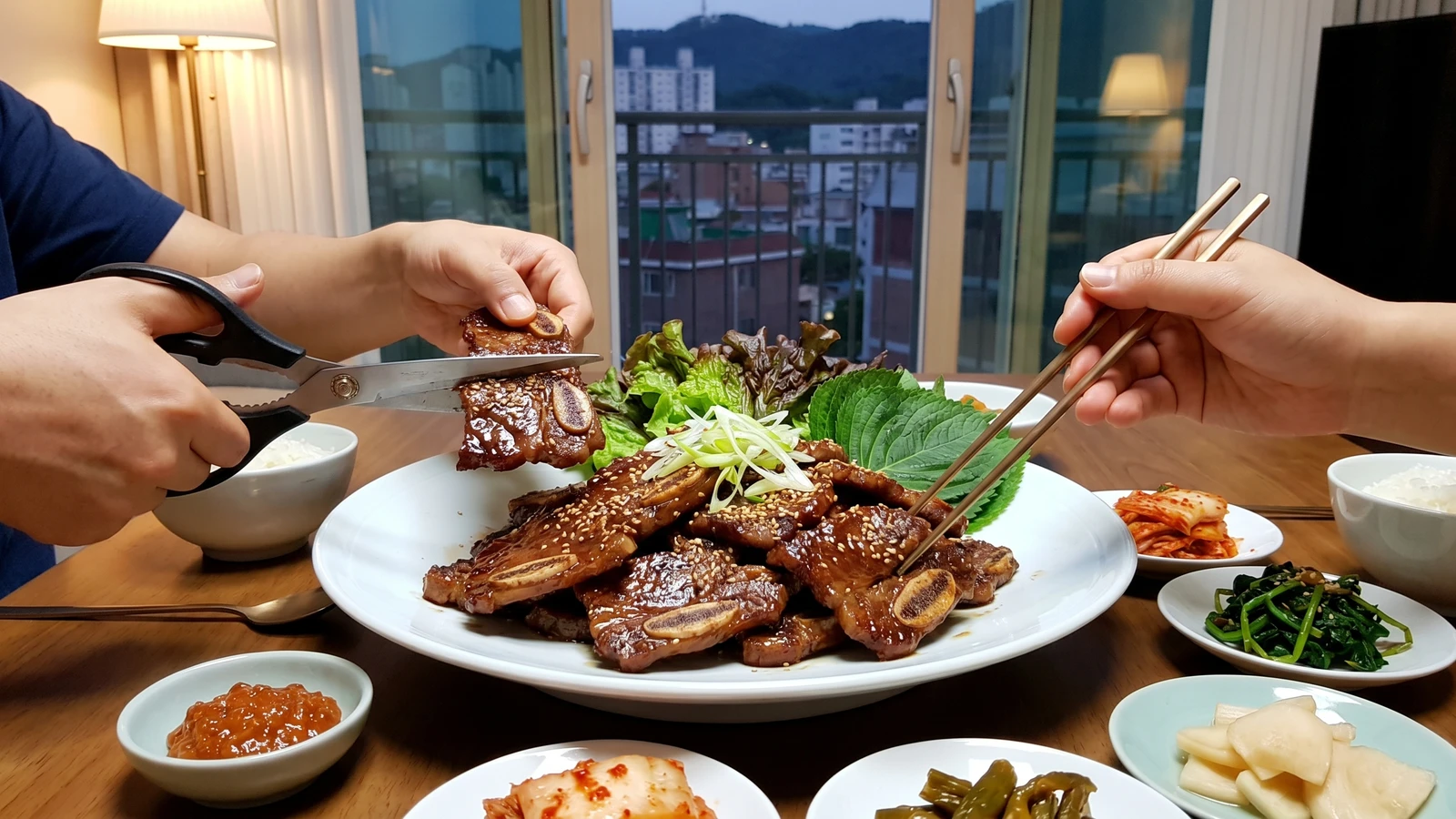
Thin cross-cut short ribs, cleaned of bone dust, soaked in a measured soy, pear, garlic, and sesame marinade, then grilled fast until the edges brown and the meat eats cleanly from the bone.
LA galbi lives or dies before it ever touches the grill. The butcher's saw gives you that beautiful cross-cut rib, meat and little ovals of bone in every strip, but it also leaves bone dust. Rinse it away. Soak briefly. Drain well. My teacher would have watched that part longer than the grilling, because carelessness at the sink follows you all the way to the table.
This is celebration food, but not stiff food. It belongs at a family table where someone is turning ribs at the stove, someone is washing lettuce, and someone has already stolen the first browned end with chopsticks. The marinade should taste of beef, soy, pear, garlic, and sesame, not sugar with a bone attached. Korean pear softens the meat and gives a cleaner sweetness, so we measure it and let it do its work.
Do not marinate these thin ribs overnight unless the cut is thick and stubborn. Six hours is enough for most LA galbi, and twelve is the upper edge. After that, soy takes over and the meat loses itself. 손맛 is real. I still measure it, so it can be handed on.
LA galbi is tied to Korean immigrant cooking in Los Angeles, where American butchers commonly cut short ribs across the bone with a bandsaw, a flanken cut that Korean cooks adapted to soy-marinated grilling. The name is often explained as Los Angeles galbi, though some cooks also connect it to the lateral cut across the rib; both explanations point to the same modern fact, a Korean diaspora dish that traveled back to Korea. By the late twentieth century it had become familiar on Korean holiday and barbecue tables, especially as imported beef and cross-cut ribs became easier to buy.
Quantity
1.5 kg
cut 6 to 8 mm thick across the bone
Quantity
as needed
for rinsing and soaking
Quantity
3/4 cup
Quantity
1/2 cup
Quantity
1/2 pear, about 180g
peeled, cored, and grated
Quantity
1/2 medium, about 120g
grated
Quantity
5 cloves
finely minced
Quantity
2 tablespoons
Quantity
2 tablespoons
Quantity
1 tablespoon
Quantity
2 tablespoons
Quantity
1 tablespoon, plus more for serving
Quantity
1/2 teaspoon
freshly ground
Quantity
4
2 finely chopped, 2 thinly sliced for garnish
Quantity
as needed
for the grill or pan
Quantity
to serve
| Ingredient | Quantity |
|---|---|
| LA galbi, flanken-cut beef short ribscut 6 to 8 mm thick across the bone | 1.5 kg |
| cold waterfor rinsing and soaking | as needed |
| soy sauce | 3/4 cup |
| water | 1/2 cup |
| Korean pearpeeled, cored, and grated | 1/2 pear, about 180g |
| yellow oniongrated | 1/2 medium, about 120g |
| garlicfinely minced | 5 cloves |
| sugar | 2 tablespoons |
| mirin or rice wine | 2 tablespoons |
| honey or rice syrup | 1 tablespoon |
| toasted sesame oil | 2 tablespoons |
| toasted sesame seeds | 1 tablespoon, plus more for serving |
| black pepperfreshly ground | 1/2 teaspoon |
| scallions2 finely chopped, 2 thinly sliced for garnish | 4 |
| neutral oilfor the grill or pan | as needed |
| lettuce leaves, perilla leaves, ssamjang, sliced garlic, and green chilies (optional) | to serve |
Rinse the ribs one by one under cold running water, rubbing around each bone to remove saw dust. Put them in a large bowl of cold water for 20 minutes, changing the water once if it turns very red. Drain and pat them dry. This step is not decoration; bone grit in the marinade gives a sandy bite, and blood left on the surface muddies the flavor.
In a bowl, stir together the soy sauce, water, grated pear, grated onion, garlic, sugar, mirin, honey, sesame oil, sesame seeds, black pepper, and 2 finely chopped scallions. Taste it before the beef goes in. It should be salty, lightly sweet, garlicky, and rounded by sesame, because the meat will dilute it. Do not add more sugar just because restaurant galbi often tastes sweet. Let the beef still read as beef.
Lay the ribs in a shallow container or zip-top bag, spooning marinade between the pieces so every strip is coated. Press out excess air, cover, and refrigerate 6 hours, turning once halfway through. For ribs thinner than 6 mm, 4 hours is enough. For ribs closer to 1 cm, you may go to 12 hours. Past that, the soy gets bossy and the meat turns too soft.
Take the ribs from the refrigerator 25 minutes before cooking. Lift them from the marinade and let the excess drip off, then lightly oil a hot grill, grill pan, or wide cast-iron skillet. High heat matters here. These ribs are thin, so they need quick browning before the inside dries out.
Cook the ribs in a single layer, 2 to 3 minutes per side, until the edges are browned and the meat tightens around the bone. Do not crowd the pan. If marinade pools under the ribs, they will boil instead of brown. Wipe burnt sugar from the pan between batches if needed, then oil lightly again.
Move the cooked ribs to a platter and let them rest 3 minutes. Scatter with the thinly sliced scallions and a small pinch of toasted sesame seeds. Resting lets the juices settle, even in a thin cut, and the scallion stays bright instead of wilting into the glaze.
Serve with rice, lettuce and perilla leaves, ssamjang, sliced garlic, green chilies, and a few clean banchan. Cut the ribs between the bones with kitchen scissors at the table if you like. LA galbi is meant to be eaten with the hands and chopsticks both, a little untidy and very shared.
1 serving (about 280g)
Culinary guides, cultural storytelling, and the editorial depth that makes cooking meaningful.
Discover Culinary ExplorerChef Jeong-sun
Firm monkfish buried under crisp soybean sprouts, minari, and a red gochugaru sauce thickened at the end; Masan's market dish asks for heat, timing, and a steady hand.

Chef Jeong-sun
A quick Korean rice bowl built on contrast: warm rice, cold popping flying-fish roe, chopped vegetables, gim, sesame oil, and the crisp rice bottom a hot stone bowl gives you.

Chef Jeong-sun
Andong's guest noodles, wheat and roasted soybean flour rolled thin, boiled and rinsed cold, then set in a clear chilled anchovy broth with careful strips of beef, egg, and cucumber.

Chef Jeong-sun
Andong's ritual-table rice served on an ordinary day: separate soy-sesame namul, warm rice, and clear radish soup, mixed without gochujang so every vegetable keeps its own voice.