
Chef Lesia
Adzhyka po-Ukrainsky (аджика, tomato-pepper relish)
The tomatoes go from garden-red to brick-red while the peppers slump and the garlic waits. By the end, the spoon leaves a path and the whole south fits in one jar.
A cooking platform built around craft, culture, and the stories behind what we eat.
Created by
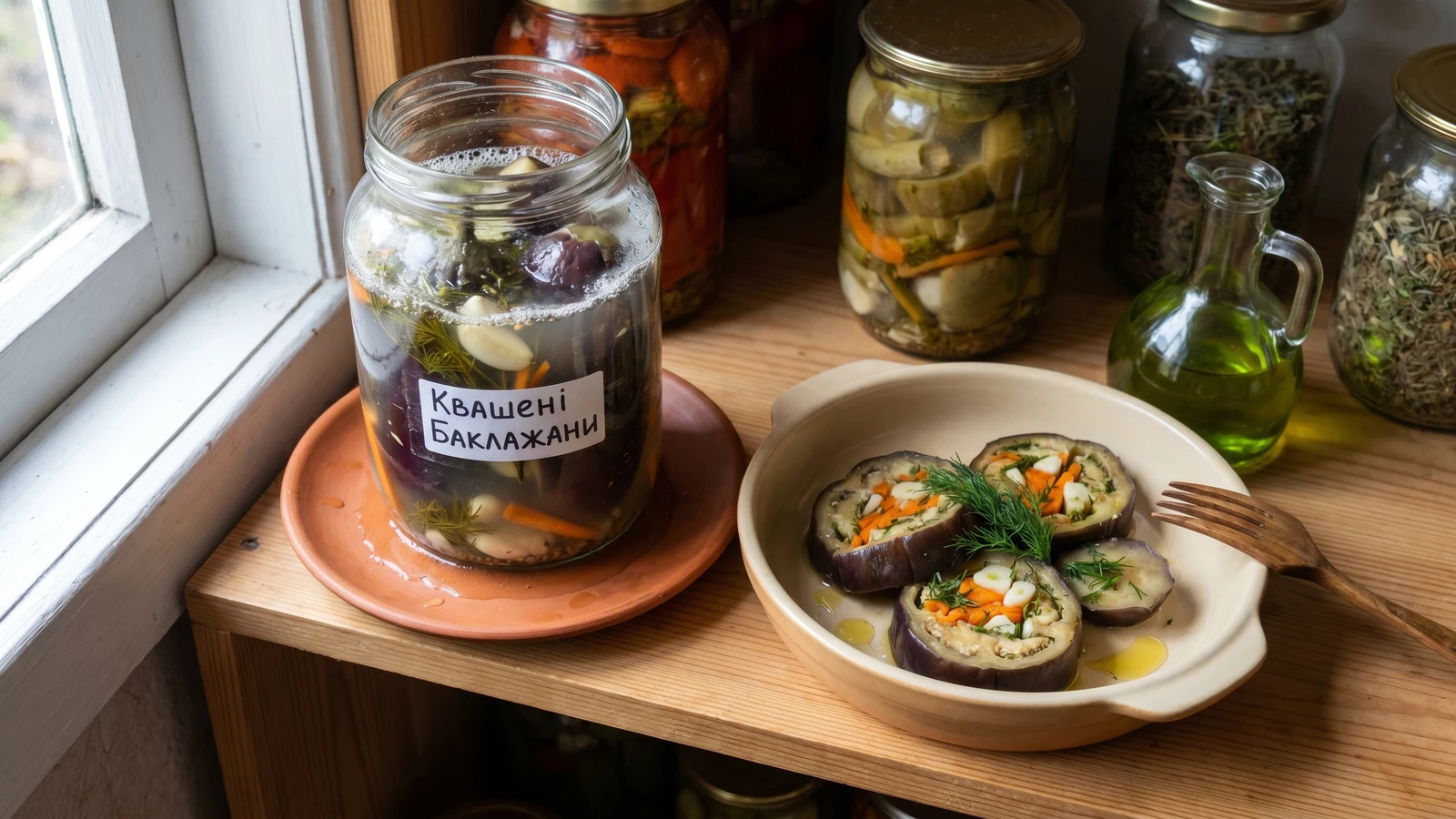
The aubergines come out of the jar striped purple, orange, and dill-green, sour enough to wake your mouth and tender enough to eat like a small meal.
The first thing is the color: purple skins darkened by brine, carrot glowing orange from the slit, dill caught in every fold like someone packed summer into a jar and told it to behave until January. These are not little side pickles you chase around the plate. Kvasheni baklazhany eat like a small cold meal, sliced thick, glossy with unrefined sunflower oil, with bread close by because the juices are half the point.
This belongs to the southern steppe and to the litnya kuhnia, the summer kitchen, when aubergines come in by the crate and nobody sensible tries to eat them all at once. You blanch them just until they give under a thumb, press out their bitter water, then stuff them with carrot, garlic, dill, and celery leaf. Aunt Nadia wrote only, "press until it sounds right," which is comic until you hear the wet squelch stop and the aubergine become quiet under the board.
The one thing that decides the dish is submersion. Four percent brine, weighed against the water, and every stuffed aubergine held under it. Above the brine, trouble. Below it, the souring begins, steady and old, the same kitchen logic that kept whole watermelons, tomatoes, and aubergines alive long after the garden went black.
Stuffed fermented aubergines are especially at home across Ukraine's south, including Kherson, Odesa, Mykolaiv, and Bessarabian kitchens, where aubergines, peppers, tomatoes, garlic, and dill define the late-summer table. The method belongs to kvashennia, lacto-fermentation, a vernacular preservation culture older than sealed vinegar canning and still argued over by village cooks: some add celery root, some sweet pepper, some tie each aubergine with celery stalk like a parcel.
Quantity
12, about 1.5 kg total
Quantity
2 large
coarsely grated
Quantity
1 small root or 2 stalks
finely chopped
Quantity
1 small
finely sliced
Quantity
8 cloves
crushed
Quantity
1 large bunch
chopped, stems kept
Quantity
1 small bunch
chopped
Quantity
1 small
thinly sliced
Quantity
1.5 litres
Quantity
60g (4 percent of water weight)
Quantity
2
for tannin
Quantity
2 tablespoons
to serve
| Ingredient | Quantity |
|---|---|
| small aubergines | 12, about 1.5 kg total |
| carrotscoarsely grated | 2 large |
| celery root or celery stalksfinely chopped | 1 small root or 2 stalks |
| sweet red pepper (optional)finely sliced | 1 small |
| garliccrushed | 8 cloves |
| dillchopped, stems kept | 1 large bunch |
| celery leaves or flat leafy celerychopped | 1 small bunch |
| hot pepper (optional)thinly sliced | 1 small |
| water | 1.5 litres |
| sea salt | 60g (4 percent of water weight) |
| blackcurrant, cherry, or oak leaves (optional)for tannin | 2 |
| unrefined sunflower oilto serve | 2 tablespoons |
Wash the aubergines and trim the stems short without cutting into the flesh. Make one long slit down each aubergine, stopping before the ends so it opens like a little book but stays whole. Small aubergines are better here; big ones turn woolly before the centre sours properly.
Bring a large pot of salted water to a lively boil and lower in the aubergines in batches. Cook them until the skin darkens and the flesh gives when you press it with a spoon, but before they collapse. Think tender, not limp. Lift them out into a colander.
Lay the warm aubergines slit-side down on a tray, cover with a board, and weight it with jars or a heavy pan. Let them press until the bitter brownish juices run out and the loud wet squelch becomes a soft sigh when you touch them. This is the step that makes the stuffing stay bright instead of muddy.
Mix the grated carrot, celery, sweet pepper if using, garlic, chopped dill, celery leaves, and hot pepper if you like it sharp. Scrunch it once with clean hands so the garlic wakes up and the herbs stain everything green. It should smell bossy, fresh, and a little too garlicky; the brine will calm it.
Open each slit and pack in a spoonful or two of the carrot mixture, enough that the aubergine looks full but can still close. Tie each one with a dill stem, celery strand, or plain kitchen string if it wants to burst open. Nobody at the table will inspect the knots.
Stir 60g salt into 1.5 litres water until dissolved. This is a 4 percent brine, weighed against the water, not guessed by mood. Fermentation is forgiving in many places; the salt percentage is not one of them.
Put dill stems and tannin leaves, if using, in the bottom of a clean jar or crock. Pack the stuffed aubergines snugly on top, pour over the brine, and weigh them down so nothing floats above the surface. Set the jar on a plate because a working jar likes to announce itself.
Leave at cool room temperature, out of direct sun. The brine will cloud, the jar may hiss, and the garlic smell will soften into something rounder. Start tasting after three days; by five to seven days the aubergines should be sour through the middle, the carrot still bright, the flesh tender but holding its shape. When they taste right to you, move them to the fridge.
To serve, lift out a few aubergines, slice them thickly across the belly, and spoon a little brine over the cut faces. Finish with unrefined sunflower oil, Ukraine in a bottle of oil, and more dill if the bunch is sitting there looking useful. Eat cold with bread, potatoes, or a plate of beans.
1 serving (about 165g)
Culinary guides, cultural storytelling, and the editorial depth that makes cooking meaningful.
Discover Culinary ExplorerChef Lesia
The tomatoes go from garden-red to brick-red while the peppers slump and the garlic waits. By the end, the spoon leaves a path and the whole south fits in one jar.

Chef Lesia
A jar of grated beets turns ordinary water into sour red light, the kind that wakes borshch from inside instead of shouting over it.

Chef Lesia
Raw garlic, salt, and green sunflower oil turn into a sauce that announces itself from the doorway, sharp enough for pampushky, potatoes, grilled meat, and any tired Tuesday plate.

Chef Lesia
The gravy should start dark as wet bark, then soften when smetana goes in. Spoon it over buckwheat, potatoes, or mlyntsi and nobody asks where the meat went.