Culinary Explorer
A cooking platform built around craft, culture, and the stories behind what we eat.
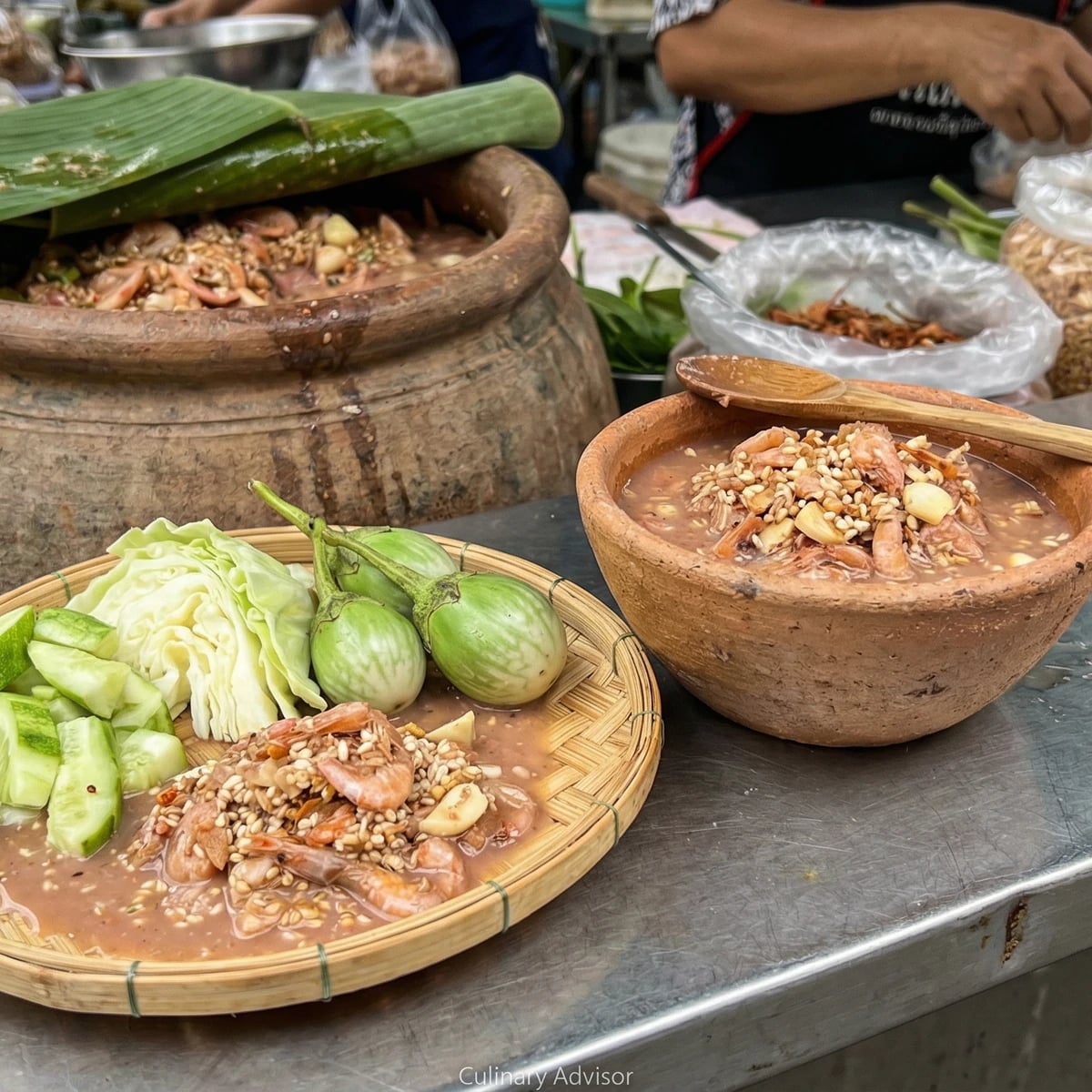
Fermented Shrimp Condiment (Kung Jom)
Created by Chef Fai
Three ingredients, five days, and salt-tolerant bacteria do the rest. Kung jom is kapi's rougher, chunkier ancestor: the ferment that taught Thai cooks what shrimp could become.
Fermentation is the invisible pillar beneath all of Thai cooking. Every time you reach for fish sauce, you're reaching for a ferment. Every time you spoon kapi (shrimp paste) into a kreung tam, you're using a ferment. Nam pla, kapi, pla ra, tua nao: these aren't just ingredients. They're the products of time, salt, and microorganisms doing work that no technique can replicate. Ajarn always said: "Before you learn to cook, learn what fermentation gives you. Without it, Thai food doesn't exist."
Kung jom is fermentation at its most stripped-down. Three ingredients. Tiny shrimp, coarse salt, roasted rice. You mix them. You pack them into a jar. You wait. That's it. No pounding, no drying, no processing. The salt creates an environment where only halophilic (salt-tolerant) bacteria and lactic acid bacteria survive. Everything else dies. The roasted rice (khao khua) provides starch, carbohydrates for those lactic acid bacteria to feed on. As they eat the starch, they produce lactic acid, dropping the pH, souring the mixture, and preserving the shrimp. The proteins in the shrimp break down into amino acids, which is where the umami comes from. That's not magic. That's microbiology.
Kapi is the refined cousin. Kapi gets pounded smooth, dried in the sun, compressed into blocks. Kung jom skips all of that. The shrimp stay whole, chunky, rough. You can see individual shrimp bodies in the jar. It's the condiment that coastal and riverine communities made before anyone had time to process shrimp paste into something polished. It's raw, pungent, and proudly unfinished. That roughness is the identity.
You eat kung jom the way you eat any Thai condiment: alongside rice, with raw vegetables, folded into a nam prik, or fried quickly in a wok with chili and garlic to take the edge off. It's salty, funky, and deeply savory. If you understand what kung jom does, you understand why fish sauce exists, why kapi exists, why Thai food tastes like nothing else on earth. The ferment is the foundation. Remove it and you remove the identity.
Ingredients
very fresh tiny shrimp (kung foy or small coastal shrimp)
Quantity
500g
heads on, rinsed and thoroughly drained
coarse sea salt
Quantity
150g (30% of shrimp weight)
raw sticky rice (khao niew)
Quantity
3 tablespoons
for roasting and pounding
| Ingredient | Quantity |
|---|---|
| very fresh tiny shrimp (kung foy or small coastal shrimp)heads on, rinsed and thoroughly drained | 500g |
| coarse sea salt | 150g (30% of shrimp weight) |
| raw sticky rice (khao niew)for roasting and pounding | 3 tablespoons |
Where cooking meets culture.
Culinary guides, cultural storytelling, and the editorial depth that makes cooking meaningful.
Discover Culinary Explorer