Culinary Explorer
A cooking platform built around craft, culture, and the stories behind what we eat.
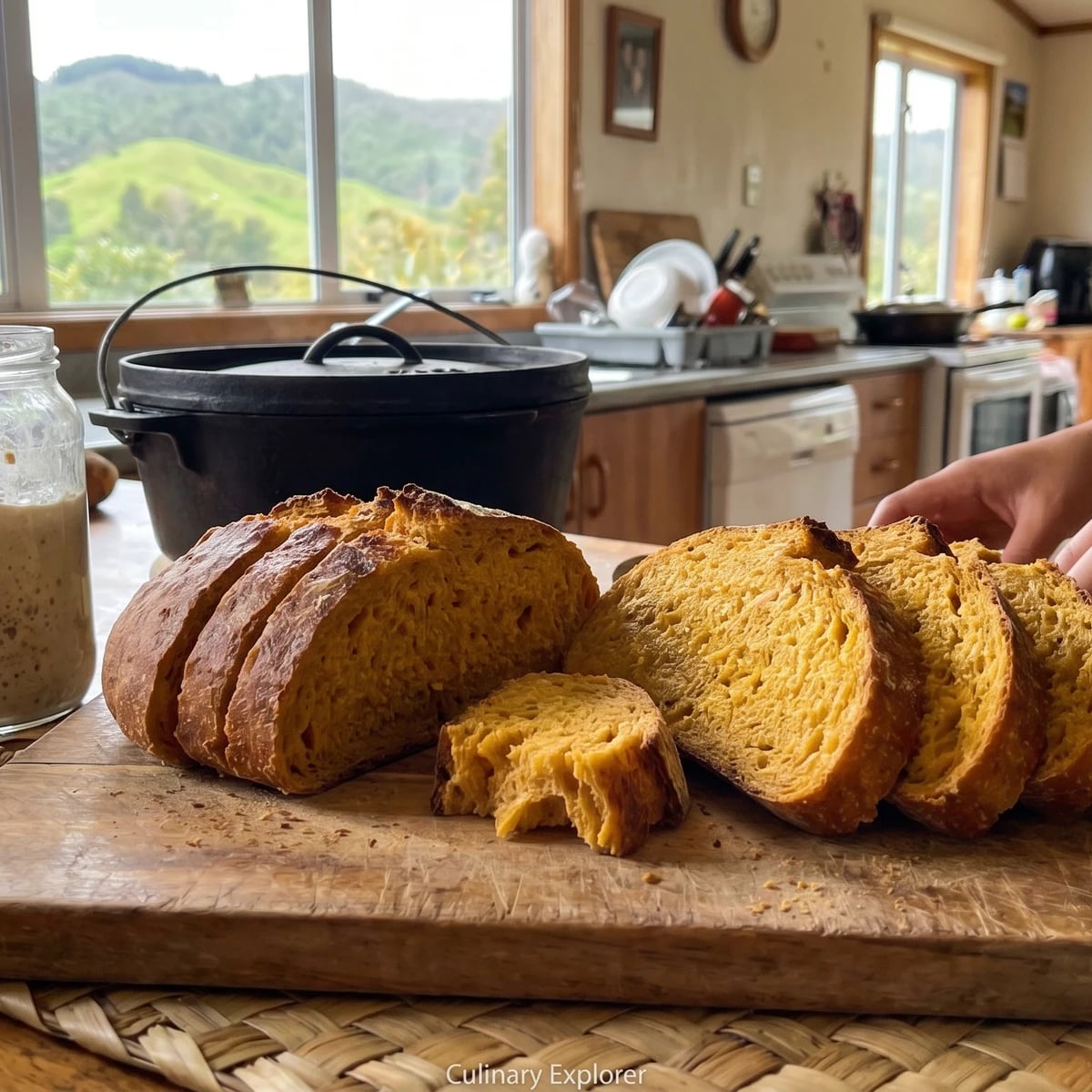
Kūmara Rēwena Parāoa (Māori Sweet-Potato Sourdough)
Created by Chef Makoa
Māori rēwena parāoa from Aotearoa, raised by a living kūmara bug instead of commercial yeast, folded with mashed sweet potato and wholemeal until the loaf bakes tangy, tender, and ready for a shared table.
The canoe came south carrying relatives, not cargo. In Aotearoa, this is Māori kai, Māori food, and the carried relative here is kūmara, sweet potato, coaxed into cooler whenua, land, by people who knew how to read a slope, a frost, a storage pit. Hawaiʻi calls its cousin ʻuala. The Cook Islands and Rapa Nui keep close cousins of that name too. One ocean, one canoe, one root.
Rēwena parāoa, fermented bread, came later, when flour entered the house and Māori cooks made a living bug do the lifting. No packet yeast here. The rēwena bug is the starter, a jar that bubbles and smells gently sour, a little sweet, a little earthy, and if you treat it right it keeps going from loaf to loaf. Like any living thing, it tells on you. Too cold, it sulks. Too hot, it dies. No blame the bug. Feed it, warm it, wait.
I cook this one open-handed because Aotearoa is not my home seat. My hands learned kalo on Oʻahu, but this bread belongs to Māori whānau, family, and to the marae, the communal meeting ground, where food carries relationship as much as hunger. For the deep tikanga, the right customs, of the marae table, sit with Māori elders and tradition-bearers. They should tell their own story.
In your kitchen, keep it simple. Let the bug get lively, fold in the mashed kūmara and wholemeal, and give the dough the time it asks for. The loaf should come out with a brown crust, a soft golden crumb, and that quiet sour edge that says somebody kept the line alive.
Ingredients
kūmara (sweet potato)
Quantity
1 small (about 8 ounces / 225 g)
peeled and diced
water
Quantity
1 1/2 cups
for cooking the kūmara, reserved after simmering
raw sugar
Quantity
1 tablespoon
| Ingredient | Quantity |
|---|---|
| kūmara (sweet potato)peeled and diced | 1 small (about 8 ounces / 225 g) |
| waterfor cooking the kūmara, reserved after simmering | 1 1/2 cups |
| raw sugar | 1 tablespoon |
Where cooking meets culture.
Culinary guides, cultural storytelling, and the editorial depth that makes cooking meaningful.
Discover Culinary Explorer