Culinary Explorer
A cooking platform built around craft, culture, and the stories behind what we eat.
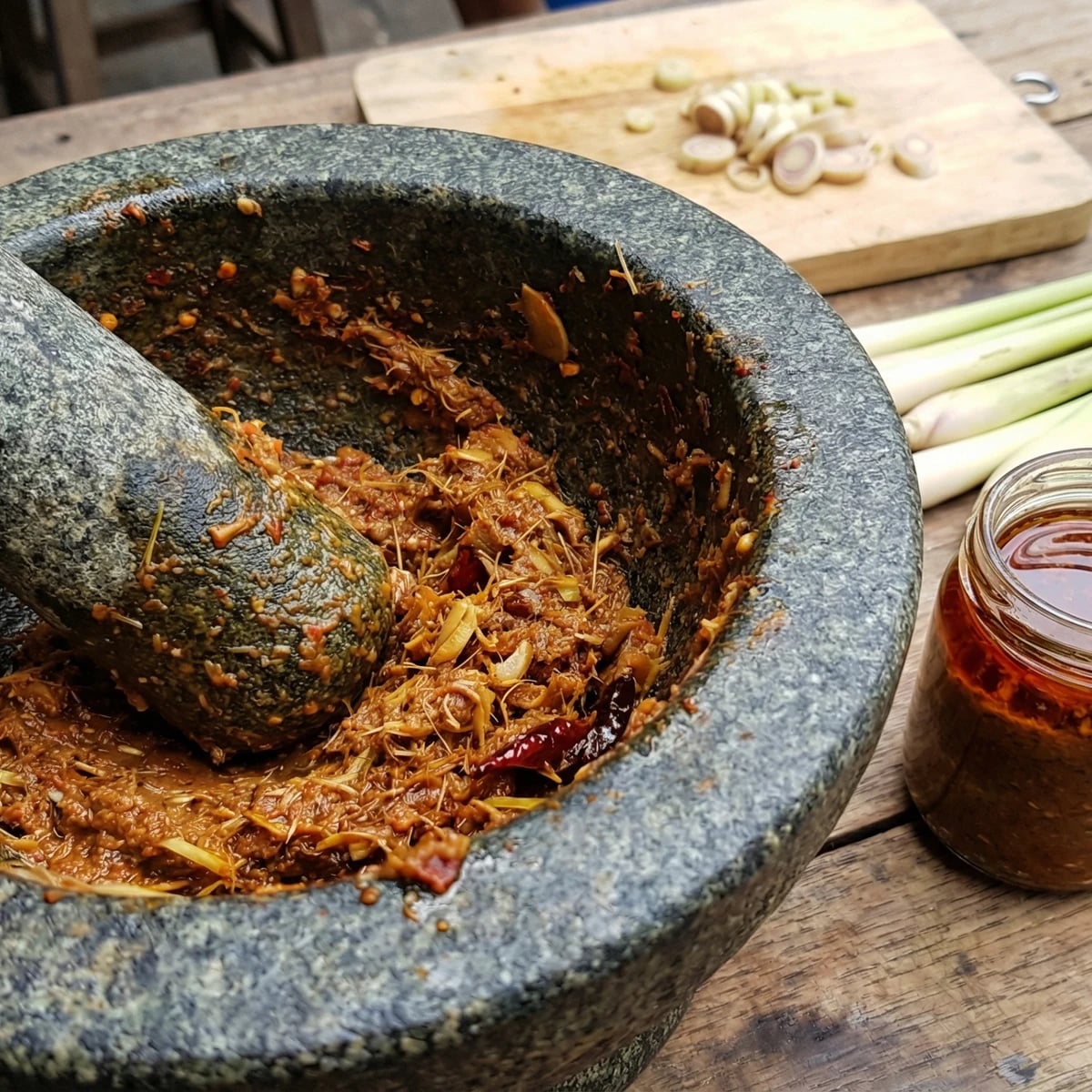
Tom Yum Paste (Kreung Tom Yum)
Created by Chef Fai
Tom yum is the one dish that breaks the kreung tam rule. This paste breaks it back. Every aromatic that normally floats whole in the broth, pounded into a concentrated bomb you can jar, store, and deploy in minutes.
Here's the paradox. Tom yum is the single dish in the Thai system that doesn't use a kreung tam. Ajarn always said: every Thai dish starts with a pounded paste, except soups infused with whole herbs. Tom yum is the exception. Lemongrass, galangal, kaffir lime leaves, whole, bruised, dropped into broth.
So why am I teaching you a tom yum paste?
Because a kreung tom yum takes the exception and brings it back into the system. You pound those same aromatics into a concentrated base that you can jar, refrigerate, freeze, and pull out whenever you want tom yum on a Tuesday night without prepping fourteen ingredients from scratch. It's the kreung tam framework applied to the one dish that normally escapes it. That's not breaking a rule. That's understanding the rule well enough to bend it.
The mortar order matters here. Lemongrass and galangal are tough, fibrous, stubborn. They go in early and they take work. The chilies and garlic break down faster. The shrimp paste goes in last because it's wet and it binds. Kaffir lime zest is the most volatile, the last dry ingredient before the kapi, because those citrus oils evaporate if you pound them too long. Every ingredient enters the krok at the right moment for a reason. The order isn't tradition for tradition's sake. It's physics.
Ajarn taught me: if you understand why each ingredient is in the mortar, you understand what it does in the dish. Lemongrass gives you citral, that sharp lemon-herb brightness. Galangal gives you piney, gingery heat that's nothing like ginger. Kaffir lime zest is pure citrus oil intensity. Dried chilies bring smokiness and color. Fresh chilies bring sharp, immediate heat. Cilantro root is earthy and anchoring. Shrimp paste is the umami depth charge. Shallots and garlic are the aromatic foundation of every kreung tam in the Thai system. You're not just pounding ingredients. You're building a flavor architecture.
Fry this paste in oil until it's fragrant and the oil separates. That's how you know it's cooked. Then it goes into a jar. Two tablespoons in hot water with shrimp, mushrooms, fish sauce, lime, and you have tom yum in ten minutes. That's the power of the kreung tam. The work happens once. The cooking happens fast.
Ingredients
lemongrass (takhrai)
Quantity
6 stalks
tender inner core only, thinly sliced
galangal (kha)
Quantity
8 slices (1/4 inch thick)
roughly chopped
kaffir lime zest (makrut)
Quantity
zest of 3 fruits
finely removed, no white pith
| Ingredient | Quantity |
|---|---|
| lemongrass (takhrai)tender inner core only, thinly sliced | 6 stalks |
| galangal (kha)roughly chopped | 8 slices (1/4 inch thick) |
| kaffir lime zest (makrut)finely removed, no white pith | zest of 3 fruits |
Where cooking meets culture.
Culinary guides, cultural storytelling, and the editorial depth that makes cooking meaningful.
Discover Culinary Explorer