
Chef Makoa
ʻAwa (Hawaiian Kava Root Drink)
Hawaiian ʻawa is kava root kneaded cool, strained into an ʻapu coconut cup, and shared with a quiet hand: earthy, peppery, calming, and far older than the tourist glass.
A cooking platform built around craft, culture, and the stories behind what we eat.
Created by
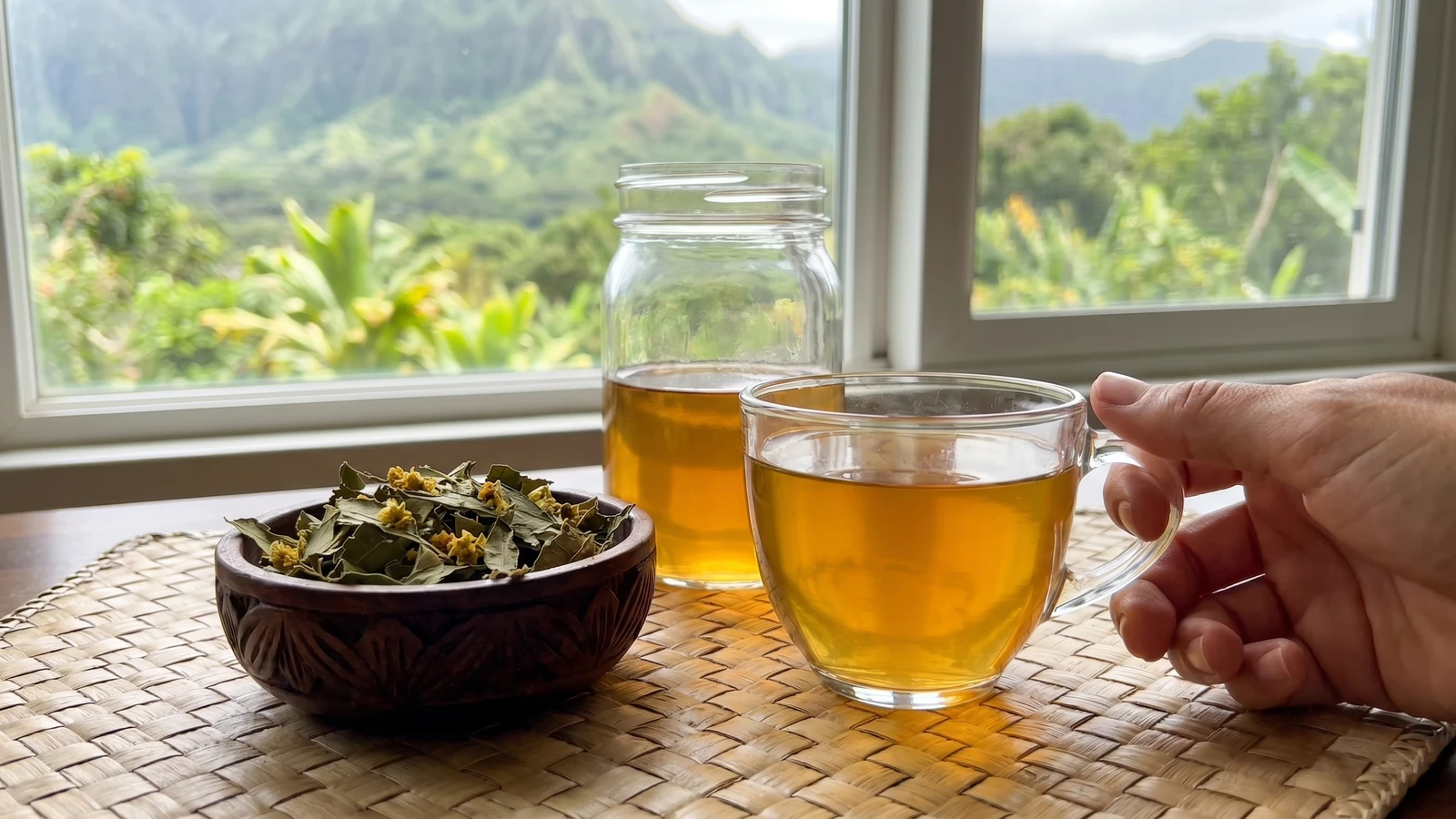
A quiet Hawaiian cup from native koʻokoʻolau leaves, steeped golden and clean, the kind of comfort the kūpuna kept close beside māmaki and shared without fuss.
My kumu used to say some plants talk loud and some talk soft. Koʻokoʻolau is the soft kind. This is Hawaiian, from the dry ridges and open places of Hawaiʻi where the native Bidens, the little yellow-flowered daisy kin, has long been brewed into a clean golden cup beside māmaki, another Hawaiian lāʻau kī, herbal tea.
Back home on Oʻahu, the old people didn't make every healing thing heavy. Some cups were just comfort, a little bitter-green, a little sweet from the leaf itself, passed across the table when the body wanted quiet. ʻĀina, kānaka, meaʻai, land, people, food, all one conversation. This tea sits in that place.
Across the Triangle, every island keeps its own plant knowledge. Hawaiʻi has koʻokoʻolau and māmaki; Sāmoa has its own lāʻau, Tonga its own vai faitoʻo, Tahiti and the Cooks their own rongoā and rāʻau. I don't blur those together. One ocean, one canoe, one root, yes, but every island knows which leaf is theirs.
So bring it into the kitchen easy. A kettle, a covered pot, a strainer. No need make it precious. Just source it pono, steep it gently, and don't ask one small leaf to carry more than it came to carry.
Koʻokoʻolau is the Hawaiian name for native Bidens species, especially the yellow-flowered plants brewed by kūpuna as a mild lāʻau kī, or herbal tea, often spoken of beside māmaki in Hawaiian home practice. Before imported black tea and plantation-store drinks became common, island families used native and canoe-carried plants for everyday comfort as well as deeper healing work. The careful line matters: this is Hawaiian plant knowledge, not a generic Polynesian beverage, and the medical parts belong with trained lāʻau lapaʻau practitioners and the families who carry that kuleana.
Quantity
4 cups
Quantity
2 tablespoons
food-grade and correctly identified
Quantity
1 teaspoon
Quantity
1 thin slice
| Ingredient | Quantity |
|---|---|
| fresh water | 4 cups |
| dried koʻokoʻolau leaves and stemsfood-grade and correctly identified | 2 tablespoons |
| local honey (optional) | 1 teaspoon |
| lemon or calamansi (optional) | 1 thin slice |
Use only food-grade koʻokoʻolau that was correctly identified, cleaned, and dried by somebody you trust. This is lāʻau, plant medicine, but we keep our words humble: it can comfort the body, it doesn't promise miracles. If you're pregnant, nursing, taking medicine, or managing a health condition, ask your clinician before making it a daily cup.
Bring 4 cups water just to a gentle boil, then pull it off the heat. No need punish the leaf. Koʻokoʻolau gives a clear golden color and a soft green-herbal smell when you treat it steady.
Add the dried koʻokoʻolau, cover, and steep 8 to 10 minutes. The tea should turn pale gold to amber, with a clean grassy smell and a little earthy backbone, not bitter and dark. If you want it stronger, add more leaf next time before you boil it hard.
Strain into cups and drink warm, or chill it for later. Add honey or a thin slice of citrus only if you like, but taste it plain first so you know the plant's own voice. Eat what you have, drink what the land gives, and keep it simple.
1 serving (about 240g)
Culinary guides, cultural storytelling, and the editorial depth that makes cooking meaningful.
Discover Culinary ExplorerChef Makoa
Hawaiian ʻawa is kava root kneaded cool, strained into an ʻapu coconut cup, and shared with a quiet hand: earthy, peppery, calming, and far older than the tourist glass.

Chef Makoa
Hawaiʻi's lilikoʻi, pressed from wrinkled passion fruit and chilled sweet-tart, is everyday local refreshment: bright enough straight, gentle enough to stir into POG.

Chef Makoa
Hawaiʻi's māmaki leaf steeped into a smooth, earthy, caffeine-free cup, old household lāʻau brought forward for a quiet modern kitchen.

Chef Makoa
Maui's everyday cooler, lilikoi, orange, and guava stirred bright and cold, the kind of juice that belongs beside plate lunch, beach picnics, and hotel breakfast trays.