
Chef Jeong-sun
Aehobak-guk (애호박국, Korean Zucchini Soup)
A clean summer soup of Korean zucchini and salted shrimp, built on quick anchovy-kelp broth and finished before the half-moons lose their shape on a weeknight table.
A cooking platform built around craft, culture, and the stories behind what we eat.
Created by
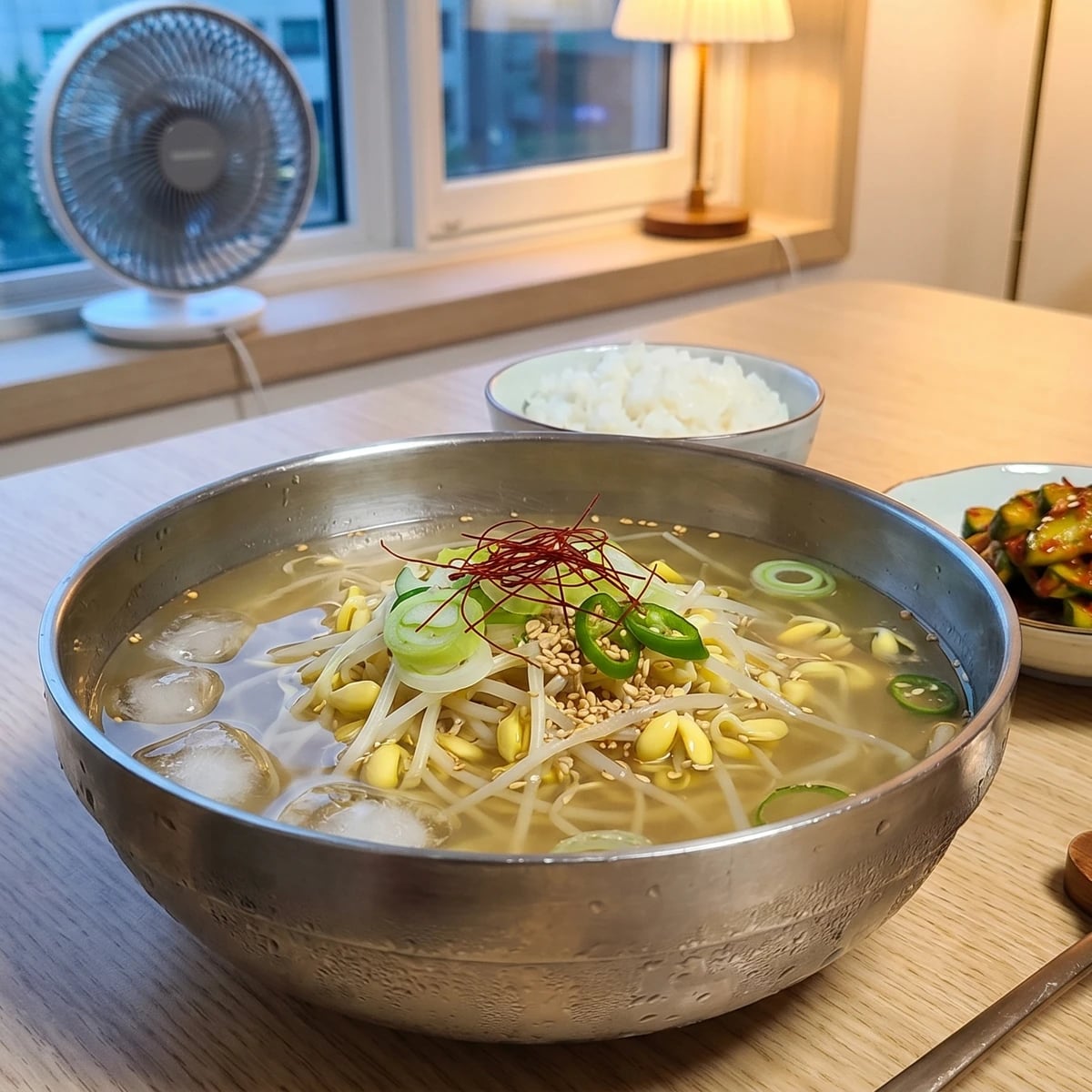
A cold Korean soup built from the water the soybean sprouts cooked in, chilled hard and seasoned lightly so the broth stays clean, nutty, and sharp enough for summer rice.
This dish lives or dies by one instruction: save the cooking water. People drain the soybean sprouts and then wonder why the soup tastes thin. The broth is not an afterthought here. It is the dish, pale and nutty from the sprouts, sharpened with vinegar only after it cools.
My mother made kongnamul-naengguk when the kitchen was too hot for another pot at dinner. She boiled the sprouts in the morning, cooled the broth in a metal bowl, and by evening there was soup cold enough to wake up plain rice. It belongs to the weeknight table, especially in summer, but don't treat it carelessly because it is quick. Soybean sprouts punish a loose hand: lift the lid halfway and the beany smell follows you around the room.
Boil them one way only: lid on from the start, or lid off the whole time. I give you the lid-on way because it keeps the broth clean and the sprouts crisp. Season after chilling, not before, because cold dulls salt and sharpens garlic differently. 손맛 is real; I measure it anyway, so the next bowl comes out the same.
Naengguk, cold soup, is a practical Korean summer category rather than a court dish: homes made it from cucumber, seaweed, young radish kimchi brine, or soybean sprout broth when heat made heavy soups unwelcome. Kongnamul became a dependable everyday ingredient because soybeans sprout quickly, cheaply, and in every season, which is why kongnamul-guk and its chilled version are found more often on home tables than in formal records. The cold version keeps the same thrift as the hot soup but changes the seasoning, using vinegar and a harder chill to make the broth refreshing.
Quantity
300g
rinsed and brown tails trimmed if desired
Quantity
6 cups
Quantity
2 cloves
lightly crushed
Quantity
1 teaspoon, plus 1/4 teaspoon more if needed
Quantity
1 tablespoon
Quantity
2 tablespoons
Quantity
1 teaspoon
Quantity
1
thinly sliced
Quantity
1
thinly sliced
Quantity
1/2 teaspoon
Quantity
small pinch
Quantity
4 to 6
| Ingredient | Quantity |
|---|---|
| soybean sprouts (kongnamul)rinsed and brown tails trimmed if desired | 300g |
| water | 6 cups |
| garliclightly crushed | 2 cloves |
| kosher salt | 1 teaspoon, plus 1/4 teaspoon more if needed |
| soup soy sauce (guk-ganjang) | 1 tablespoon |
| rice vinegar | 2 tablespoons |
| sugar | 1 teaspoon |
| scallionthinly sliced | 1 |
| green chili or mild green pepper (optional)thinly sliced | 1 |
| toasted sesame seeds | 1/2 teaspoon |
| chili threads (sil-gochu) (optional) | small pinch |
| ice cubes (optional) | 4 to 6 |
Rinse the soybean sprouts in two changes of cold water, lifting them out so grit stays behind. Trim only the brown tails if they bother you. Do not remove every root for a weeknight soup; the sprouts should still look like themselves.
Put the sprouts, water, crushed garlic, and 1 teaspoon salt in a medium pot. Cover with a tight lid and bring to a boil over medium-high heat. Once it boils, cook 6 minutes without lifting the lid. Pick one method and stay with it: lid on the whole time, or lid off the whole time. Halfway is where the harsh beany smell comes from.
Turn off the heat. Lift the sprouts into a bowl with tongs, then strain the cooking broth into a clean heatproof bowl or pitcher. Discard the garlic. Let both sprouts and broth cool 15 minutes at room temperature, then refrigerate until very cold, at least 2 hours.
When the broth is cold, stir in the soup soy sauce, rice vinegar, and sugar. Taste it now. It should be clean, lightly salty, and a little sharper than you expect, because the sprouts and ice will soften it. Add the extra 1/4 teaspoon salt only if the broth tastes flat.
Divide the chilled sprouts among four bowls and pour the seasoned cold broth over them. Add scallion, green chili if using, sesame seeds, and a few chili threads. Add ice only at the table, just before eating, so the broth stays bright instead of watery.
1 serving (about 430g)
Culinary guides, cultural storytelling, and the editorial depth that makes cooking meaningful.
Discover Culinary Explorer
Chef Jeong-sun
A clean summer soup of Korean zucchini and salted shrimp, built on quick anchovy-kelp broth and finished before the half-moons lose their shape on a weeknight table.

Chef Jeong-sun
A Masan coast monkfish stew with firm white meat, gelatin at the bones, soybean sprouts for crunch, and a red broth seasoned to carry the fish, not bury it.

Chef Jeong-sun
A weeknight fish roe stew with radish and crown daisy in a clean spicy broth, where the whole success depends on adding the roe late enough that it sets tender, not chalky.

Chef Jeong-sun
Late-summer mallow leaves rubbed with salt until the bitter green water runs off, then simmered in a clean doenjang broth with dried shrimp, the quiet soup a Korean weeknight deserves.