
Chef Jeong-sun
Aehobak-bokkeum (Korean Stir-Fried Zucchini)
Tender Korean zucchini half-moons cooked quickly over real heat, seasoned with salted shrimp so the squash tastes deeper than oil and still clean enough for a weeknight table.
A cooking platform built around craft, culture, and the stories behind what we eat.
Created by
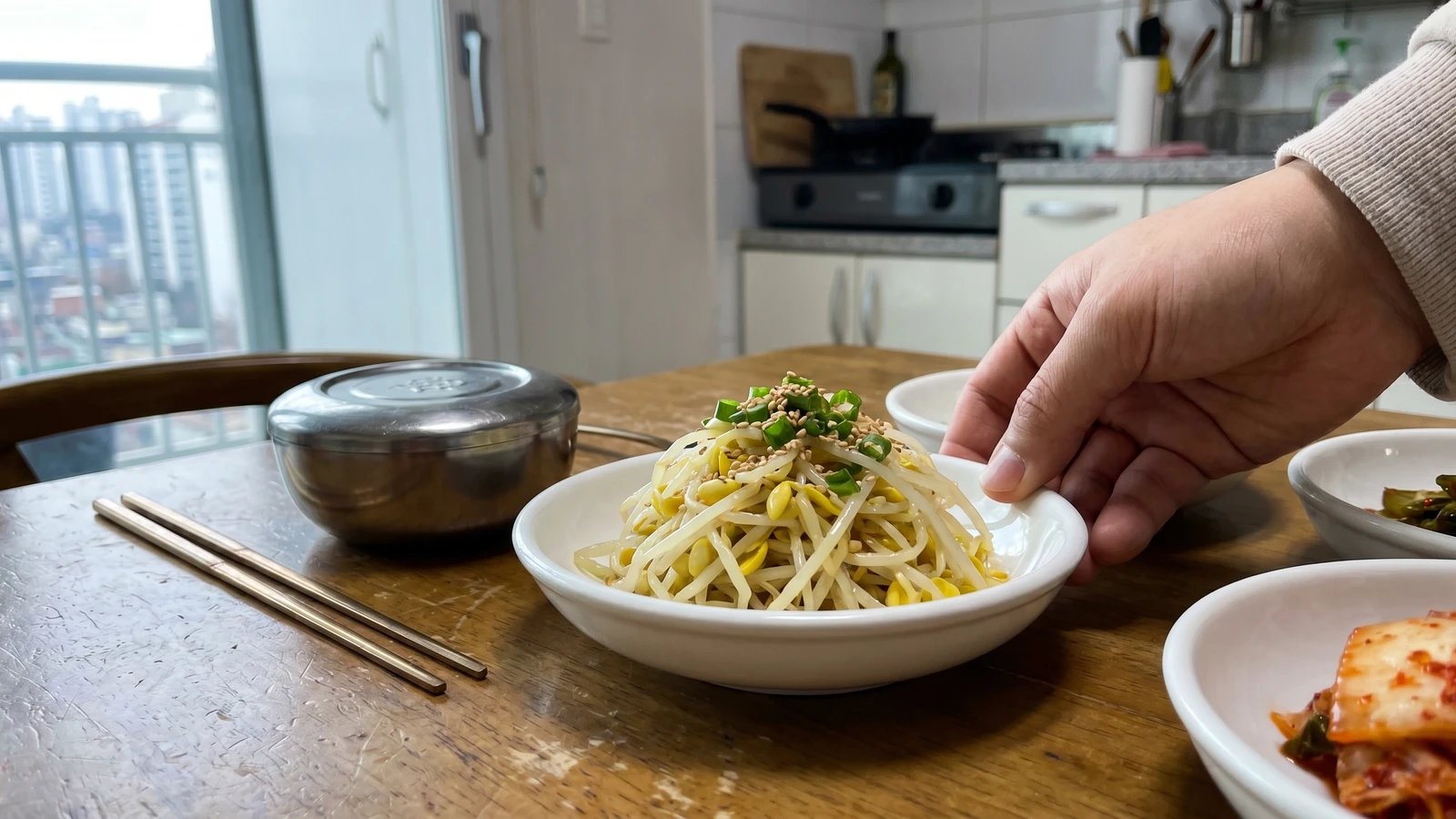
A clean, nutty weeknight banchan of soybean sprouts boiled properly, drained while warm, and seasoned by hand so the crunch stays clear and the garlic does not take over.
Kongnamul-muchim lives or dies by one small decision: lid on or lid off. Pick before the pot goes on the stove, then keep your promise. Half-cooked soybean sprouts hate cold air. Lift the lid in the middle and the kitchen will tell on you for an hour.
Soybean sprouts have been grown and eaten in Korea for centuries because they are cheap, quick to sprout, and useful through winter when fresh greens were scarce. Kongnamul appears across the everyday table as muchim (seasoned side dish), guk (soup), and in Jeonju bibimbap, where the sprout's clean crunch is part of the city's well-known bowl. This is home food, not palace food, and that is exactly why it deserves a careful record.
Quantity
450g
rinsed, loose hulls removed
Quantity
1 cup
Quantity
1 teaspoon, divided
Quantity
1
finely chopped
Quantity
1 small clove
minced very fine
Quantity
2 teaspoons
Quantity
1 teaspoon
Quantity
1 teaspoon
lightly crushed
Quantity
1/8 teaspoon
| Ingredient | Quantity |
|---|---|
| soybean sprouts (kongnamul)rinsed, loose hulls removed | 450g |
| water | 1 cup |
| kosher salt | 1 teaspoon, divided |
| scallionfinely chopped | 1 |
| garlicminced very fine | 1 small clove |
| toasted sesame oil | 2 teaspoons |
| soup soy sauce (guk-ganjang) (optional) | 1 teaspoon |
| toasted sesame seedslightly crushed | 1 teaspoon |
| gochugaru (Korean chili flakes) (optional) | 1/8 teaspoon |
Rinse the soybean sprouts in two changes of cold water, lifting them out so the loose yellow hulls stay behind. Pinch away any brown or tired root ends if they bother you, but do not spend the evening grooming every sprout. Drain well. Clean sprouts cook evenly, and the finished dish tastes cleaner.
Put the sprouts, 1 cup water, and 1/2 teaspoon salt in a medium pot. Choose one method now: lid on from the start and do not lift it, or lid off the whole time. I use lid on because the sprouts cook evenly in their own trapped heat. What you cannot do is peek halfway.
Set the covered pot over medium-high heat. Once you hear a steady boil, cook 8 minutes without opening the lid. Turn off the heat and let it stand 1 minute, still covered. The sprouts should bend easily, smell nutty and clean, and keep a clear crunch. Raw bean sprouts are not the goal here.
Drain the sprouts in a colander and shake off the water. Do not rinse them cold unless you are holding them for later. Warm sprouts drink the seasoning better, and that is why this small dish tastes finished instead of watery.
Move the warm sprouts to a mixing bowl. Add the scallion, minced garlic, sesame oil, sesame seeds, the remaining 1/2 teaspoon salt, and the soup soy sauce if using. Toss gently by hand or with tongs, lifting from the bottom so the sprouts do not break. Taste one sprout. It should be nutty, lightly salty, and still itself.
Let the seasoned sprouts sit 5 minutes, then taste again. Add a pinch more salt only if the center of the sprout tastes flat. Fold in the gochugaru if you want the light red version. Serve at room temperature as banchan with rice, soup, and whatever else the table has.
1 serving (about 105g)
Culinary guides, cultural storytelling, and the editorial depth that makes cooking meaningful.
Discover Culinary ExplorerChef Jeong-sun
Tender Korean zucchini half-moons cooked quickly over real heat, seasoned with salted shrimp so the squash tastes deeper than oil and still clean enough for a weeknight table.

Chef Jeong-sun
Tender Korean summer zucchini softened gently in the pan with saeujeot for salt and depth, finished with sesame so the vegetable stays sweet, green, and plainly itself.
Chef Jeong-sun
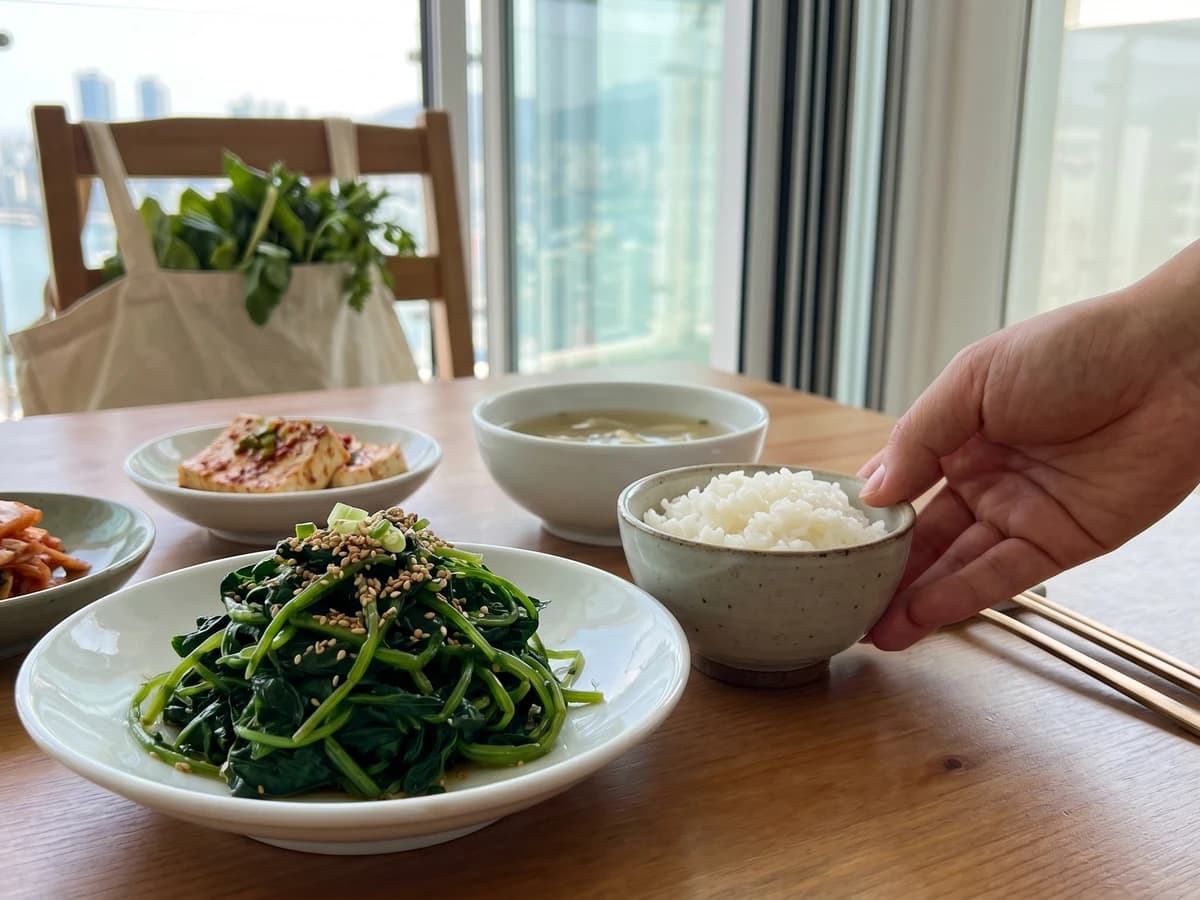
A bittersweet spring green from the southern shore, blanched just until pliant, then seasoned lightly so its clean coastal bitterness stays alive on the rice table.

Chef Jeong-sun
Torn king oyster or shiitake mushrooms, browned until their own water disappears, then finished with soy, garlic, sesame oil, and onion for a quiet banchan that earns its place.