
Chef Jeong-sun
Aehobak-guk (애호박국, Korean Zucchini Soup)
A clean summer soup of Korean zucchini and salted shrimp, built on quick anchovy-kelp broth and finished before the half-moons lose their shape on a weeknight table.
A cooking platform built around craft, culture, and the stories behind what we eat.
Created by
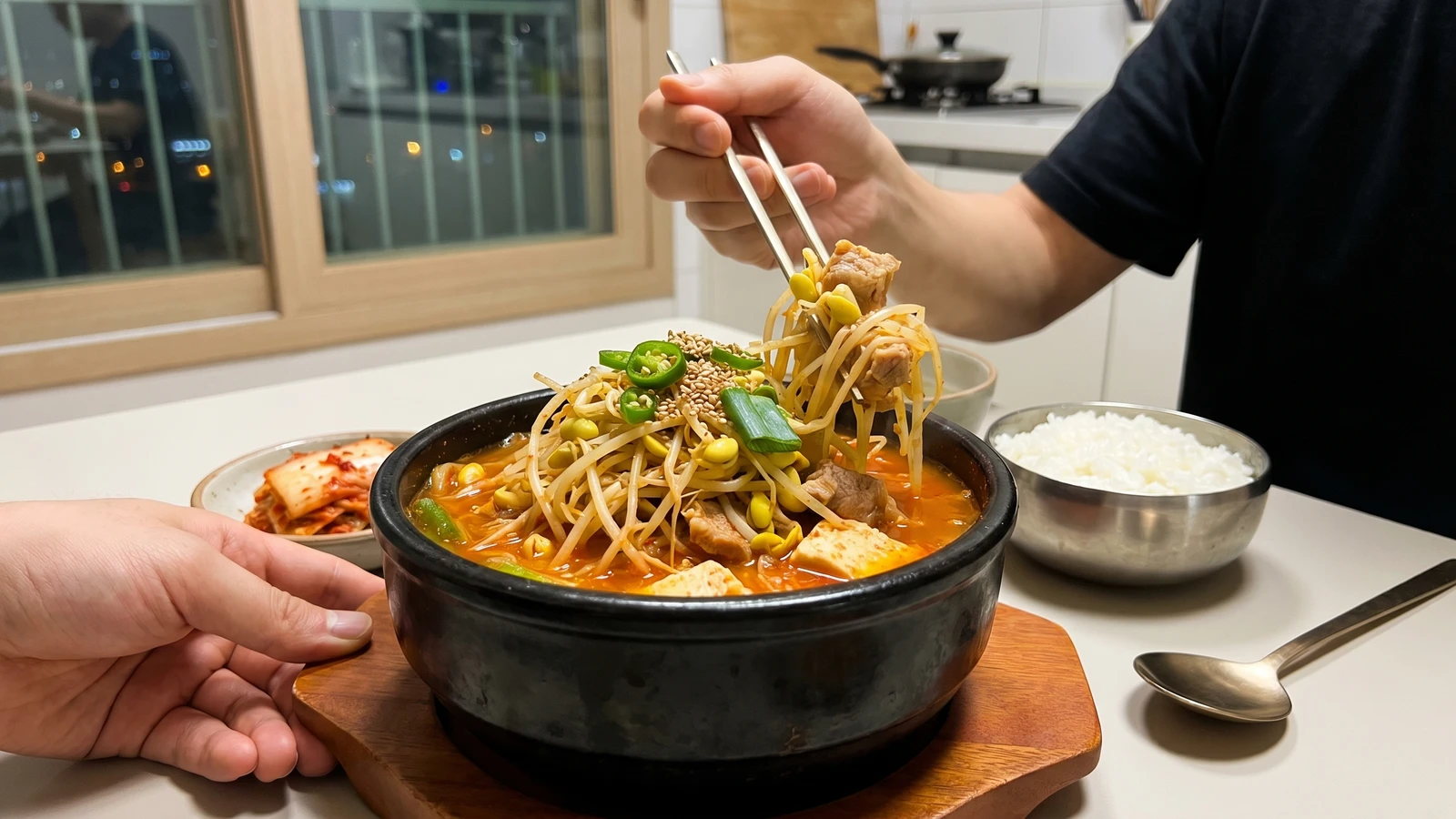
A weeknight soybean sprout stew that lives by one rule: cook the sprouts with the lid on or off the whole time, so the broth stays clean and the crunch remains.
Kongnamul-jjigae lives or dies by the lid. Soybean sprouts are cheap, plain, and unforgiving. If you trap them under a lid and then lift it halfway, the kitchen will tell on you before the table does. Lid on the whole time, or lid off the whole time. Choose once and don't fuss with it.
This is not kongnamul-guk (soybean sprout soup), the clear morning soup people eat when the body needs kindness. Jjigae is tighter, stronger, and more deliberate: a small pot of sprouts, pork or anchovy broth, gochugaru (Korean chili flakes), garlic, and scallion, cooked just long enough for the stems to bend but still snap under the teeth. The broth should be spicy and clean, not thick with gochujang. Let the soybean sprout taste like itself.
My teacher made me count the minutes from the boil, not from when I felt hopeful. Six minutes covered for the sprouts, then season and finish. Notebook 19 says 300 grams of sprouts to 3 cups broth, because less broth gives you jjigae and more gives you soup. 손맛 is real; I measure it anyway, so the next cook can make the same pot on a tired Tuesday night.
Soybean sprouts have been an everyday Korean ingredient for centuries because they grow quickly from stored beans, even when fresh vegetables are scarce. Jeonju is especially associated with kongnamul through its famous kongnamul-gukbap (soybean sprout soup with rice), while spicy kongnamul-jjigae belongs more to home kitchens and modest eateries than to formal records. Its history is the history of budget cooking: a handful of sprouts stretched with broth, chili, and sometimes a little pork to make a full table with rice.
Quantity
300g
rinsed, any brown tails trimmed
Quantity
120g
cut into bite-size pieces
Quantity
3 cups
Quantity
1 piece, about 3 inches square
Quantity
6
heads and guts removed
Quantity
1 tablespoon
Quantity
1/2 medium
sliced 1/4 inch thick
Quantity
1 tablespoon
Quantity
1 teaspoon
Quantity
1 tablespoon
Quantity
1 teaspoon soup soy sauce or 1/2 teaspoon fish sauce
Quantity
3 cloves
minced
Quantity
1/2 teaspoon, plus more only after tasting
Quantity
200g
cut into 1-inch cubes
Quantity
1
sliced on the diagonal
Quantity
2
cut into 2-inch lengths
Quantity
1 teaspoon
Quantity
1/2 teaspoon
| Ingredient | Quantity |
|---|---|
| soybean sprouts (kongnamul)rinsed, any brown tails trimmed | 300g |
| thin-sliced pork belly or pork shoulder (optional)cut into bite-size pieces | 120g |
| anchovy-kelp broth or water | 3 cups |
| dried kelp (dasima) (optional) | 1 piece, about 3 inches square |
| large dried anchovies (myeolchi) (optional)heads and guts removed | 6 |
| neutral oil | 1 tablespoon |
| onionsliced 1/4 inch thick | 1/2 medium |
| gochugaru (Korean chili flakes) | 1 tablespoon |
| gochujang (Korean chili paste) (optional) | 1 teaspoon |
| soy sauce | 1 tablespoon |
| soup soy sauce (guk-ganjang) or fish sauce | 1 teaspoon soup soy sauce or 1/2 teaspoon fish sauce |
| garlicminced | 3 cloves |
| kosher salt | 1/2 teaspoon, plus more only after tasting |
| firm tofu (optional)cut into 1-inch cubes | 200g |
| green chilisliced on the diagonal | 1 |
| scallionscut into 2-inch lengths | 2 |
| toasted sesame oil | 1 teaspoon |
| toasted sesame seeds (optional) | 1/2 teaspoon |
If you do not already have broth, put 3 cups water, the kelp, and the cleaned anchovies in a small pot. Bring just to a simmer over medium heat, pull the kelp out, and simmer the anchovies 8 minutes more. Strain. Kelp left too long turns the broth slick and bitter, and this stew needs a clean base.
Rinse the soybean sprouts in cold water and drain well. Trim only the brown or tired tails; don't sit there making them pretty for twenty minutes. The yellow heads and pale stems are the dish, so keep them whole and unbruised.
Heat the oil in a ttukbaegi or small heavy pot over medium heat. Add the pork, if using, and cook 3 to 4 minutes, until some fat renders and the edges lose their raw color. Add the onion and cook 2 minutes more. This small amount of pork is seasoning, not the whole meal.
Stir in the gochugaru and cook 20 to 30 seconds, just until the oil turns red. Add the gochujang only if you want a rounder, slightly thicker broth. One teaspoon is enough. Too much and every spoonful tastes like paste instead of soybean sprout.
Add the broth, soy sauce, soup soy sauce or fish sauce, garlic, salt, and soybean sprouts. Bring to a boil. Cover the pot and cook 6 minutes without lifting the lid. This is the rule: lid on the whole time, or lid off the whole time. Half-cooked sprouts meeting cold air make a harsh beany smell, and there is no garnish that fixes it.
Open the lid after the 6 minutes are done. Add the tofu, if using, and simmer uncovered 3 to 4 minutes, until the tofu is warmed through and the sprouts are flexible but still crunchy. Taste the broth now. Add salt in pinches only if it needs it, because the soy sauces have already done part of the work.
Add the green chili and scallions and simmer 1 minute. Turn off the heat and stir in the sesame oil. Scatter sesame seeds over the top if using. Carry the pot to the table with rice and one or two quiet banchan; the stew is strong enough to lead, but it should not shout.
1 serving (about 345g)
Culinary guides, cultural storytelling, and the editorial depth that makes cooking meaningful.
Discover Culinary ExplorerChef Jeong-sun
A clean summer soup of Korean zucchini and salted shrimp, built on quick anchovy-kelp broth and finished before the half-moons lose their shape on a weeknight table.

Chef Jeong-sun
A Masan coast monkfish stew with firm white meat, gelatin at the bones, soybean sprouts for crunch, and a red broth seasoned to carry the fish, not bury it.
Chef Jeong-sun
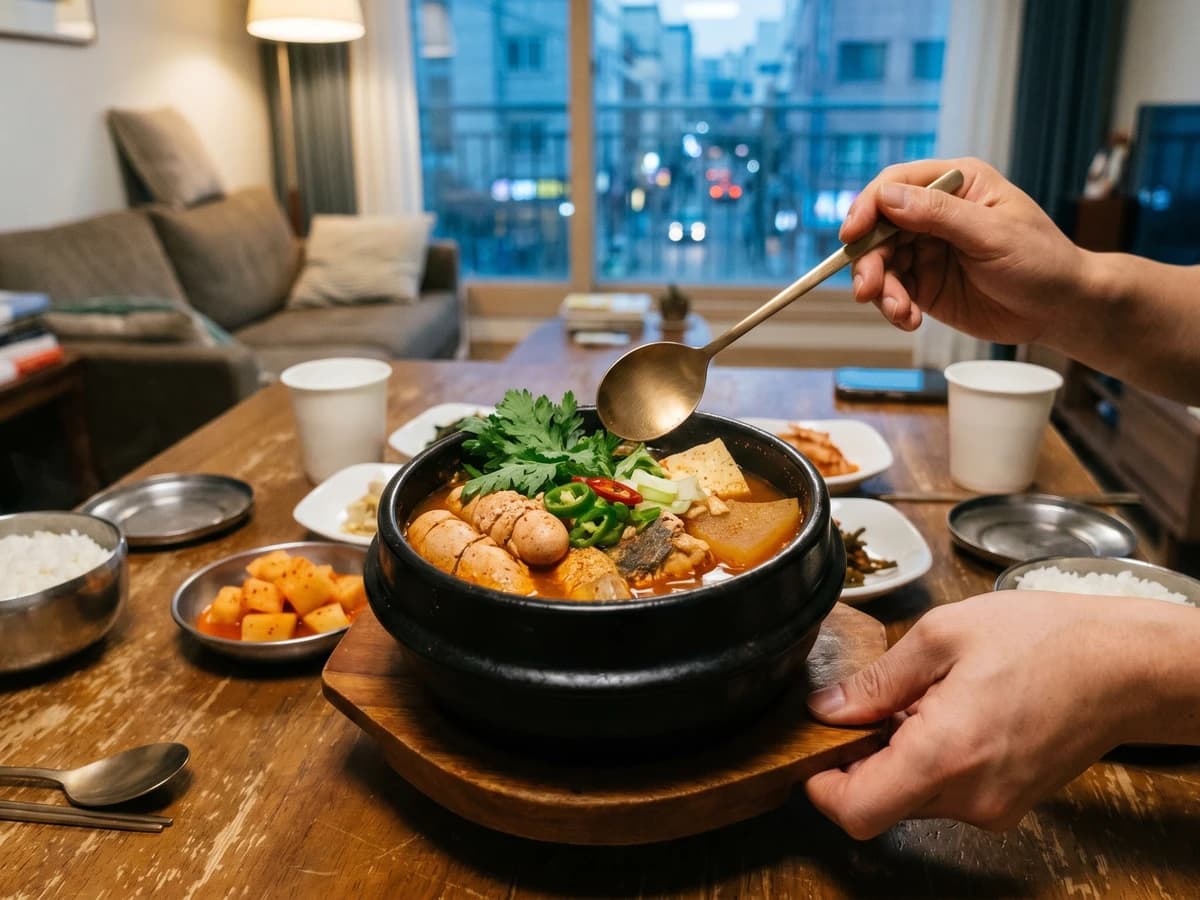
A weeknight fish roe stew with radish and crown daisy in a clean spicy broth, where the whole success depends on adding the roe late enough that it sets tender, not chalky.

Chef Jeong-sun
Late-summer mallow leaves rubbed with salt until the bitter green water runs off, then simmered in a clean doenjang broth with dried shrimp, the quiet soup a Korean weeknight deserves.