
Chef Klaus
Allgäuer Krautkrapfen
The Allgäu pan dish that makes a meal from noodle dough, winter kraut, onion, and fat: brown the cut sides first, then cook gently so the rolls hold.
A cooking platform built around craft, culture, and the stories behind what we eat.
Created by
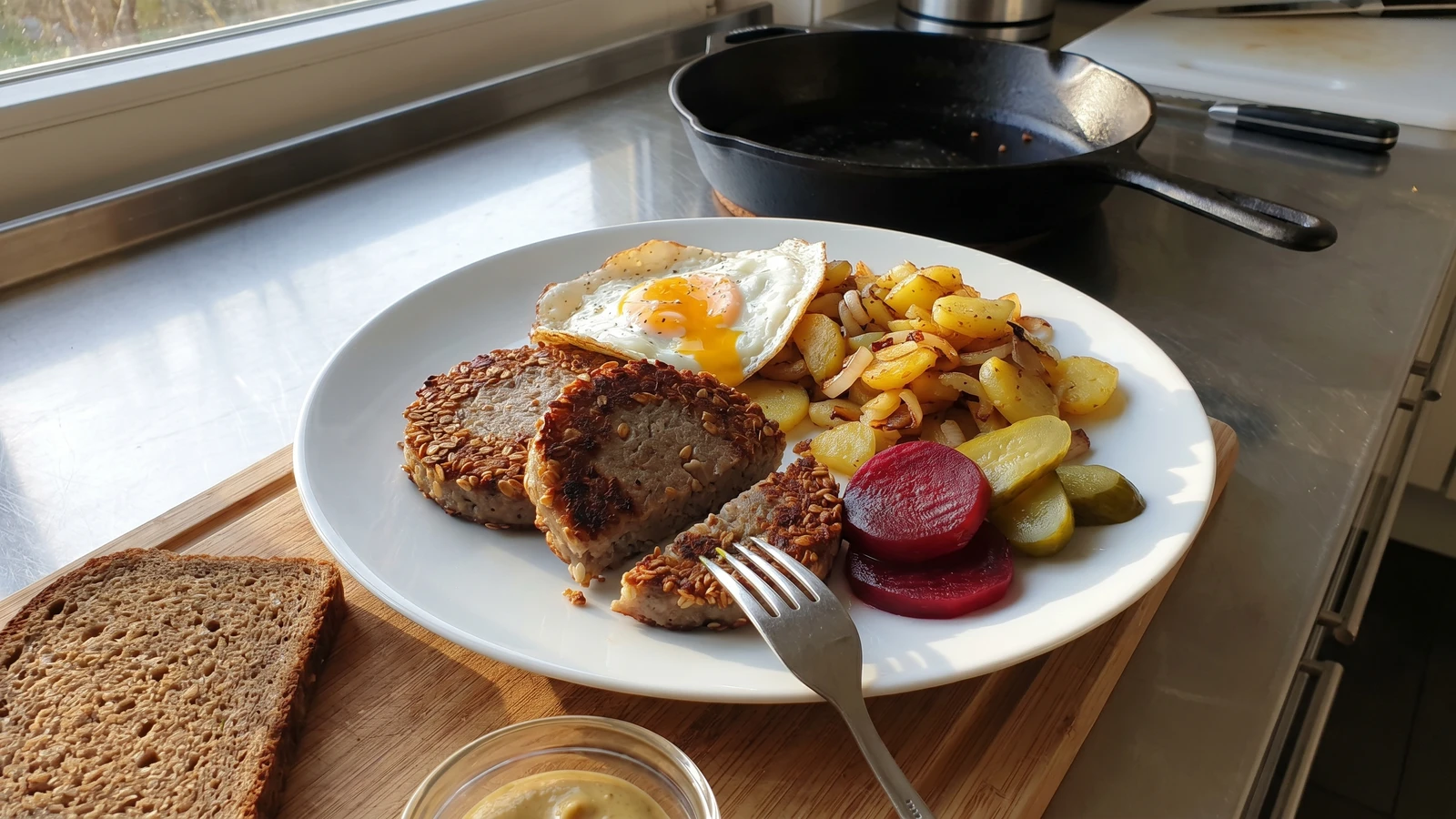
Bremen's pan-fried oat-and-pork sausage loaf belongs to the winter larder: thrift meat, groats, onion, and a hot pan doing honest work.
Knipp is Bremen and Lower Saxony food, winter food, and slaughter-day food. Pork head, belly, rind, liver if the butcher uses it, and oats or groats are cooked into a soft Grützwurst, a grain sausage, then chilled firm and fried in thick slices. Weggeworfen wird nichts. The cheap parts carry the flavour, and the oats stretch it into supper.
The regions argue over the grain and the shape. Bremen Knipp leans on oats and is often sliced like a loaf; Westphalian Stippgrütze is looser and often made with buckwheat groats; further north you meet other Grützwürste, some smoked, some liver-heavy, some meant for the kale pot. Im Norden anders, im Süden anders. This is not one national sausage with a different label.
The technique is the pan. Cut the Knipp thick, start it in a cold heavy skillet, and let the fat wake up slowly before you turn the heat higher. If the pan is ripping hot at the start, the outside burns before the oats have dried and set; start cool and it fries in its own fat, crisp at the edges and soft in the middle. Nicht aus dem Glas, and not from a packet either. Buy good Knipp from a butcher, or make the mixture properly and let it chill hard before frying.
Serve it with Bratkartoffeln, a fried egg, sour pickles, beetroot, or dark rye. Sharp things matter here because the sausage is rich. Würzen, Fett, Salz zum Schluss, then eat while the crust still answers the fork.
Knipp belongs to the north German Schlachtefest, the autumn and winter slaughter season when pork head, rind, liver, and scraps were boiled, chopped, and bound with grain so nothing from the animal was wasted. In Bremen and the surrounding Lower Saxon countryside, oat-based Grützwurst became a local standard by the 19th century, while neighbouring Westphalia kept its related Stippgrütze looser and often buckwheat-based. The dish shows the old grain-and-pork line of northern German cooking: rye and oats in the north, more potato and dumpling traditions as the table moves south.
Quantity
800g
chilled firm
Quantity
1.2kg
boiled the day before and peeled
Quantity
2
finely sliced
Quantity
3 tablespoons
divided
Quantity
4
Quantity
4
sliced
Quantity
200g
drained
Quantity
4 slices
Quantity
to taste
Quantity
1 teaspoon
| Ingredient | Quantity |
|---|---|
| butcher-made Knipp (Bremer Grützwurst)chilled firm | 800g |
| waxy potatoesboiled the day before and peeled | 1.2kg |
| onionsfinely sliced | 2 |
| lard or neutral oildivided | 3 tablespoons |
| eggs | 4 |
| sour picklessliced | 4 |
| pickled beetrootdrained | 200g |
| dark rye bread (optional) | 4 slices |
| salt and black pepper | to taste |
| marjoram (optional) | 1 teaspoon |
Keep the Knipp cold until the pan is ready, then cut it into 2cm slices. Cold Knipp cuts cleanly and holds its shape long enough to form a crust; warm Knipp smears, breaks, and fries into paste before the oats can set.
Slice the cold boiled potatoes into thick coins. Heat 2 tablespoons lard in a wide skillet and fry the potatoes in a single layer until browned on both sides, adding the onions only after the potatoes have colour. Onion goes in later because it burns before a cold potato has time to crisp. Season at the end so the potatoes stay dry on the surface.
Lay the Knipp slices in a cold heavy skillet with the remaining tablespoon of lard, then set the heat to medium-low. Let the fat render and the grain dry slowly for 8 to 10 minutes before moving the slices. Runter mit der Temperatur. If you poke too soon, you tear away the crust you came for.
When the underside is dark golden and firm at the edge, turn the slices with a broad spatula and fry the second side another 6 to 8 minutes. The middle should stay soft and savoury while the edges go crisp; if fat pools in the pan, spoon a little over the top so the oats fry instead of drying out.
Fry the eggs in the potato pan or a small clean skillet until the whites are set and the yolks are still soft. The yolk is the sauce here, so don't cook it hard unless you want dry sausage and regret.
Put the Knipp beside the Bratkartoffeln, slide an egg on top or next to it, and add sour pickles and beetroot. Taste before salting because butcher-made Knipp is usually well seasoned already. Serve dark rye if you want the northern table complete. Schön ist, was schmeckt.
1 serving (about 700g)
Culinary guides, cultural storytelling, and the editorial depth that makes cooking meaningful.
Discover Culinary ExplorerChef Klaus
The Allgäu pan dish that makes a meal from noodle dough, winter kraut, onion, and fat: brown the cut sides first, then cook gently so the rolls hold.

Chef Klaus
Swabian egg pasta turned toward the apple cellar: fresh Spätzle tossed with browned butter, tart apples, cinnamon, and enough restraint to stay supper, not cake.

Chef Klaus
Hesse's pork goulash belongs to Apfelwein country: shoulder, onions, and tart cider cooked low until the cheap cut turns soft and the sauce lands sweet-sour, not sour-sweet.

Chef Klaus
The old sweet supper that saves yesterday's loaf: stale bread drinks eggy milk, the pan stays moderate, and butter browns the outside only after the centre has set.