Chef Takumi
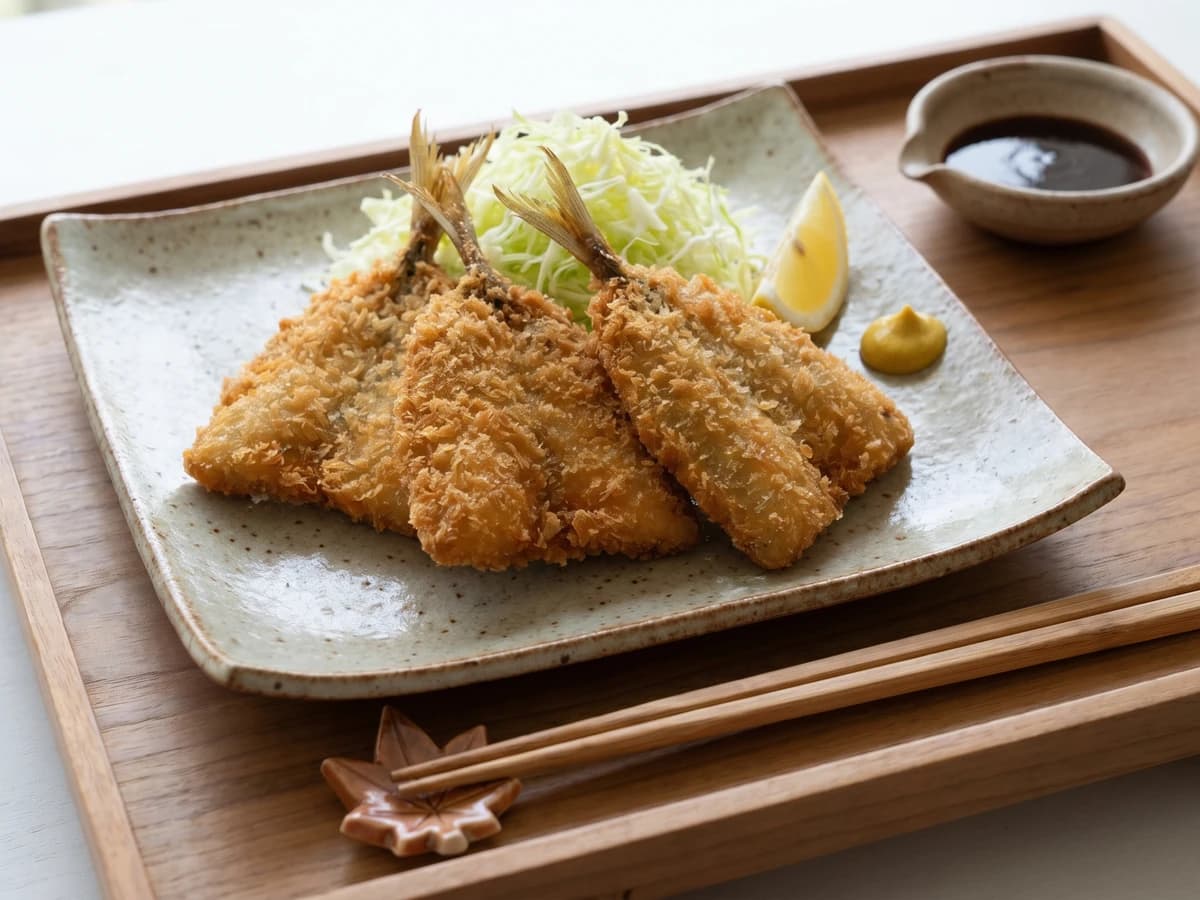
Aji Fry (アジフライ, panko-fried horse mackerel)
Aji fry is weeknight fish with no mystery: fresh horse mackerel opened cleanly, breaded lightly, and fried until the panko crackles while the flesh stays sweet.
A cooking platform built around craft, culture, and the stories behind what we eat.

Created by
Katsudon is comfort with timing: a just-fried tonkatsu, shallow soy-dashi broth, and softly set egg, slid over rice before the cutlet forgets it was crisp.
Katsudon looks like a contradiction: fry a pork cutlet until crisp, then lay it in broth. The nervous cook sees a sodden dinner coming. It isn't. We use a shallow pool of dashi and soy, and only for a moment, so the egg settles around the cutlet while a few ridges stay dry and crisp.
The first secret is timing. Fry the tonkatsu, slice it cleanly, then bring it to the rice at once. The broth should be strong because the rice will soften it, and it should be scant because the cutlet isn't being stewed. Pour the egg loosely, not beaten into perfect smoothness, so it sets in soft gold and white streaks instead of one rubbery sheet.
This is donburi, bowl food complete in the hand, and it belongs to the everyday table as much as to a student before an exam. Katsu sounds like katsu (勝つ), to win, so the bowl has gathered a cheerful superstition around it. We need not be dramatic. A good cutlet, clear dashi, hot rice, and nothing hidden under sauce: that is victory enough.
Katsudon grew from tonkatsu, a Meiji-period yōshoku pork cutlet that Japanese cooks remade with panko and rice. The egg-bound style is often placed in Tokyo's Waseda area in the Taishō period, though several shops and regions keep competing origin claims. Fukui and Aizu are known for sauce katsudon, where the cutlet is dipped in Worcestershire-style sauce instead of simmered with egg; this recipe follows the dashi, onion, and egg style now common across much of Japan.
Quantity
2 cups
for dashi
Quantity
1 piece (about 5g)
Quantity
10g
Quantity
2 (120 to 150g each)
about 1/2 inch thick
Quantity
1/2 teaspoon
Quantity
1/4 cup
Quantity
1
beaten, for breading
Quantity
1 cup
Quantity
about 3 cups
for frying
Quantity
3/4 cup
from the dashi above
Quantity
2 tablespoons
Quantity
2 tablespoons
Quantity
1 teaspoon
Quantity
1/2 small
thinly sliced
Quantity
3
loosely beaten, for finishing
Quantity
4 cups
Quantity
4 to 6 stems
cut into 1-inch lengths
Quantity
for serving
| Ingredient | Quantity |
|---|---|
| cold waterfor dashi | 2 cups |
| konbu (dried kelp) | 1 piece (about 5g) |
| katsuobushi (bonito flakes) | 10g |
| boneless pork loin chopsabout 1/2 inch thick | 2 (120 to 150g each) |
| fine sea salt | 1/2 teaspoon |
| all-purpose flour | 1/4 cup |
| large eggbeaten, for breading | 1 |
| panko breadcrumbs | 1 cup |
| neutral oilfor frying | about 3 cups |
| fresh dashifrom the dashi above | 3/4 cup |
| koikuchi shōyu (regular Japanese soy sauce) | 2 tablespoons |
| hon mirin | 2 tablespoons |
| sugar | 1 teaspoon |
| onionthinly sliced | 1/2 small |
| large eggsloosely beaten, for finishing | 3 |
| cooked hot Japanese short-grain rice | 4 cups |
| mitsuba (optional)cut into 1-inch lengths | 4 to 6 stems |
| shichimi tōgarashi (optional) | for serving |
Wipe the konbu with a damp cloth, but don't wash it. Put it in the cold water and bring it up slowly over low heat, about ten minutes. Pull the konbu when the water trembles and small bubbles climb the side of the pot. Add the katsuobushi all at once, take the pot off the heat, and leave it alone for two minutes. Strain through a cloth and let it drip on its own.
Pat the pork dry. Make a few shallow cuts through the fat and membrane along the edge, then pound any thick spots until each chop is even. Salt both sides and let the pork stand for ten minutes, then pat it dry again. Those little cuts keep the cutlet from curling in the oil, so it browns evenly instead of arching like it has opinions.
Set out the flour, beaten egg, and panko in three shallow dishes. Dust each chop lightly with flour and shake off the excess, dip it in egg, then press it into the panko so the crumbs cling in an even coat. Rest the breaded pork on a rack for five to ten minutes. A thin flour layer helps the egg grip; too much turns pasty. The rest lets the coating settle so it doesn't shed the moment it meets the oil.
Heat the oil to 340 F to 350 F, or 170 C to 175 C. A panko crumb should bubble briskly without darkening at once. Fry the cutlets one at a time until deep golden, about three minutes on the first side and two minutes on the second, and the center reaches 145 F or 63 C. Rest on a rack for three minutes, then slice each cutlet crosswise into five or six strips, keeping the shape together.
Stir together the 3/4 cup dashi, shōyu, mirin, and sugar until the sugar dissolves. Taste it. It should be stronger than a soup, because the rice, pork, and egg will soften it. This broth seasons the whole bowl, so thin broth makes a thin katsudon.
Work one serving at a time. Put half the seasoned broth and half the sliced onion in an oyakodon pan or a small skillet. Simmer for two to three minutes, until the onion loses its raw edge but still has shape. Cooking the onion first sweetens the broth and keeps the cutlet from sitting too long in liquid.
Lay one sliced cutlet over the onion, still held in its cutlet shape. Pour half the loosely beaten finishing eggs around and across the top, leaving a few panko ridges exposed. Cover and cook for 45 to 60 seconds, until the egg is softly set and glossy, with no clear liquid running. Don't stir or flip. Movement breaks the crust and muddies the bowl. Repeat with the second cutlet.
Divide the hot rice between two deep donburi bowls. Slide each panful onto the rice in one motion, using a spatula if needed to keep the cutlet together. Finish with mitsuba and a light pinch of shichimi tōgarashi if you like. Serve at once, while the rice catches the broth and the cutlet still has crisp edges.
1 serving (about 680g)
Culinary guides, cultural storytelling, and the editorial depth that makes cooking meaningful.
Discover Culinary ExplorerChef Takumi
Aji fry is weeknight fish with no mystery: fresh horse mackerel opened cleanly, breaded lightly, and fried until the panko crackles while the flesh stays sweet.
Chef Takumi
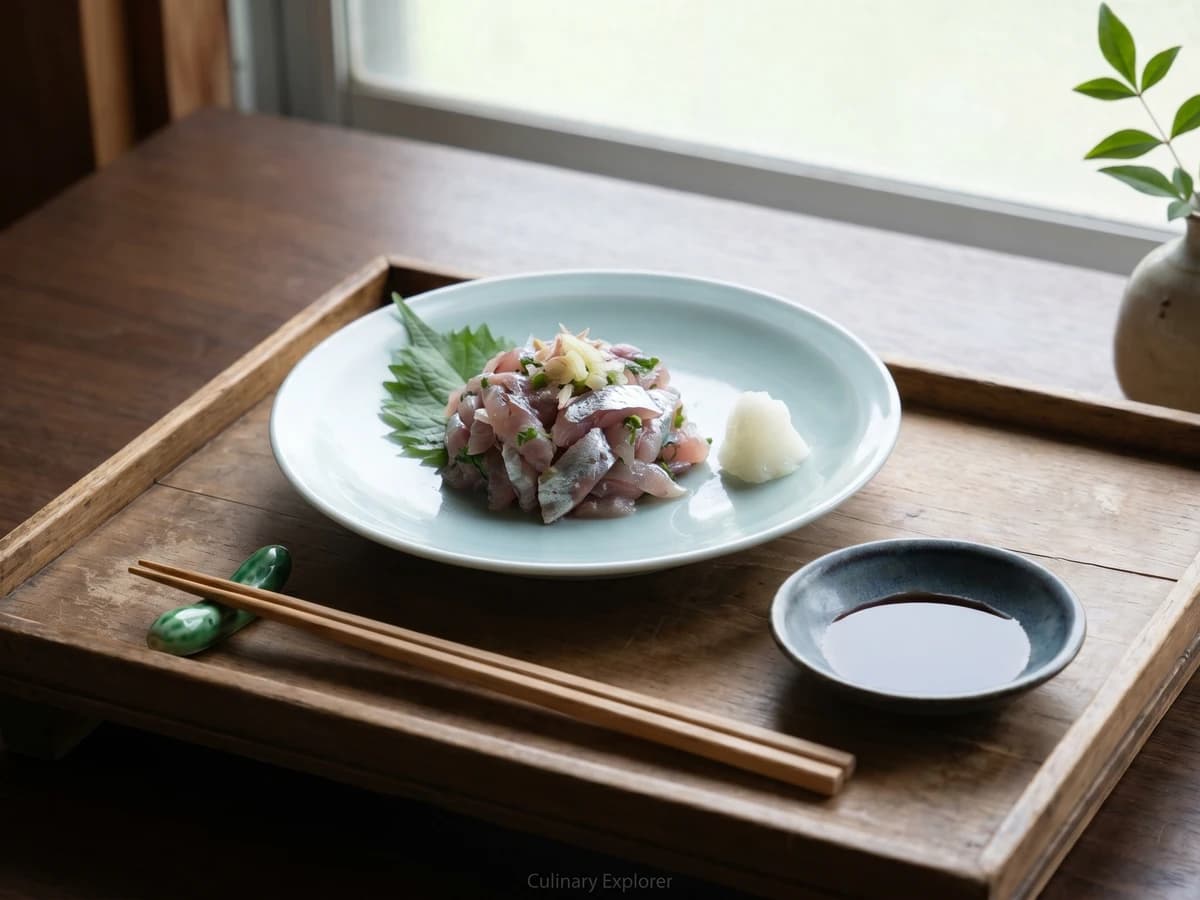
Summer horse mackerel, chopped just enough to catch ginger and scallion, becomes a cool, clean main dish with rice. The secret is fresh fish and a knife that does not bruise it.

Chef Takumi
Akashi-yaki is not sauced takoyaki. It is egg-rich batter, tender octopus, and clear dashi, cooked pale and soft so each ball can be dipped like a small custard dumpling.
Chef Takumi
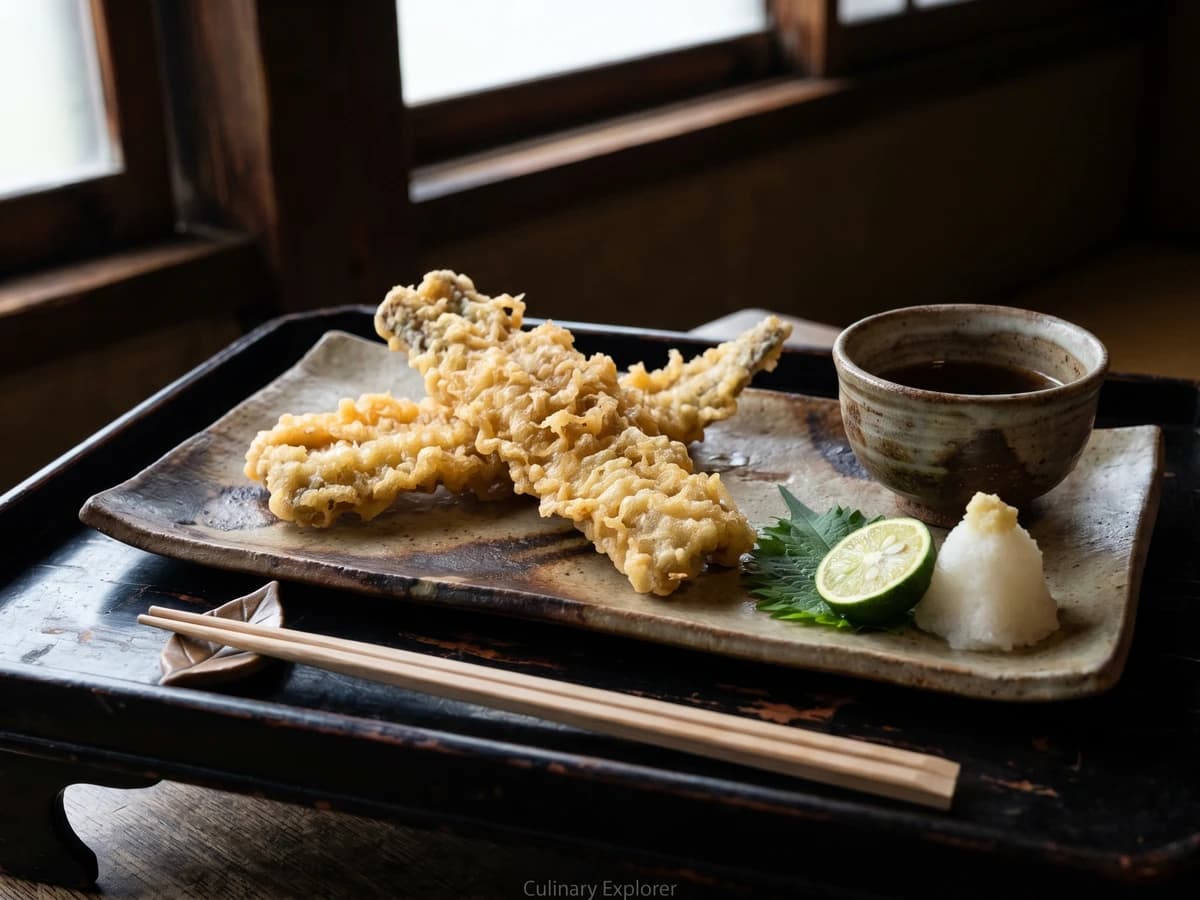
A whole anago looks like a test of nerve. It is mostly good sourcing, a dry skin, cold batter, and oil hot enough to leave the eel sweet under its lace.