Culinary Explorer
A cooking platform built around craft, culture, and the stories behind what we eat.
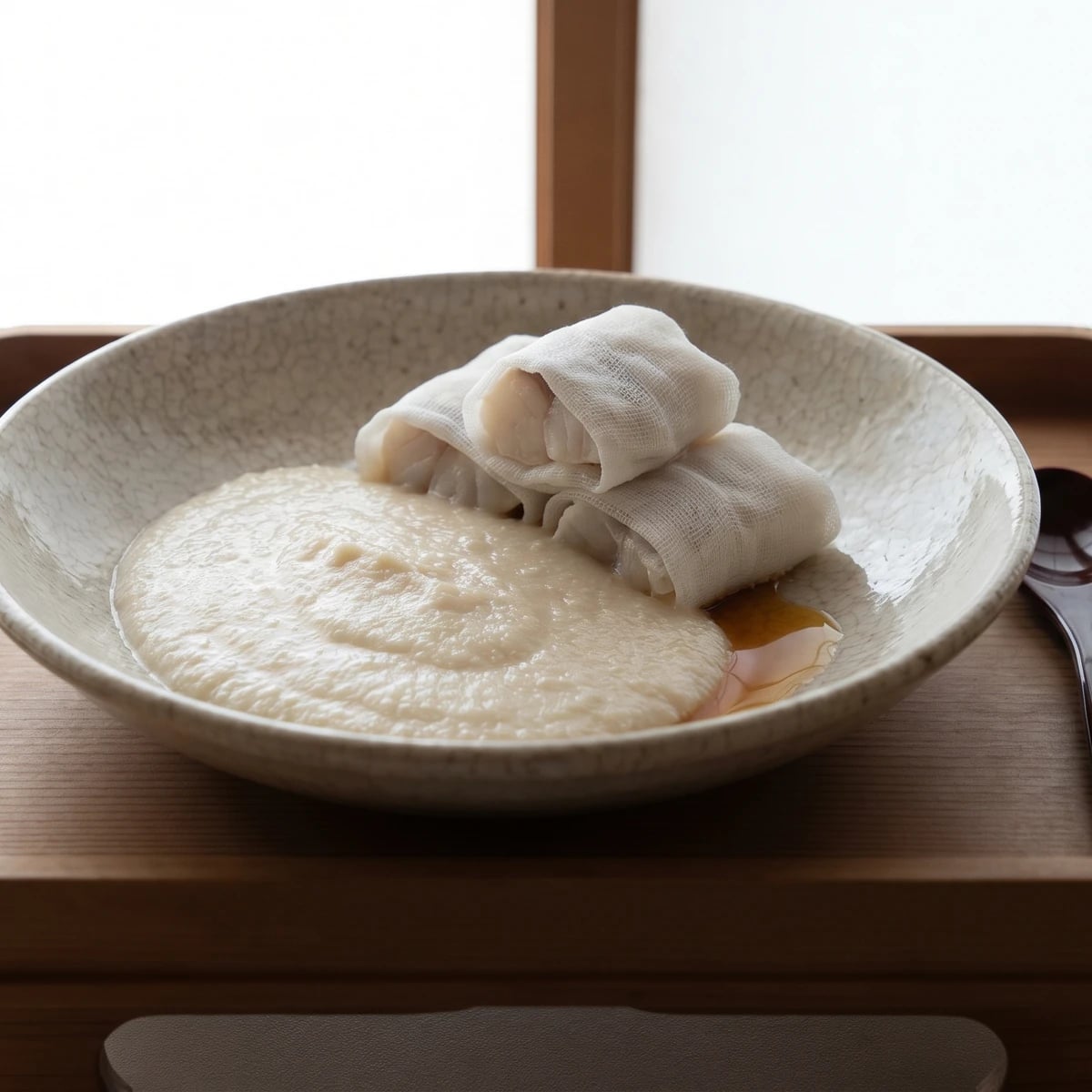
Kasudoko (酒粕床, sake-lees marinade bed)
Created by Chef Takumi
Sake lees look stubborn at first, then soften into one of the most generous beds in the Japanese kitchen: fragrant, pale, gently sweet, and patient enough to season while you do nothing.
Sake kasu, the lees left after pressing sake, doesn't look like much when you first unwrap it. Pale, crumbly, a little sharp in aroma. Give it mirin, sake, sugar, and salt, and it turns into kasudoko, a soft marinade bed that seasons fish or vegetables while they rest in the cold. The brewer's leftover becomes the home cook's quiet advantage.
The hesitation is usually the smell. Sake lees can seem too strong, as if they might take over the dish. They won't, if you balance them properly and keep the layer thin. The lees lend fragrance and depth, the salt seasons, the sugar and mirin round the edge, and time does the work more gently than any hand can. This is honmono made reachable: mix, wrap, wait.
The one detail that decides it is contact without excess. Coat the fish or vegetable completely, but don't bury it under a heavy mound. Too little and the seasoning is patchy; too much and you taste the bed instead of the ingredient. Wipe the kasudoko away before cooking, because sake lees scorch quickly over heat. We want its perfume and seasoning, not a burnt crust shouting over a good piece of fish.
Kasuzuke, food pickled or marinated in sake lees, belongs beautifully to colder months, when sake brewing has given its lees and grilled fish feels right beside rice and soup. But the method, not the menu, is the lesson. A good bed, a fresh ingredient, and two unhurried days. Nothing hidden.
Ingredients
sake kasu (sake lees)
Quantity
300g
crumbled or chopped if firm
mirin
Quantity
1/4 cup
sake
Quantity
1/4 cup
| Ingredient | Quantity |
|---|---|
| sake kasu (sake lees)crumbled or chopped if firm | 300g |
| mirin | 1/4 cup |
| sake | 1/4 cup |
Where cooking meets culture.
Culinary guides, cultural storytelling, and the editorial depth that makes cooking meaningful.
Discover Culinary Explorer