
Chef Dean
Bacon Egg and Cheese on a Roll
The iconic New York bodega breakfast: shattering-crisp bacon, a golden-yolked fried egg, and molten American cheese tucked into a soft kaiser roll. This is the sandwich that built a city.
A cooking platform built around craft, culture, and the stories behind what we eat.
Created by
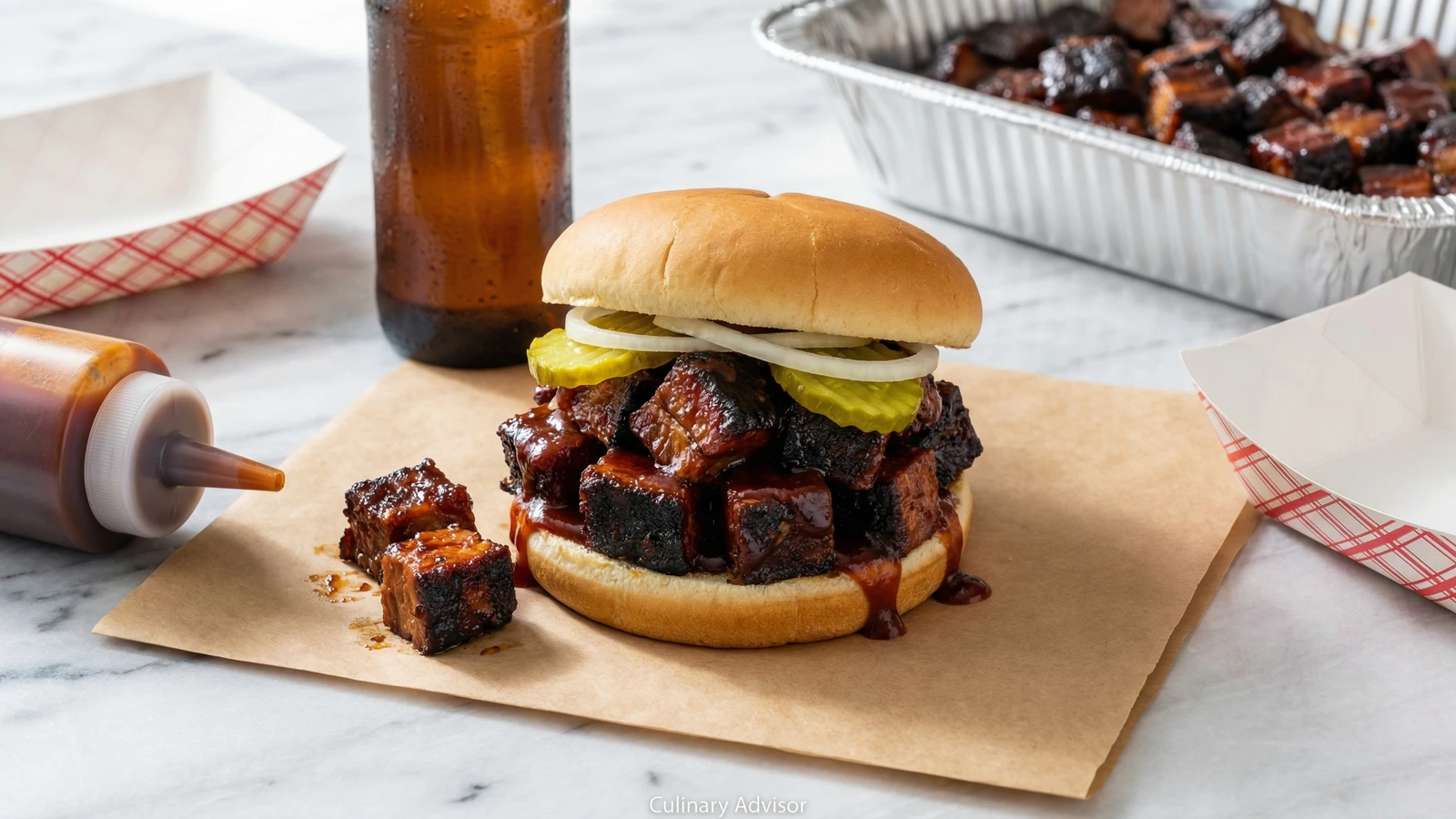
Smoke-kissed cubes of brisket point, lacquered in tangy-sweet Kansas City sauce until they turn sticky and caramelized, piled high on a pillowy bun with nothing but pickles and onion to compete for your attention.
Kansas City invented burnt ends by accident. Pitmasters needed something to feed the line cooks while they waited for whole briskets to finish. They'd trim the fatty point, cube it, and throw it back on the smoker with sauce. What emerged was better than the brisket itself: crusty bark on every surface, meat so tender it barely held together, and a glaze that shattered into sticky sweetness with each bite.
The point is the hero here. It's the fattier half of the brisket, heavily marbled, and it needs that extra time in the smoke to render properly. You cannot rush this. The collagen breaks down over hours, transforming tough connective tissue into gelatin that coats your lips. The bark develops through patience, not temperature.
I've eaten burnt ends from every famous joint in Kansas City. Arthur Bryant's. Gates. Joe's Kansas City, tucked inside that gas station that's become a pilgrimage site. The best versions share common traits: cubes cut large enough to show off their smoke rings, sauce applied with restraint, and bread soft enough to absorb the juices without competing for attention. This is not delicate food. It is food that demands napkins and cold beer and friends who don't judge you for eating with your hands.
Quantity
4-5 pounds
trimmed
Quantity
3 tablespoons
Quantity
2 tablespoons
Quantity
1 tablespoon
Quantity
1 tablespoon
Quantity
1 tablespoon
Quantity
2 teaspoons
Quantity
1 teaspoon
Quantity
1 1/2 cups
divided
Quantity
1/4 cup
Quantity
2 tablespoons
cubed
Quantity
8
Quantity
for serving
Quantity
for serving
thinly sliced
| Ingredient | Quantity |
|---|---|
| beef brisket pointtrimmed | 4-5 pounds |
| coarse black pepper | 3 tablespoons |
| kosher salt | 2 tablespoons |
| smoked paprika | 1 tablespoon |
| garlic powder | 1 tablespoon |
| onion powder | 1 tablespoon |
| brown sugar | 2 teaspoons |
| cayenne pepper | 1 teaspoon |
| Kansas City-style barbecue saucedivided | 1 1/2 cups |
| beef broth or apple juice | 1/4 cup |
| unsalted buttercubed | 2 tablespoons |
| soft potato buns or brioche hamburger buns | 8 |
| dill pickle slices | for serving |
| white onionthinly sliced | for serving |
Examine your brisket point. You want a fat cap trimmed to about a quarter-inch thickness, enough to protect the meat during the long smoke but not so much that it prevents bark formation. Remove any hard pieces of fat that won't render. Combine pepper, salt, paprika, garlic powder, onion powder, brown sugar, and cayenne in a bowl. Season the point generously on all surfaces, pressing the rub into the meat. Let it sit uncovered in the refrigerator overnight, or at minimum two hours at room temperature.
Build a fire and stabilize your smoker at 250°F. Kansas City pitmasters traditionally use hickory or a blend of hickory and oak. Fruit woods work but lack the assertiveness this beef demands. You need enough fuel to maintain temperature for ten to twelve hours. Fill your water pan if your smoker has one.
Place the brisket point fat-side up in the smoker, away from direct heat. Close the lid and resist the urge to peek for at least three hours. The bark needs uninterrupted time to form. After hour three, check every ninety minutes. You're looking for an internal temperature of 195°F and a mahogany bark that's firm but yields to pressure. This takes eight to ten hours for most points.
Transfer the smoked point to a cutting board. Let it rest fifteen minutes so it's cool enough to handle. Using a sharp knife, cut the meat into cubes roughly one and a half inches square. You'll sacrifice some of your beautiful bark on the interior cuts, which is why the next step matters. Every exposed surface will develop new bark.
Place the cubes in a deep aluminum pan. Add one cup of barbecue sauce, the beef broth, and butter. Toss gently to coat without crushing the cubes. The mixture should look loose, not swimming. Return uncovered to the smoker at 275°F. This higher temperature caramelizes the sugars in the sauce.
Every thirty minutes, gently stir the cubes and check their progress. The sauce will reduce and thicken. The edges will darken and turn sticky. After two to three hours, the burnt ends should look lacquered, with a mahogany-black exterior that glistens. The meat should jiggle when you shake the pan, almost gelatinous from the rendered collagen.
Split your potato buns and toast them lightly on the cooler side of the smoker, or in a dry skillet over medium heat. You want the cut sides barely golden, just enough structure to hold the meat without becoming crisp. These buns must remain soft and yielding.
Brush the bottom bun with a thin layer of the remaining half cup of barbecue sauce. Pile the burnt ends generously, using a slotted spoon to leave excess liquid behind. You want four to five ounces of meat per sandwich. Top with pickle slices and a few rings of raw white onion. Press the top bun gently, let the juices soak in for a moment, and serve immediately with extra napkins.
1 sandwich (about 345g)
Culinary guides, cultural storytelling, and the editorial depth that makes cooking meaningful.
Discover Culinary ExplorerChef Dean
The iconic New York bodega breakfast: shattering-crisp bacon, a golden-yolked fried egg, and molten American cheese tucked into a soft kaiser roll. This is the sandwich that built a city.

Chef Dean
Buffalo's proudest sandwich: silky rare roast beef mounded on a crusty roll showered with caraway and coarse salt, the top dipped in warm jus, the whole thing demanding horseradish and a cold beer.

Chef Dean
Shatteringly crisp beer-battered halibut piled on a buttery bun with tangy homemade tartar sauce and crunchy coleslaw. This is the Pacific Northwest on a plate, the kind of sandwich worth driving to the coast for.

Chef Dean
A pork cutlet pounded thin as a playing card, coated in seasoned cracker crumbs, and fried until it sprawls gloriously past the edges of its bun. This is Indiana on a plate.