Culinary Explorer

A cooking platform built around craft, culture, and the stories behind what we eat.
Discover Culinary Explorer
Kansai-Style Sakuramochi (関西風桜餅, Dōmyōji)

Kansai-Style Sakuramochi (関西風桜餅, Dōmyōji)

Created by

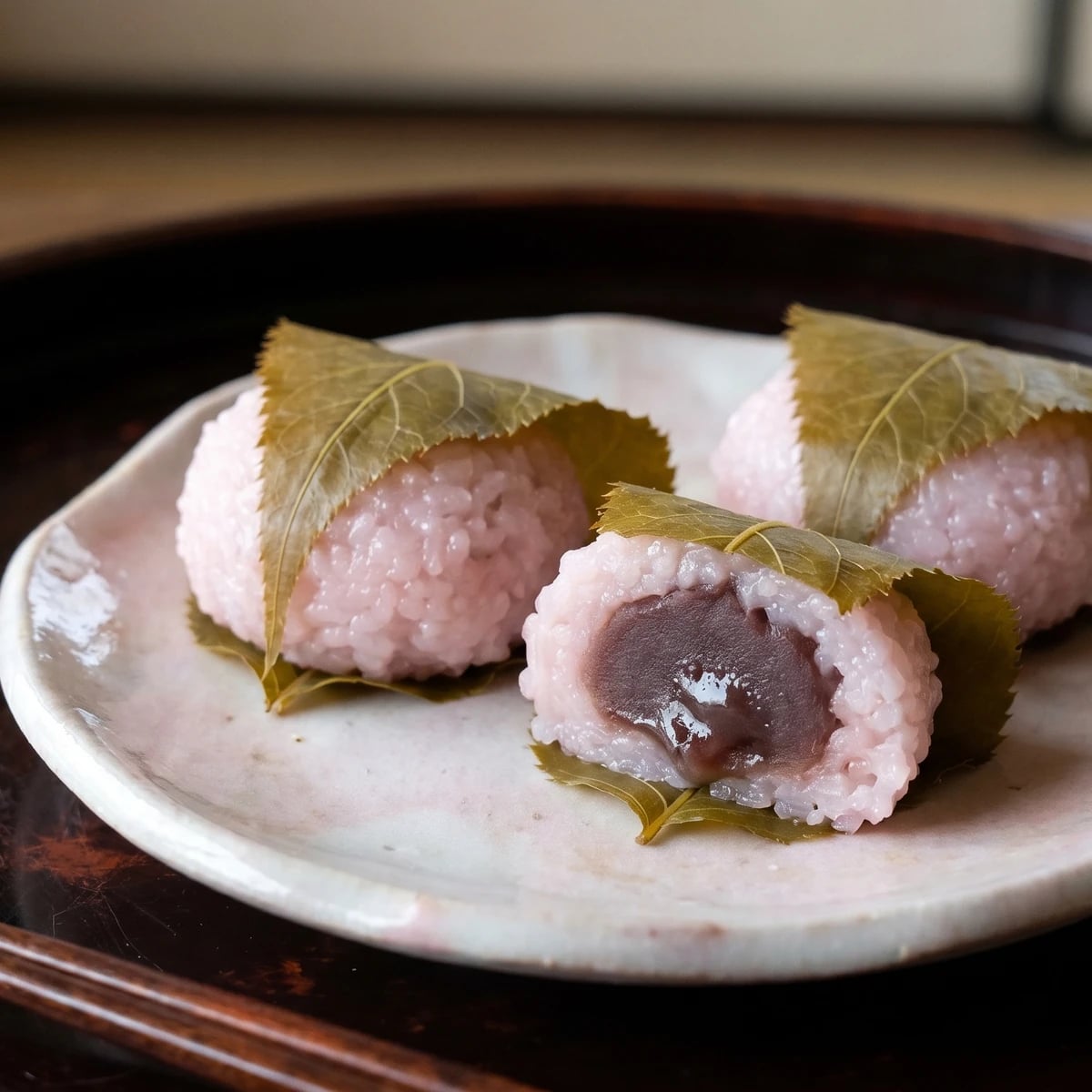
Kansai's sakuramochi is soft grain, smooth anko, and one salty cherry leaf. Steam the dōmyōji gently and the sweet comes together with spring's scent already built in.

Desserts
Japanese
Special Occasion
Picnic
Celebration
45 min
Active Time
20 min cook1 hr 20 min total
Yield8 pieces

Sakuramochi begins with the leaf. Salt-pickled cherry leaf is spring made practical: fragrant, faintly bitter, and salty enough to wake the sweet bean paste beside it. Without that leaf, you have a pleasant pink mochi. With it, you have the thing we wait for when the blossoms make sensible people study weather reports.

People see the color, the wrapping, the little seasonal ceremony of it, and assume confectioner's work. It isn't. Kansai-style sakuramochi, the Dōmyōji kind, is coarse steamed sweet rice wrapped around smooth anko. The one detail that decides it is hydration: each grain must drink enough water to turn tender, but not so much that it collapses into paste. You want a soft chew, with the grains still visible.

The leaf should be soaked just enough to calm the salt, not washed into silence. That edge is the point. It makes the anko taste cleaner and keeps the mochi from becoming merely sweet. We eat this for Hinamatsuri and blossom season, often at room temperature, small enough for a picnic and quiet enough to need no announcement. Leave it room on the plate. The leaf has already done the speaking.

Sakuramochi's best documented origin is Edo: in 1717, Yamamoto Shinroku, a gatekeeper at Chōmeiji by the Sumida River, began selling sweets wrapped in pickled cherry leaves from the temple grounds. Kansai's version took a different body, using dōmyōji-ko, coarse dried grains of steamed glutinous rice named for Dōmyōji in present-day Fujiidera, Osaka Prefecture. The regional split remains plain at a glance: Kantō's Chōmeiji style is a thin crepe, while Kansai's Dōmyōji style shows the rice grains.

The technique, the tradition, and the story behind every dish.

Discover Culinary Explorer

Ingredients

salt-pickled cherry leaves (sakura no ha no shiozuke)

Quantity

8

rinsed, briefly soaked, and patted dry

koshian (smooth sweet red bean paste)

Quantity

200g

chilled

dōmyōji-ko (coarse dried glutinous rice grains)

Quantity

150g

water

Quantity

180ml

granulated sugar

Quantity

45g

sea salt

Quantity

1 small pinch

red food coloring (shokubeni) (optional)

Quantity

1 tiny drop

salted water for hands

Quantity

1/2 cup water with a pinch of salt

Equipment Needed

  • Bamboo steamer (seiro), or a metal steamer with a tight lid
  • Sarashi cloth, clean cotton cloth, or perforated parchment
  • Rice paddle or small wet spatula

Instructions

  1. 1

    Soak the leaves

    Rinse the salt-pickled cherry leaves under a thin stream of cool water, then soak them in fresh cool water for 10 to 20 minutes. They should taste pleasantly salty, not harsh. Pat them dry and trim any tough stems. Soak too long and you wash away the fragrance; skip the soak and the salt bullies the anko.

    The leaf is not decoration. It is the seasoning, the perfume, and half the reason this sweet belongs to spring.
  2. 2

    Shape the anko

    Divide the chilled koshian into 8 portions, about 25g each, and roll them into small balls. Keep them covered and cool while you prepare the rice. Cold anko holds its shape, which lets you wrap it cleanly instead of chasing a soft paste around your palm.

  3. 3

    Hydrate the rice

    Combine the 180ml water, sugar, and pinch of salt in a small saucepan. Warm just until the sugar dissolves, then tint it the palest pink if using coloring. Stir in the dōmyōji-ko, remove from the heat, cover, and let it stand for 20 minutes. The dried grains need time to drink evenly before heat sets their surface. Rush this and the outside turns sticky while the center stays firm.

  4. 4

    Steam the grains

    Line a seiro or steamer with a damp cloth, or use perforated parchment. Spread the hydrated dōmyōji in a shallow, loose layer and steam over steady boiling water for 15 to 18 minutes, until the grains look translucent and feel tender when pinched. Steaming cooks each grain without drowning it, keeping the nubbled texture that makes Dōmyōji the Kansai style.

    You want tender grains, not a smooth mochi paste. The visible grain is not a flaw here. It is the identity of the sweet.
  5. 5

    Rest and divide

    Lift the cooked dōmyōji into a bowl, cover it, and let it rest for 10 minutes. Fold it gently with a wet rice paddle, then divide it into 8 portions. Wet your hands with the salted water before handling each piece. The water keeps the rice from clinging to your fingers, and the faint salt keeps the surface from tasting flat.

  6. 6

    Wrap the centers

    Flatten one portion of dōmyōji into an oval in your wet palm. Set an anko ball in the center, draw the rice up around it, and pinch the seam closed. Press with your fingertips, not your fist. The grains need to meet, not disappear. If a little anko shows at the seam, leave it. Honmono is not afraid of a small seam.

  7. 7

    Fold the leaves

    Lay one cherry leaf vein side up. Set the mochi seam side down near the base and fold the leaf around it so the smoother face shows outside. Do not cinch it tight; the leaf is a wrapper and a seasoning, not tape. Let the finished sweets rest 10 minutes before serving so the cherry scent passes into the rice. The leaf is edible, though some diners peel it away.

Chef Tips

  • Buy dōmyōji-ko, not mochiko. Mochiko makes a smooth dough, while dōmyōji-ko keeps the grainy, tender chew that belongs to the Kansai sweet.
  • Color with a very small hand. Cherry blossoms are pale. A loud pink sakuramochi has already missed the season before anyone takes a bite.
  • Do not soak the leaves until they taste like plain leaves. Their salt and fragrance are what keep the sweet balanced. Nothing hidden, nothing perfumed after the fact.
  • If your koshian is soft, chill it before rolling. A firm center makes the wrapping calm, and calm hands make better wagashi.

Advance Preparation

  • The anko balls can be shaped up to 2 days ahead and kept covered in the refrigerator.
  • The cherry leaves can be rinsed and soaked a few hours ahead, then kept between damp paper towels so they do not dry out.
  • Finished sakuramochi are best the day they are made. Refrigeration firms the rice, so if you must chill them overnight, wrap them airtight and let them return to room temperature before serving.

Frequently Asked Questions

Nutrition Information

1 serving (about 75g)

Calories
155 calories
Total Fat
0 g
Saturated Fat
0 g
Trans Fat
0 g
Unsaturated Fat
0 g
Cholesterol
0 mg
Sodium
210 mg
Total Carbohydrates
35 g
Dietary Fiber
1 g
Sugars
16 g
Protein
3 g

Note: Chef personas and recipes are created with AI assistance. Cook with care: follow safe food-handling practices, check doneness with a thermometer when needed, and adapt for allergies and your kitchen.

Where cooking meets culture.

Culinary guides, cultural storytelling, and the editorial depth that makes cooking meaningful.

Discover Culinary Explorer

More from Wagashi: Traditional Japanese Sweets

Browse the full collection