
Chef Freja
Andelår med Rødkål
Slow-roasted duck legs with crisp, deeply golden skin, served with braised red cabbage and caramelized potatoes. The weeknight Danish duck that proves the best part of the bird is the one that takes its time.
A cooking platform built around craft, culture, and the stories behind what we eat.
Created by Chef Freja
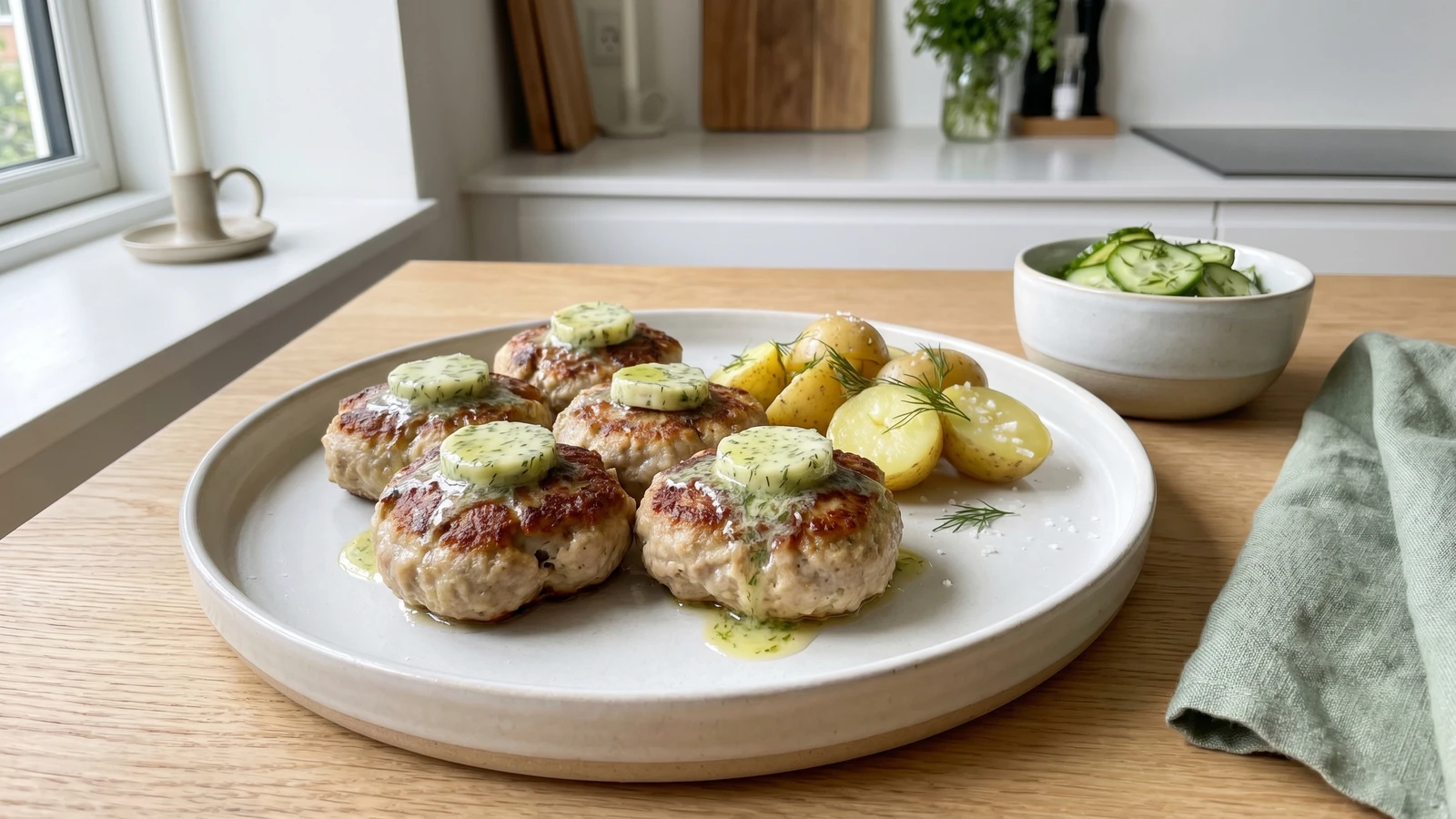
Lighter veal frikadeller pan-fried to a golden crust and crowned with coins of fresh dill butter that melt into pale green pools. The dish that arrives in Danish kitchens when spring does.
May brings the dill. Not the tired bunches that sit in supermarkets all winter, but the real thing: bright, feathery, so fragrant it scents your hands before you've even started chopping. This is when kalvefrikadeller make sense.
Pork frikadeller are the weeknight standard, the one every Dane learns first. But when the season turns and the markets fill with young herbs and the evenings stay light past nine, there's a version that belongs to spring. Veal is leaner and more delicate than pork, and it takes the dill differently: quietly, without competing. The meatballs come out softer, paler, with a golden crust that shatters into something tender underneath. And then you put the dill butter on top and let it melt.
Pay attention to two things. First, the sparkling water. It sounds strange but it's the technique that makes these light instead of dense. The bubbles create air pockets that survive the pan, and you'll taste the difference on the first bite. Second, the resting time. The mixture needs twenty minutes in the fridge before you shape it. That patience is what holds everything together. You'll know when it's right: the patties will hold their shape on the spoon and release cleanly into the hot butter. After that, the dill butter does the rest.
Frikadeller appear in Danish cookbooks as early as the 1700s, the word borrowed from the French fricadelle via German, though the dish itself became something distinctly Danish over the following century. Veal frikadeller, kalvefrikadeller, were historically associated with celebrations and the spring season, when young calves were available and the cost of veal signaled that this was not an ordinary Tuesday dinner. The pairing with fresh dill butter is a twentieth-century refinement, connected to the broader Danish tradition of compound butters served on warm meat, a technique the smorrebrodsjomfruer of Copenhagen's lunch restaurants practiced with quiet precision.
Quantity
500g
Quantity
1 small
finely grated
Quantity
3 tablespoons
Quantity
1 large
Quantity
100ml
cold
Quantity
1 teaspoon
Quantity
1/2 teaspoon
Quantity
pinch
freshly grated
Quantity
75g
softened
Quantity
large bunch, about 30g
finely chopped
Quantity
1 teaspoon
Quantity
pinch
Quantity
30g
Quantity
1 tablespoon
Quantity
to serve
Quantity
to serve
| Ingredient | Quantity |
|---|---|
| ground veal | 500g |
| onionfinely grated | 1 small |
| plain flour | 3 tablespoons |
| egg | 1 large |
| sparkling watercold | 100ml |
| fine sea salt | 1 teaspoon |
| white pepper | 1/2 teaspoon |
| nutmegfreshly grated | pinch |
| unsalted butter (for dill butter)softened | 75g |
| fresh dillfinely chopped | large bunch, about 30g |
| lemon juice | 1 teaspoon |
| flaky sea salt | pinch |
| unsalted butter (for frying) | 30g |
| neutral oil | 1 tablespoon |
| new potatoes (optional) | to serve |
| cucumber salad (optional) | to serve |
Combine the softened butter, finely chopped dill, lemon juice, and a pinch of flaky salt in a small bowl. Work it together with a fork until the dill is evenly distributed and the butter is green-flecked throughout. The lemon is there for brightness, not sourness, so keep it to a teaspoon. Shape the butter into a rough log on a piece of cling film, roll it tight, and set it in the fridge to firm up while you make the frikadeller. Cold dill butter melting slowly over a hot meatball is the whole point of this dish.
Put the ground veal in a large bowl. Add the grated onion, flour, egg, salt, white pepper, and nutmeg. Grate the onion on the fine side of a box grater so it breaks down into a wet pulp. You don't want pieces of onion in the mixture. You want its moisture and sweetness distributed through every bite. Stir everything together with a wooden spoon, then pour in the cold sparkling water and beat the mixture vigorously for a full minute. The sparkling water does something that still water can't: the bubbles create tiny air pockets throughout the mixture, and those pockets survive the frying. The result is lighter, softer frikadeller. This is the same principle as the pork version, and it matters even more with veal because veal is already lean and needs all the help it can get.
Cover the bowl and leave it in the fridge for at least twenty minutes. The flour hydrates during this time, absorbing moisture and binding the mixture so it holds together in the pan. Skipping this rest is the most common reason frikadeller fall apart when you try to turn them. The cold also firms the mixture slightly, making it easier to shape.
Fill a small bowl with cold water and keep it beside the stove. Using two tablespoons dipped in the water, scoop a generous portion of the veal mixture and pass it between the spoons a few times to form an oval, slightly flattened patty. They're not round meatballs. Danish frikadeller are oval and a little flat, like a thick patty. This shape gives you more surface in contact with the pan, which means more crust, which is where the flavor concentrates. Lay each one on a plate as you go. You should get about sixteen.
Heat the butter and oil together in a large heavy frying pan over medium heat. Butter alone burns before the centers cook through. Oil alone tastes like nothing. Together they give you the golden crust and the nutty richness that makes frikadeller taste right. When the butter is foaming and the foam has just begun to subside, lay the patties in the pan. Don't crowd them. Work in two batches if you need to. Cook for four to five minutes on the first side without moving them. You'll see the edges turn pale gold and firm up. That's your signal to turn. Flip them gently and cook for another three to four minutes. The surface should be deep golden brown, and if you press the center lightly with your finger, it should feel firm but give slightly. That's cooked through but still juicy inside.
Transfer the frikadeller to a warm serving plate. Take the dill butter from the fridge, unwrap it, and cut it into thin rounds. Lay a coin of dill butter on top of each hot frikadeller. Don't stir it around. Let it sit there and melt slowly, pooling into the crevices and running down the sides in pale green rivulets. The heat of the veal does the work. That slow melt is what carries the dill flavor into every bite, and the cold butter meeting the hot crust creates the contrast that makes this dish more than the sum of its parts. Serve immediately alongside new potatoes tossed in butter and a simple cucumber salad with white vinegar and dill. Tak for mad.
1 serving (about 180g)
Culinary guides, cultural storytelling, and the editorial depth that makes cooking meaningful.
Discover Culinary ExplorerChef Freja
Slow-roasted duck legs with crisp, deeply golden skin, served with braised red cabbage and caramelized potatoes. The weeknight Danish duck that proves the best part of the bird is the one that takes its time.

Chef Freja
The whole roasted duck of juleaften, stuffed with tart apples and dark prunes, slow-roasted for four patient hours until the skin crackles like something earned and the meat underneath gives way without resistance.

Chef Freja
Whole sea trout baked with butter, lemon, and armfuls of dill, served beside the first nye kartofler of the season and a melting slab of dildsmor. The Danish summer table at its most generous.

Chef Freja
A side of salmon baked gently in butter and white wine, served warm with a bright dill cream sauce and the season's first nye kartofler. Late spring on a Danish table, cooked with love.