
Chef Juliette
Bavaroise
Bavaroise turns the ribbon stage into a drink: yolks and sugar, boiling tea and milk, and Kirsch whisked into a light crown of foam. Keep the whisk moving, and the café comes home.
A cooking platform built around craft, culture, and the stories behind what we eat.
Created by
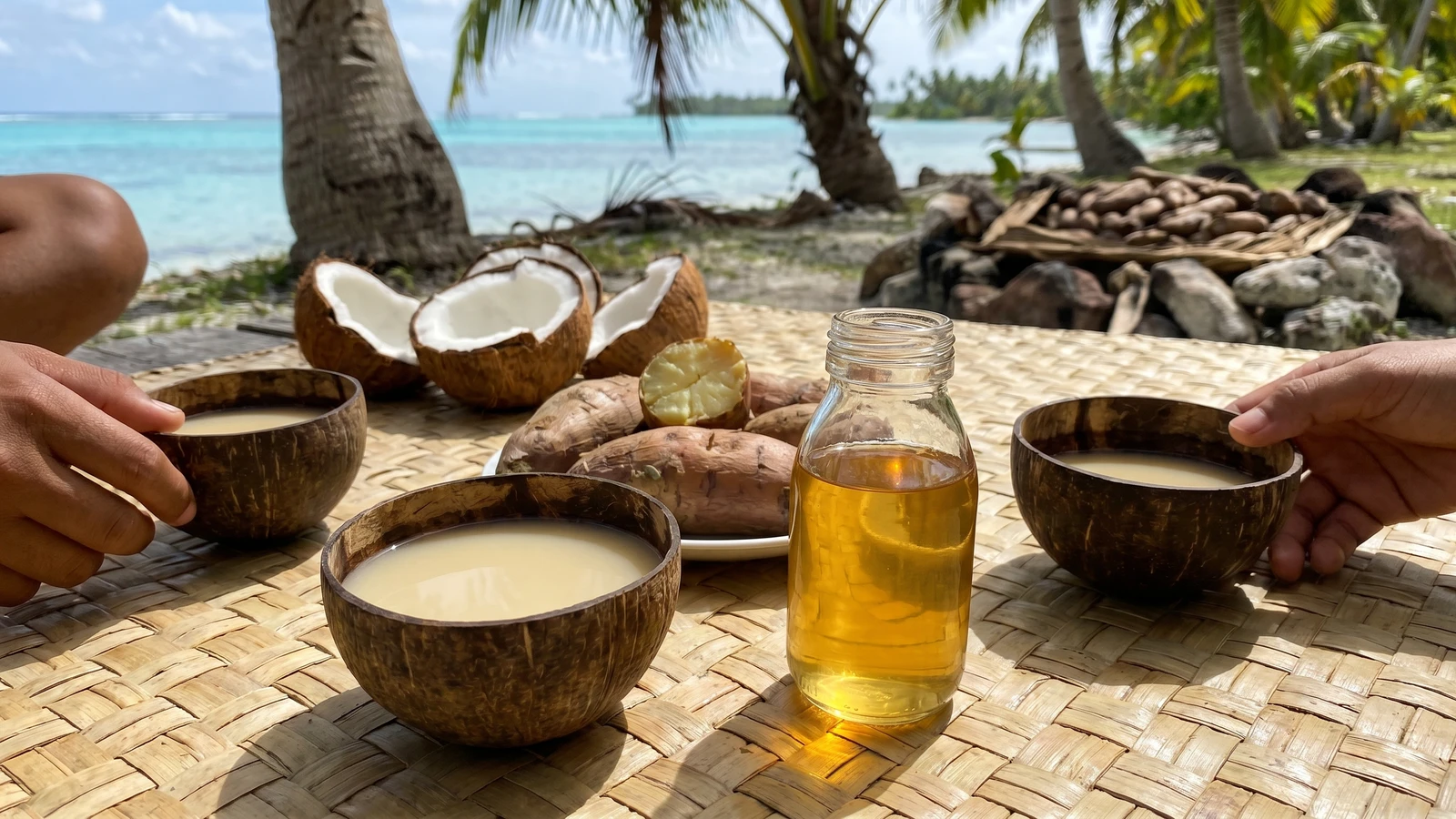
Sweet sap from the bound coconut flower-spathe, drawn at dawn in Tuvalu and served fresh before it turns, or boiled down to syrup so the tree feeds the table longer.
Pulaka comes first in Tuvalu, the giant swamp-taro hauled from pits dug down into coral, the food that tells you this low island is still feeding itself. When those pits turn salty, everybody feels it. So kaleve, the sweet sap drawn from the bound flower-spathe of the coconut palm, is not just a drink. It's the tree answering back.
This is Tuvalu's hand. Tokelau, its cousin to the east, knows that same coral-soil world and its own coconut-sap ways, but I won't smear the two into one faceless atoll story. Tuvalu's kaleve is tapped at dawn, clean and sweet, drunk fresh before the day warms it into ferment, or boiled down into a dark syrup that can sweeten breadfruit, pulaka, tea, or a cup of water when the barge food is sitting heavy.
I didn't learn this from my own loʻi back home on Oʻahu. I cook this open-handed, with respect for the Tuvaluan aunties, uncles, and toddy cutters who carry the real knowledge of the palm. In your kitchen, the rule is simple: get fresh sap from somebody who knows the tree, keep it clean, drink it quick, or boil it. Eat what you have, yeah, but honor the hand that brought it down from the palm.
In Tuvalu, coconut toddy is drawn from the unopened flower-spathe of the coconut palm and has long served as a fresh drink, a sweetener, and a boiled syrup in a coral-atoll food system built around pulaka pits, pandanus, breadfruit, reef fish, and coconut. As saltwater intrusion threatens pulaka pits, kaleve carries the same hard truth as corned beef and rice off the barge: food from the ship is the wound, and food from the tree and pit is part of the repair. Tokelau has its own distinct atoll foodways and coconut-sap traditions beside Tuvalu's, close cousins but not the same table.
Quantity
4 cups
strained and chilled, from a skilled tapper
Quantity
1 tablespoon
Quantity
1 small pinch
Quantity
1 cup
for diluting syrup
| Ingredient | Quantity |
|---|---|
| freshly tapped coconut palm sap (kaleve)strained and chilled, from a skilled tapper | 4 cups |
| fresh lime juice (optional) | 1 tablespoon |
| sea salt (optional) | 1 small pinch |
| cool water or coconut water (optional)for diluting syrup | 1 cup |
Start with fresh kaleve tapped at dawn by someone who knows the coconut palm. It should smell clean, sweet, and green, with no sour bite. Strain it through clean cloth into a washed bottle or bowl right away. Don't climb or cut a palm unless that knowledge is yours; the tree and the cutter both deserve better than guessing.
For fresh kaleve, chill it briefly and pour into coconut-shell cups or plain glasses. Add a little lime and a pinch of sea salt only if the sap wants brightness. The drink should stay pale, sweet, and light, like the palm itself is in the cup.
To keep it longer, pour the strained kaleve into a small heavy pot and bring it to a gentle simmer. Cook uncovered, skimming any foam, until it reduces to about one cup and turns honey-gold to light brown with a glossy pour. Don't walk away; sugar from the tree can catch fast.
Let the syrup cool, then bottle it clean. It should coat a spoon lightly, not turn hard like candy. Use it to sweeten cool water, coconut water, tea, or spoon it over cooked pulaka or breadfruit. Same tree, longer memory.
Serve fresh kaleve the same day, or stir two tablespoons of syrup into a cup of cool water or coconut water for each person. Taste and adjust, no need make it precious. The point is the tree tapped, never the barge.
1 serving (about 245g)
Culinary guides, cultural storytelling, and the editorial depth that makes cooking meaningful.
Discover Culinary ExplorerChef Juliette
Bavaroise turns the ribbon stage into a drink: yolks and sugar, boiling tea and milk, and Kirsch whisked into a light crown of foam. Keep the whisk moving, and the café comes home.

Chef Juliette
Bischoff turns Champagne, tilleul, citrus, and brandy into pale-gold granité, coarse enough to sparkle under the spoon. The scraping makes the texture, and the timer becomes your smallest member of the brigade.

Chef Juliette
Café glacé is coffee taught by texture: dark, sweet, vanilla-softened, and churned only until it moves like loose snow. Stop before ice cream, pour into cold cups, and take it outside.

Chef Juliette
Zest brings perfume, juice brings acid, and three cool hours join them: a clear, lively French limonade finished with seltzer for the picnic table in the shade.