
Chef Takumi
Autumn Mushroom Rice (きのこの炊き込みご飯, Kinoko Takikomi Gohan)
Autumn mushrooms do most of the work here. Rinse the rice well, season the liquid before cooking, and let the pot rest so every grain comes out separate and fragrant.
A cooking platform built around craft, culture, and the stories behind what we eat.
Created by
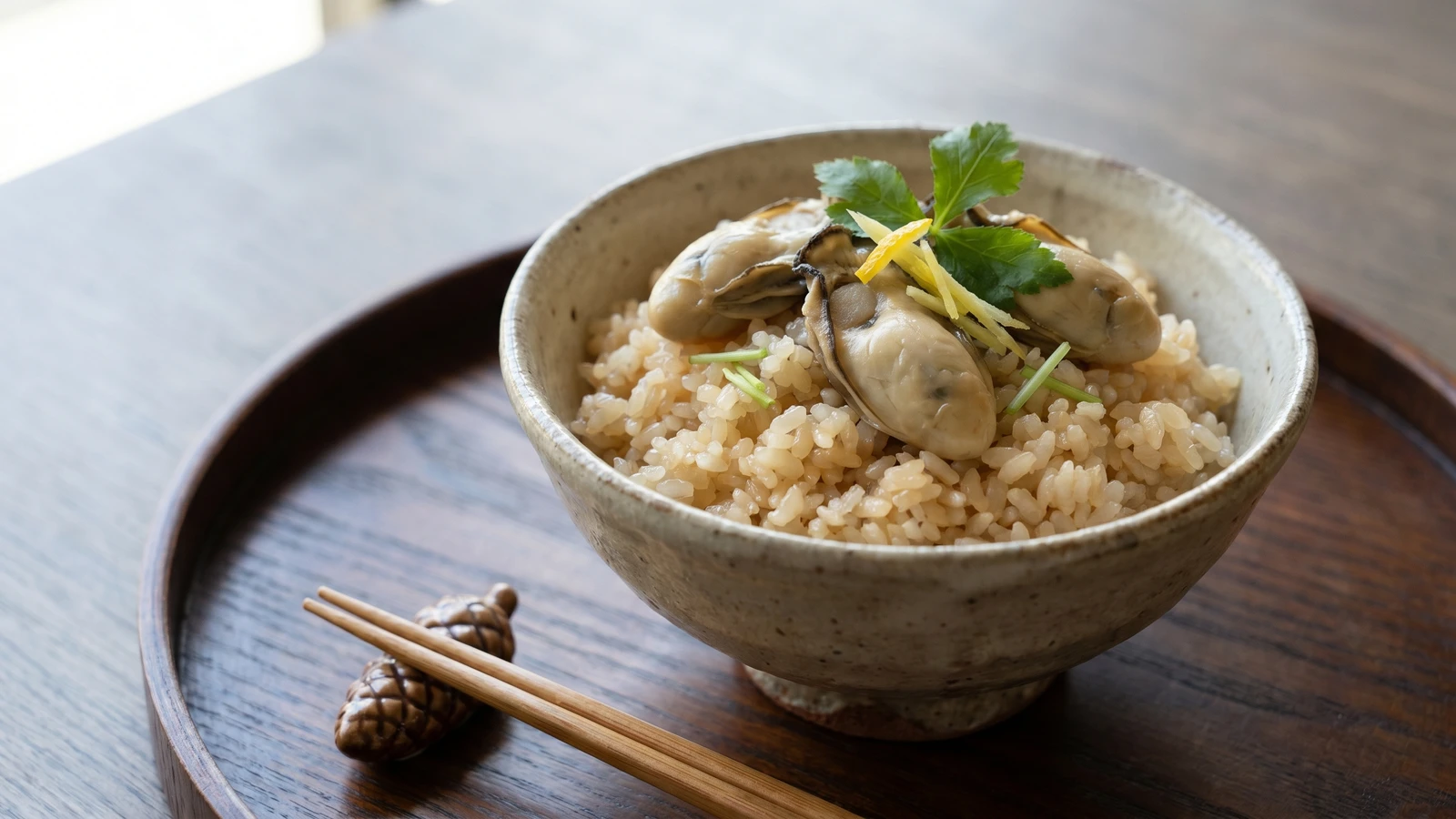
Winter oyster rice is simpler than it looks: poach the oysters briefly, cook the rice in their liquor and dashi, then fold them back in so every grain tastes of the sea.
Oysters have a winter clock. When the water is cold, their flesh turns full and sweet, and this rice makes a small ceremony of that season without making hard work of it. Kaki gohan looks like a special-occasion dish because oysters do that to people. In the pot, though, it's only rice, dashi, a little shōyu and sake, and the courage not to cook the oyster twice to death.
The one detail that decides it is separation. Briefly poach the oysters, lift them out as soon as their edges curl, then cook the rice in the oyster liquor and dashi. The rice takes the sea, the oysters keep their plumpness. If you bury them in the pot from the start, they give up everything and come out small and sulking. We don't need drama. We need timing.
This belongs to winter takikomi gohan, seasoned rice cooked with what is at its prime. It can sit beside miso soup and a vinegared vegetable on an ordinary night, or in small bowls at a dinner table where everyone politely pretends they did not want more. Use glistening fresh oysters with a clean sea smell, strain the liquor, and keep the seasoning quiet. Nothing hidden, because the oyster is the reason we came.
Kaki gohan is tied closely to Hiroshima and the Seto Inland Sea, where oyster cultivation in Hiroshima Bay is recorded from the Tenbun era (1532-1555). In the Edo period, Hiroshima oysters were sold from kakibune, oyster boats moored in Osaka and other cities, a trade that helped make winter oyster dishes familiar beyond the growing grounds. The rice belongs to takikomi gohan, the method of cooking seasonal ingredients with the grain so their liquor becomes seasoning rather than waste.
Quantity
2 rice-cooker cups (360ml, about 300g)
Quantity
250g
with their liquor saved if possible
Quantity
1 tablespoon
for cleaning
Quantity
3/4 teaspoon
divided
Quantity
1 piece (about 8g)
Quantity
2 1/2 cups
Quantity
15g
Quantity
2 tablespoons
Quantity
1 tablespoon
Quantity
1 tablespoon
Quantity
20g
peeled and cut into fine matchsticks
Quantity
2 tablespoons
chopped
Quantity
1 small strip
cut into fine slivers
| Ingredient | Quantity |
|---|---|
| Japanese short-grain white rice | 2 rice-cooker cups (360ml, about 300g) |
| shucked oysterswith their liquor saved if possible | 250g |
| katakuriko (potato starch), or cornstarchfor cleaning | 1 tablespoon |
| fine sea saltdivided | 3/4 teaspoon |
| konbu | 1 piece (about 8g) |
| cold water | 2 1/2 cups |
| katsuobushi (bonito flakes) | 15g |
| sake | 2 tablespoons |
| usukuchi shōyu (light soy sauce), or regular soy sauce | 1 tablespoon |
| mirin | 1 tablespoon |
| fresh gingerpeeled and cut into fine matchsticks | 20g |
| mitsuba, or thin scallion topschopped | 2 tablespoons |
| yuzu peel (optional)cut into fine slivers | 1 small strip |
Put the rice in a bowl, cover with cold water, and stir with your hand. Pour off the cloudy water and repeat until the water is almost clear, not perfectly clear. Soak the rice in fresh water for 30 minutes, then drain it in a sieve for 10 to 15 minutes. Soaking lets the grains hydrate evenly, and draining keeps your measured cooking liquid honest.
Wipe the konbu with a damp cloth, but don't wash it. Put it in the cold water and warm it slowly over low heat, about 10 minutes. Pull the konbu when the water trembles and small bubbles climb the sides, before it boils. Bring the water just to a gentle boil, add the katsuobushi all at once, take the pot off the heat, and leave it alone for 2 to 3 minutes. Strain through a cloth or fine sieve and let it drip without squeezing.
If the oysters came with liquor, strain it through a fine sieve lined with cloth or a coffee filter and save it. Put the oysters in a bowl with the katakuriko and 1/2 teaspoon of the salt. Turn them gently with your fingers until the starch turns gray, then rinse in two or three changes of cold water and drain well. The starch catches grit and surface murk without rough handling. Wash it twice, wash it thrice, but don't bruise the thing you came to eat.
In a small saucepan, combine the saved oyster liquor, 1/2 cup of the dashi, the sake, mirin, shōyu, and the remaining 1/4 teaspoon salt. Bring it just to a quiet simmer, then add the oysters. Cook for 1 to 2 minutes, turning once, until the edges curl and the centers turn opaque but still glisten. Lift the oysters out to a plate and keep every drop of the liquid.
Pour the oyster poaching liquid into a measuring cup and add enough dashi to make 430ml, about 1 3/4 cups plus 1 tablespoon. Taste it. It should be seasoned enough to flavor rice, but not salty like soup gone wrong. If your oyster liquor was very briny, hold back a spoonful and replace it with plain dashi. Rice remembers every extra splash, so measure before it goes in.
Put the drained rice in a rice cooker or a heavy pot. Add the measured liquid and scatter the ginger over the top. For a rice cooker, cook on the regular white rice setting. For a pot, bring it to a boil over medium heat, cover tightly, lower the heat, and cook 12 minutes. Turn off the heat and do not open the lid yet. The covered rest finishes the grain as gently as the fire began it.
When the rice is cooked, open the lid quickly, lay the poached oysters on top, close the lid again, and rest for 10 minutes off the heat. If using a rice cooker, switch off keep-warm if you can. That rest warms the oysters through and lets their juices settle into the rice without tightening them.
Use a shamoji, a rice paddle, to loosen the rice from the sides and fold from the bottom with a cutting motion. Don't stir as if it were porridge. You want separate glossy grains and whole oysters. Serve in small bowls, with mitsuba and a few threads of yuzu peel on top. Leave it room, even in the bowl.
1 serving (about 300g)
Culinary guides, cultural storytelling, and the editorial depth that makes cooking meaningful.
Discover Culinary ExplorerChef Takumi
Autumn mushrooms do most of the work here. Rinse the rice well, season the liquid before cooking, and let the pot rest so every grain comes out separate and fragrant.

Chef Takumi
A whole salmon fillet laid on seasoned rice does nearly all the work. Cook it gently, flake it back through, and autumn has found its bowl.

Chef Takumi
Daigakuimo is simple student comfort: sweet potato cut stout, fried until the corners take color, then turned in a soy-sugar syrup that sets shiny instead of sticky.

Chef Takumi
Chawanmushi looks delicate, but the secret is plain: good dashi, strained egg, and quiet heat. Keep the steam soft and the custard sets smooth, tender, and calm.