Culinary Explorer

A cooking platform built around craft, culture, and the stories behind what we eat.
Discover Culinary Explorer
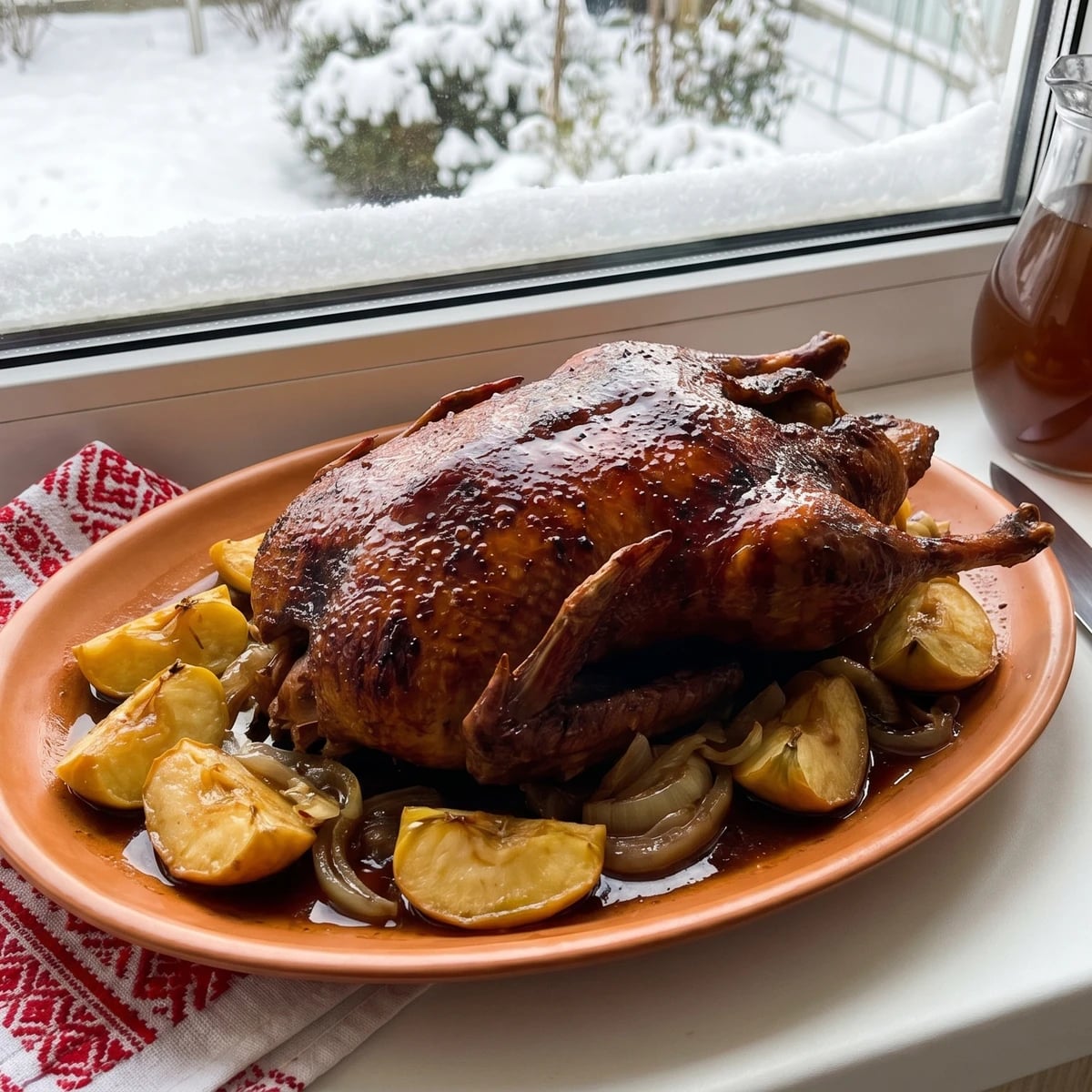
Kachka z Yablukamy (качка з яблуками, duck with apples)

Kachka z Yablukamy (качка з яблуками, duck with apples)

Created by

The best bite is the apple under the bird: tart, collapsed, shining with duck fat, and sharp enough to pull a winter feast back from too much richness.

Main Dishes
Ukrainian
Christmas
New Years
Celebration
35 min
Active Time
2 hr 30 min cook27 hr 5 min total
Yield6 to 8 servings

The best bite is the apple under the bird. Not the neat slice of breast, not even the bronze leg, but the tart fruit that has collapsed in the pan and drunk enough duck fat to shine. On a winter holiday table, this is the bit people pretend not to fight over. Sour apple cuts through duck the way a bright window cuts through January: suddenly the richness has somewhere to go.

Use apples with backbone, the ones that bite back. One of Aunt Nadia's letters says only, "more sour than sweet," and that was the whole instruction. She was right. The apples are not decoration. They are the knife for the fat, and if you use sweet woolly ones the bird becomes sleepy.

Salt the duck the day before if you can, leave it uncovered, and let the skin dry until it feels tight under your fingers. Prick the skin, not the flesh, so the fat can find its way out, then pour that fat into a jar as it renders. Tomorrow's potatoes will thank you. Roast until the leg loosens, the apples sigh down into the tray, and the kitchen smells deep and sweet instead of merely meaty. That's when it sounds right.

Roast duck with apples belongs to Ukrainian winter feast cooking, especially Christmas and New Year, when poultry fat and stored apples met after the first frosts rather than in summer abundance. Ukraine's apple culture has its own names: the green Renet Symyrenka was documented in the late nineteenth century at Mliiv in Cherkasy region by pomologist Levko Symyrenko, and its sharp winter flesh is exactly the kind of apple that keeps duck from feeling dull. Soviet-era public catering standardized many holiday roasts, but home tables kept the older pairing of bird, orchard fruit, buckwheat, cabbage, and pan fat.

The technique, the tradition, and the story behind every dish.

Discover Culinary Explorer

Ingredients

whole duck

Quantity

1, 2.4 to 2.8 kg

giblets removed

fine sea salt

Quantity

1 tablespoon

black pepper

Quantity

1 teaspoon

freshly ground

tart apples

Quantity

7

Renet Symyrenka, Granny Smith, Bramley, or any sharp storage apple

onion

Quantity

1 large

thickly sliced

garlic

Quantity

5 cloves

3 smashed and 2 finely grated

bay leaves

Quantity

2

caraway seeds (optional)

Quantity

1 teaspoon

lightly crushed

buckwheat honey

Quantity

1 tablespoon

fermented apple brine, sauerkraut brine, or lemon juice

Quantity

1 tablespoon

water or unsweetened apple juice

Quantity

150ml

Equipment Needed

  • Large roasting tray with a rack, or a thick bed of apples and onion
  • Small skewer or sharp paring knife
  • Kitchen twine
  • Heatproof jar for rendered duck fat

Instructions

  1. 1

    Salt the duck

    The day before, pat the duck dry inside and out, then trim away any loose lumps of fat from the cavity and save them. Prick the skin all over with a skewer or the tip of a small knife, especially around the thighs and breast, keeping the blade shallow so you pierce skin and fat, not meat. Rub the salt and pepper over the bird and inside the cavity, then leave it uncovered in the fridge overnight until the skin feels tight and dry.

    This is the step that gives you lacquered skin. Wet skin steams itself in the oven, and we are not doing all this work for rubber.
  2. 2

    Wake it up

    Take the duck out of the fridge about an hour before roasting so it loses its fridge chill. Wipe away any beads of moisture from the skin. Heat the oven to 160C. Put the saved trimmings of duck fat into the roasting tray so they begin the pan juices for you.

  3. 3

    Prepare the apples

    Core five of the apples and cut them into quarters, leaving the skins on so they hold themselves together at first. Toss them with the smashed garlic, bay leaves, caraway if using, and a pinch of salt. Slice the remaining two apples into thick rounds or wedges for the tray. Keep them tart. Don't sweeten them into pudding before the duck has even met them.

  4. 4

    Stuff it loosely

    Spoon the seasoned apple quarters into the cavity, but don't pack them hard. The duck needs hot air moving through the middle or the breast cooks while the inside sulks. Tie the legs together with kitchen twine if you have it, then set the sliced onion and the remaining apple pieces in the roasting tray and place the duck breast-side up on top. Pour the water or apple juice into the tray.

  5. 5

    Roast and render

    Roast gently until the fat begins to run clear and the skin turns from pale to honey-gold. Every thirty-five to forty minutes, tilt the tray and spoon or pour the clear fat into a heatproof jar, leaving the darker pan juices behind with the apples and onion. Listen for a steady ticking in the tray, not angry frying. If the tray dries out, add another splash of water.

  6. 6

    Lacquer the skin

    Stir the buckwheat honey with the grated garlic and fermented apple brine, sauerkraut brine, or lemon juice. Brush this thinly over the duck, then raise the oven to 220C and roast until the skin is deep bronze and taut, the apples have collapsed at the edges, and the leg moves easily when you wiggle it. If you use a thermometer, the thickest part of the thigh should read 74C. The kitchen should smell sweet, roasted, and slightly sharp from the apples.

  7. 7

    Rest and carve

    Move the duck to a warm platter and let it rest for twenty to thirty minutes. Scoop the soft apples from the cavity into a bowl and discard the bay leaves. Skim excess fat from the tray, then spoon the glossy apple-onion juices over the carved duck. Serve the pan apples beside it, not hidden underneath. They earned their place.

Chef Tips

  • The apple matters more than any spice here. Use sour, firm apples: Renet Symyrenka if you can find them, or Granny Smith, Bramley, or another sharp storage apple. Sweet soft apples collapse too early and make the roast taste flat.
  • Prick the skin at a shallow angle. If you cut into the flesh, the juices escape and the meat dries before the fat has rendered.
  • Save every spoonful of clean duck fat in a jar. Roast potatoes in it the next day, or stir a little through buckwheat kasha with fried onions.
  • The honey glaze is a shine, not a candy coat. If the skin is already dark enough, brush once and stop. If it colours too fast, lay foil loosely over the breast.
  • For the table, I like something sour beside it: pelustka, the beet-pink cabbage ferment whose name means petal, or plain sauerkraut with a little green sunflower oil.

Advance Preparation

  • For the best skin, salt the duck and leave it uncovered in the fridge for 12 to 24 hours before roasting.
  • The apple stuffing is best cut just before roasting so it stays bright and sharp.
  • Rendered duck fat keeps in the fridge for at least a week. Spoon it into a clean jar while still liquid.

Frequently Asked Questions

Nutrition Information

1 serving (about 340g)

Calories
705 calories
Total Fat
49 g
Saturated Fat
17 g
Trans Fat
0 g
Unsaturated Fat
32 g
Cholesterol
145 mg
Sodium
1110 mg
Total Carbohydrates
33 g
Dietary Fiber
5 g
Sugars
25 g
Protein
34 g

Note: Chef personas and recipes are created with AI assistance. Cook with care: follow safe food-handling practices, check doneness with a thermometer when needed, and adapt for allergies and your kitchen.

Where cooking meets culture.

Culinary guides, cultural storytelling, and the editorial depth that makes cooking meaningful.

Discover Culinary Explorer

More from Ukrainian Meat Mains

Browse the full collection