Chef Jeong-sun
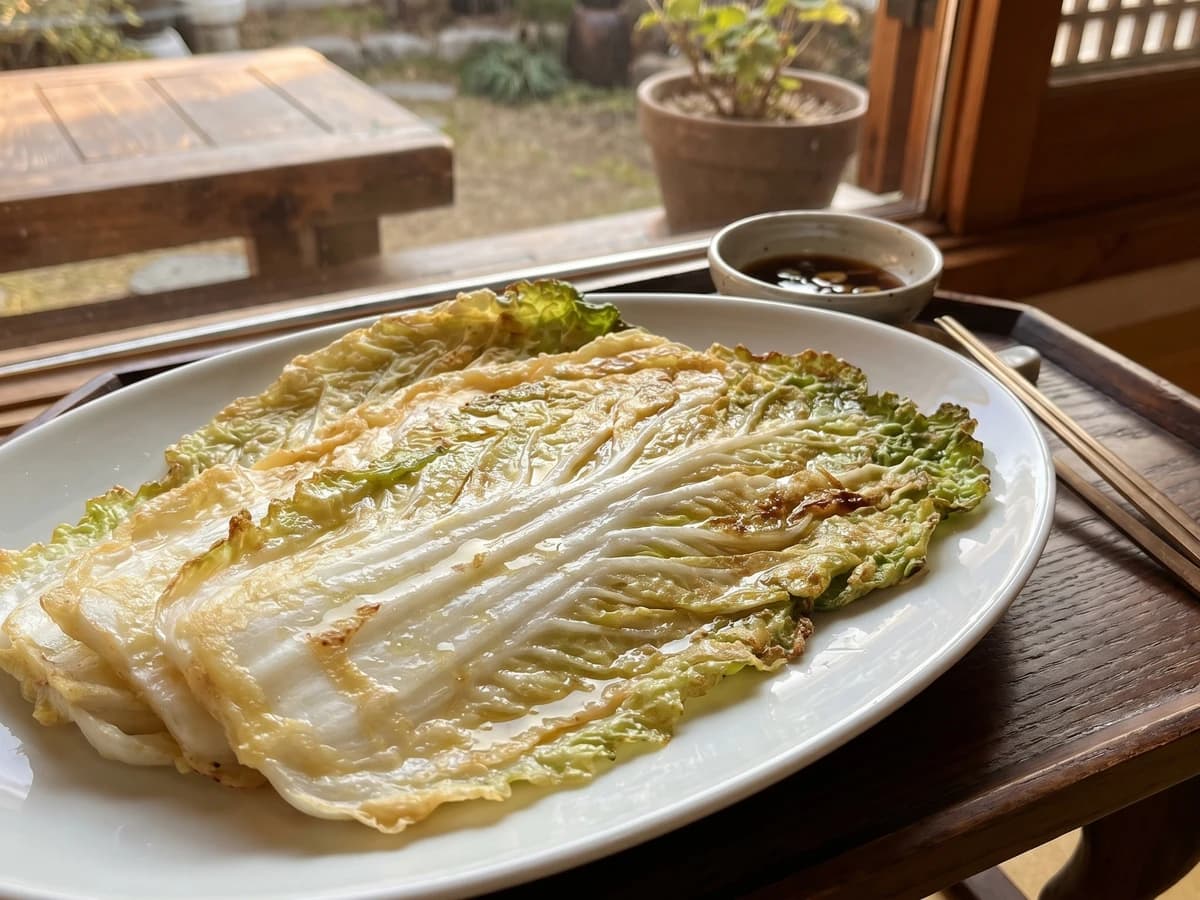
Baechu-jeon (배추전, Napa Cabbage Pancake)
A Gyeongsang home pancake made from one whole napa cabbage leaf at a time, flattened at the rib, brushed in thin salted batter, and fried until sweet, tender, and quietly crisp at the edges.
A cooking platform built around craft, culture, and the stories behind what we eat.

Created by
Chewy dried filefish cut into narrow strips, dragged through a thin ice-cold beer batter, and fried fast so the edges crisp while the fish keeps its sweet sea chew.
Jwipo belongs to the late table, not the ceremonial one: a few friends, a cold beer, a plate set down between people who have already eaten dinner but are not ready to go home. In the market it hangs in flat amber sheets, sweet-salty and a little tough, waiting for fire or oil to wake it back up. Treat it carelessly and it turns hard as a roof tile. Treat it properly and it becomes one of the best cheap anju (drinking snacks) we have.
The whole dish lives or dies by temperature and thickness. Cut the strips wide enough to keep their chew, make the batter thin and very cold, and fry quickly in oil that is truly hot. The beer is not there for cleverness. It brings bubbles and a little bitterness, both useful against the sweet dried fish. Ice-cold water keeps the coating light.
Notebook 41 says this plainly: jwipo is already seasoned. Do not bury it under sugar, gochujang, or a heavy sauce. Let it taste like itself. The safe shortcut is buying good pressed jwipo sheets instead of drying fish yourself. The corner you cannot cut is the cold batter, because that is where the crispness begins.
Jwipo is dried, seasoned filefish, a commercial snack that became especially familiar in Korea's late twentieth-century markets, school snack shops, hof bars, and pojangmacha tables. The flat pressed sheets come from a preservation habit older than the modern bar snack, but today's jwipo is usually a processed product, sometimes made from filefish and sometimes from mixed fish, so careful cooks read the label. Jwipo-twigim is a home and drinking-table variation on the more common roasted jwipo, using quick frying to turn a chewy dried sheet into crisp anju.
Quantity
4 sheets, about 120g total
cut into 1/2-inch strips
Quantity
1/2 cup, plus 2 tablespoons
divided
Quantity
2 tablespoons
Quantity
1/4 teaspoon
Quantity
1/4 teaspoon
Quantity
1/2 cup
Quantity
1/4 cup
Quantity
1
cold
Quantity
3 cups
for frying
Quantity
1 tablespoon
Quantity
2 tablespoons
Quantity
1 tablespoon
Quantity
1 teaspoon
Quantity
1 teaspoon
finely sliced
Quantity
1/2 teaspoon
| Ingredient | Quantity |
|---|---|
| dried filefish (jwipo)cut into 1/2-inch strips | 4 sheets, about 120g total |
| all-purpose flourdivided | 1/2 cup, plus 2 tablespoons |
| potato starch or cornstarch | 2 tablespoons |
| fine sea salt | 1/4 teaspoon |
| baking powder | 1/4 teaspoon |
| cold lager beer | 1/2 cup |
| ice-cold water | 1/4 cup |
| egg yolkcold | 1 |
| neutral oilfor frying | 3 cups |
| toasted sesame seeds (optional) | 1 tablespoon |
| soy sauce | 2 tablespoons |
| rice vinegar | 1 tablespoon |
| maesil-cheong (Korean green plum syrup) or sugar | 1 teaspoon |
| scallionfinely sliced | 1 teaspoon |
| gochugaru (Korean chili flakes) (optional) | 1/2 teaspoon |
Cut the dried filefish into strips about 1/2 inch wide and 3 inches long. Do not cut them too thin, because they curl and harden before the batter has time to cook. If the sheets are very stiff, wave them once over a low flame or warm pan for 10 seconds per side, just until flexible, then cut.
Stir together the soy sauce, rice vinegar, maesil-cheong or sugar, scallion, and gochugaru if using. Keep it sharp and light. Jwipo is already seasoned and sweet from drying, so the sauce is there to wake it up, not cover it.
Pour the oil into a small heavy pot so it is at least 1 1/2 inches deep. Heat to 350 degrees F. This temperature matters: cooler oil makes the batter heavy, hotter oil browns the outside before the dried fish softens inside.
Whisk 1/2 cup flour, potato starch, salt, and baking powder in a bowl. In a second bowl, stir the cold beer, ice-cold water, and egg yolk, then pour into the dry mix and stir only 8 to 10 times. Leave small lumps. A smooth batter means you worked the flour too much, and the coating will fry tough instead of crisp.
Put the remaining 2 tablespoons flour on a plate. Dust the jwipo strips lightly, shake off the excess, then dip each strip into the batter. The flour helps the thin coating cling to the fish instead of sliding off into the oil.
Fry 6 to 8 strips at a time for 60 to 90 seconds, turning once, until pale golden and crisp at the edges. Do not wait for deep brown. Dried filefish has sugar in it, and it goes from good to bitter faster than fresh fish.
Lift the strips to a rack, not a paper towel, so the underside stays crisp. Scatter with toasted sesame if you like. Serve at once with the dipping sauce and something cold to drink. Fried jwipo waits badly, and I won't pretend otherwise.
1 serving (about 90g)
Culinary guides, cultural storytelling, and the editorial depth that makes cooking meaningful.
Discover Culinary ExplorerChef Jeong-sun
A Gyeongsang home pancake made from one whole napa cabbage leaf at a time, flattened at the rib, brushed in thin salted batter, and fried until sweet, tender, and quietly crisp at the edges.

Chef Jeong-sun
A holiday jeon of fresh shiitake or oyster mushrooms, salted lightly, dusted thinly, and carried through egg in a quiet pan until the mushroom stays earthy and the coating stays tender.
Chef Jeong-sun
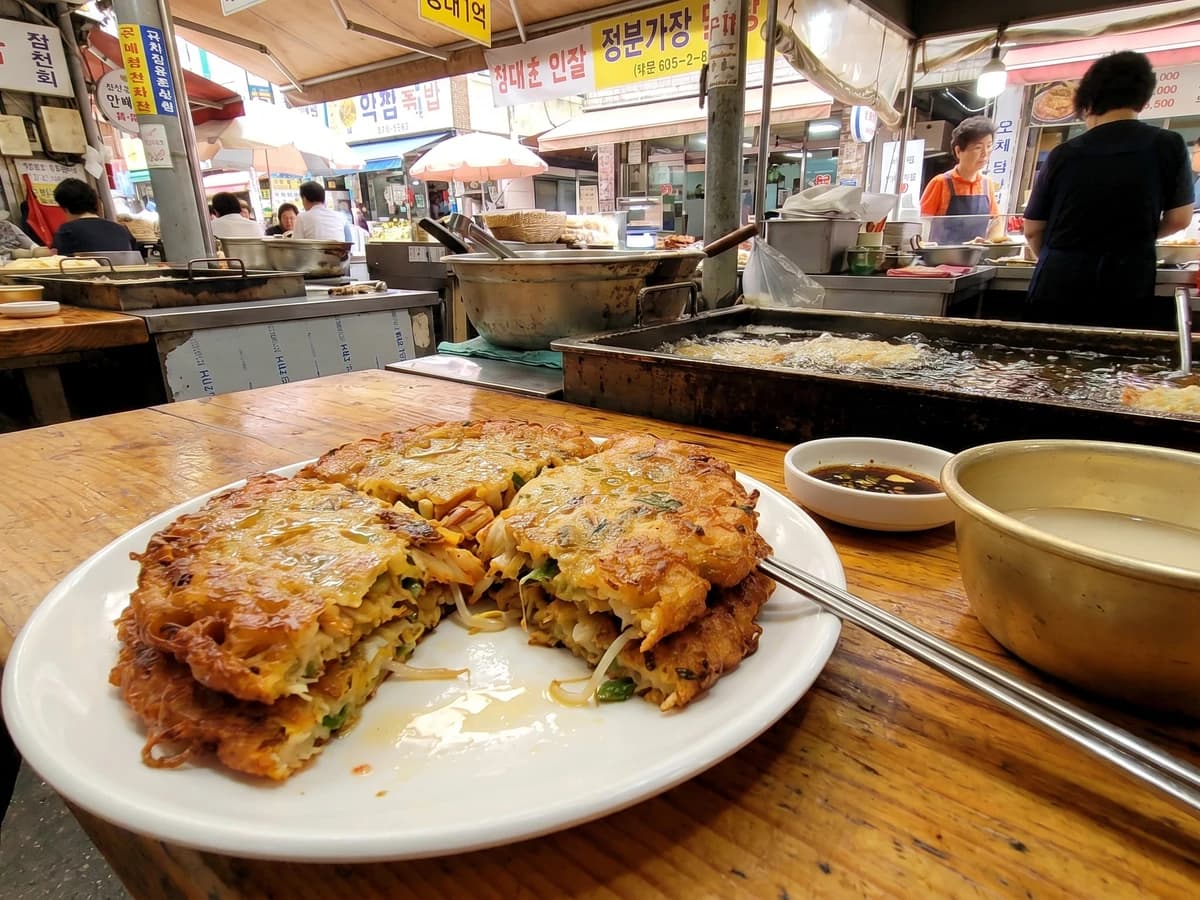
Soaked mung beans ground coarse, folded with pork, bracken, sprouts, and kimchi, then fried thick until the edges crisp and the center stays tender enough for a shared table.
Chef Jeong-sun
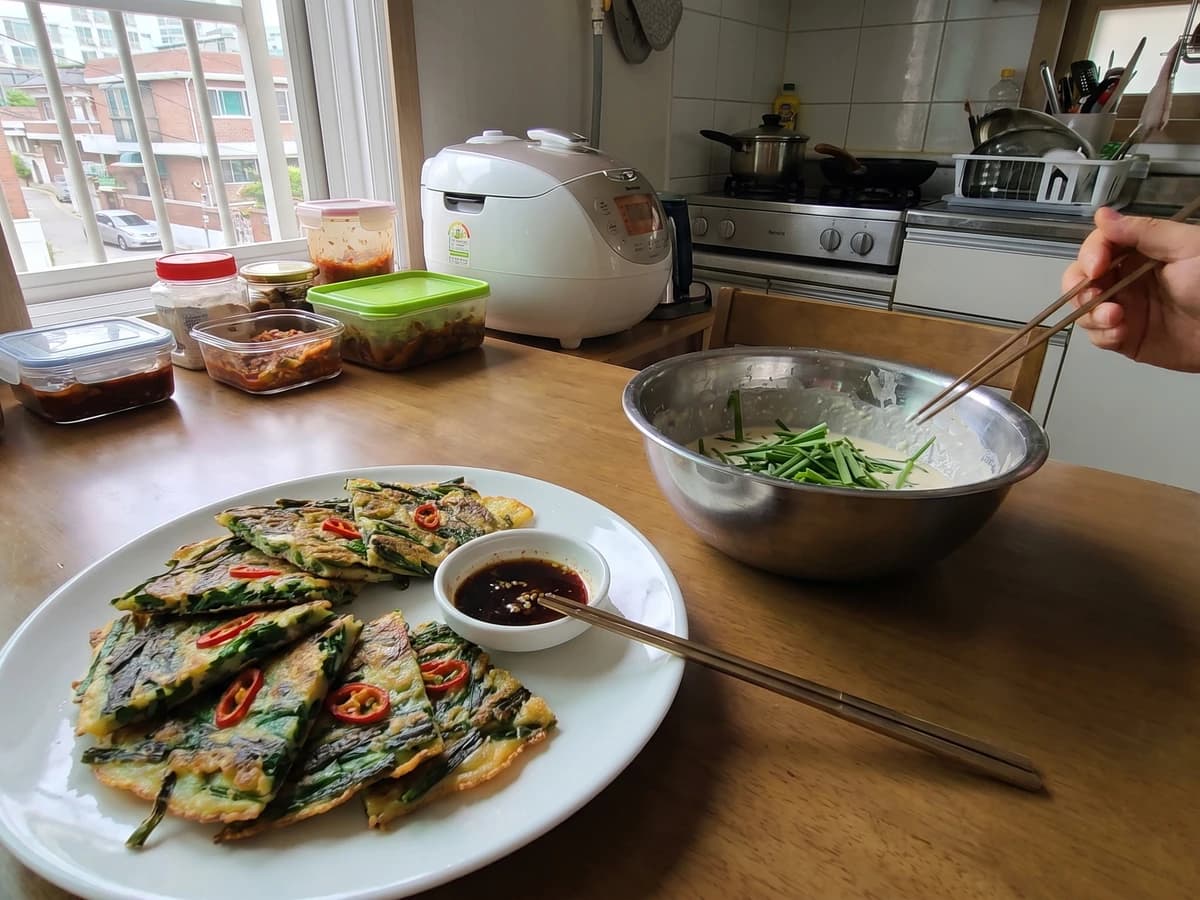
A summer garlic chive pancake fried thin, crisp at the edges and chewy in the center, with just enough batter to hold the green pile together and a sharp soy-vinegar dip.