
Chef Lupita
Agua de Alfalfa
Ciudad de México's highland market agua fresca, fresh alfalfa blended with pineapple and lime until bright green, strained clean, and poured cold from the vitrolero.
A cooking platform built around craft, culture, and the stories behind what we eat.
Created by
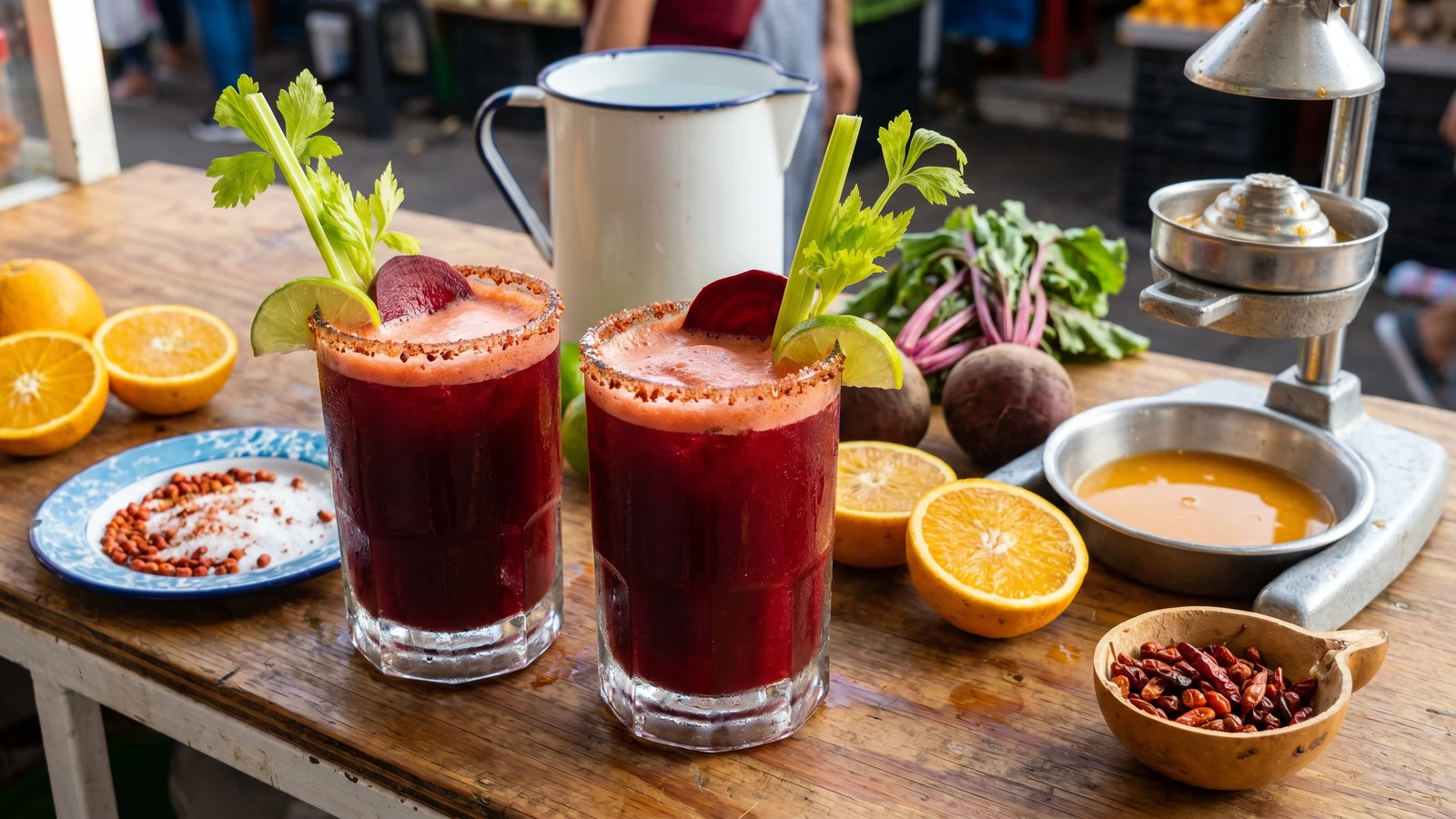
Sinaloa's blood-red breakfast juice, beet and carrot pressed with orange, lime, and celery at the corner puesto. The morning cure of the northwest, drunk standing up before the heat sets in.
The vampiro is a Sinaloa drink, a corner-puesto drink, the kind of juice you order before the heat of Culiacan or Mazatlan settles into the morning and you need something that will wake you up without sitting heavy. Beet, carrot, orange, celery, lime. The color is the name. Blood red, almost violet at the edge of the glass.
This is not a wellness drink. This is a working drink. The juiceros set up at first light, pressing oranges by the dozen on a hand-cranked extractor and feeding whole beets and carrots into a juicer that has been running since the puesto opened twenty years ago. The vampiro is what the construction worker drinks before his shift, what the abuela drinks on her way back from the panaderia, what the children drink when their mother decides they are not eating enough verduras. It is the morning cure for a hangover, for a long day, for whatever is wrong with you that vegetables can fix.
The ingredients are not negotiable. Beet for color and earth. Carrot for sweetness and body. Orange for brightness, with the pith left on so the juice has grip. Celery, leaves and all, for the savory note that keeps the glass from turning into a fruit smoothie. A squeeze of lime to lift it. A pinch of salt to pull it together. Some puestos rim the glass with crushed chiltepin and salt, the wild Sonoran chile that grows up through Sinaloa's sierra. That rim is the difference between a juice and a vampiro. Cada estado, su propia cocina, and this one belongs to the northwest.
The jugo vampiro emerged in Sinaloa's juguerias and corner puestos during the second half of the 20th century, when the consolidation of the northwest's industrial agriculture made beets, carrots, and Valencia oranges available year-round at low cost in working-class markets across Culiacan, Los Mochis, and Mazatlan. The drink belongs to the broader regional tradition of jugos de la manana, a category of pressed vegetable-fruit juices sold from dawn until mid-morning at sidewalk stands, descended in spirit from the pre-Columbian practice of consuming pulped fruit and water at the start of the day. The chiltepin rim is a Sonoran-Sinaloan signature, drawing on the wild chile that grows along the Sierra Madre Occidental and that indigenous and rancho cooks of the northwest have used as a seasoning for centuries.
Quantity
1 medium (about 8 ounces)
scrubbed and trimmed
Quantity
3 medium
scrubbed and trimmed
Quantity
4
with the leaves
Quantity
4
peeled, with the white pith left on
Quantity
1 small
peeled
Quantity
1 small piece (1/2 inch)
peeled
Quantity
1 pinch
Quantity
1 pinch
crushed, for the rim
Quantity
1
for the rim
Quantity
for serving
| Ingredient | Quantity |
|---|---|
| red beetscrubbed and trimmed | 1 medium (about 8 ounces) |
| carrotsscrubbed and trimmed | 3 medium |
| celery stalkswith the leaves | 4 |
| Valencia or navel orangespeeled, with the white pith left on | 4 |
| limepeeled | 1 small |
| fresh ginger (optional)peeled | 1 small piece (1/2 inch) |
| sea salt | 1 pinch |
| chiltepin (optional)crushed, for the rim | 1 pinch |
| lime wedge (optional)for the rim | 1 |
| ice | for serving |
Scrub the beet and carrots under cold water. The beet skin stays on. That is where the color lives and that is where most of the earthiness comes through. Trim the leafy tops and the root ends. Cut the beet into wedges that will fit the throat of your juicer or blender. Cut the carrots into 2-inch pieces. The celery goes in whole, leaves and all. The leaves carry more flavor than the stalks.
Peel the oranges and the lime by hand. Leave the white pith on the orange flesh. The pith is bitter on its own, but in the vampiro it cuts the sweetness of the beet and the carrot and gives the juice the slight grip that keeps it from tasting like a smoothie. Sweet juice on its own is not a vampiro. The vampiro has edges.
If you have a juicer, run everything through in this order: beet first, then carrot, then celery, then orange and lime, then the ginger if you are using it. The citrus at the end pushes the heavier pulp through and rinses the screen. If you do not have a juicer, blend everything in a high-powered blender with 1/2 cup of cold water until smooth, then strain through a fine-mesh sieve or a clean cotton manta. Press the pulp with the back of a spoon. Do not waste it.
Stir a pinch of sea salt into the juice. Taste. The salt does not make it salty. It pulls the beet and the orange forward and rounds the whole glass. If the juice tastes flat, the answer is almost always more lime, not more salt. If it tastes too sweet, more lime. If it tastes thin, more salt. The vampiro should taste like the earth answering the sun.
Run a lime wedge around the rim of two heavy glass tumblers. Press the rim into a small plate of crushed chiltepin and sea salt if you want the corner-stand finish. Fill the glasses with ice. Pour the juice over the ice and serve immediately. The vampiro does not keep. Within 30 minutes the color dulls and the citrus turns sharp in the wrong way. Drink it the moment it is poured. La cocina no es decoracion, es trabajo, and so is the desayuno.
1 serving (about 350g)
Culinary guides, cultural storytelling, and the editorial depth that makes cooking meaningful.
Discover Culinary ExplorerChef Lupita
Ciudad de México's highland market agua fresca, fresh alfalfa blended with pineapple and lime until bright green, strained clean, and poured cold from the vitrolero.
Chef Lupita
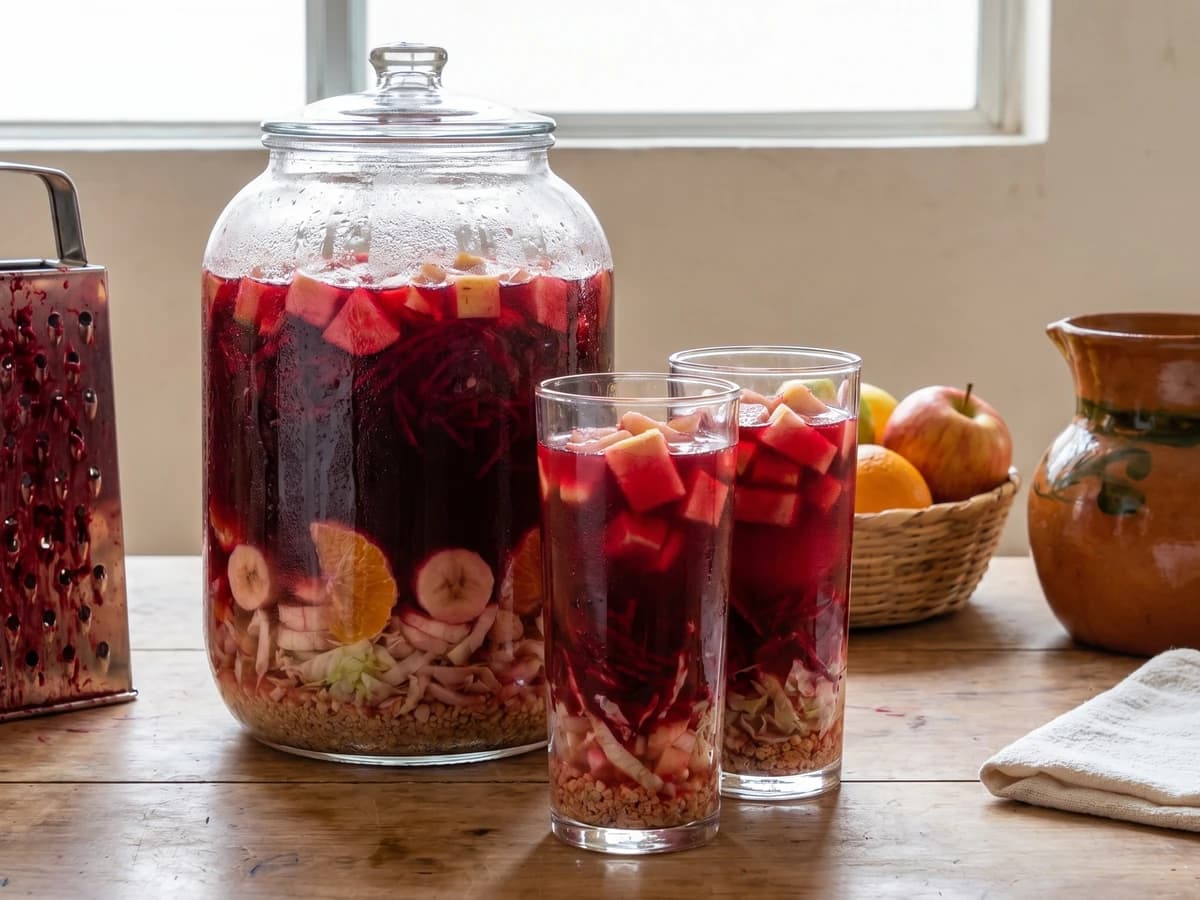
Aguascalientes' Lenten agua fresca, jewel-red from cooked beet and full of apple, banana, orange, lettuce, and ground peanuts, served cold when Holy Week meets the Feria de San Marcos.

Chef Lupita
Sonora and Sinaloa's creamy malted barley water, built on toasted cebada perla, Mexican canela, vanilla from Papantla, and evaporated milk. Pink-beige, rich, and served cold over heavy ice in a heavy glass tumbler. Liquid cookie comfort the northwest way.

Chef Lupita
Yucatán's everyday tonic of boiled chaya leaves blended with lima agria, sugar, and ice. The bright green jarra that sits on every Peninsula table from Mérida to Valladolid.