Culinary Explorer
A cooking platform built around craft, culture, and the stories behind what we eat.
Jugo de Caña Tabasqueño
Created by Chef Lupita
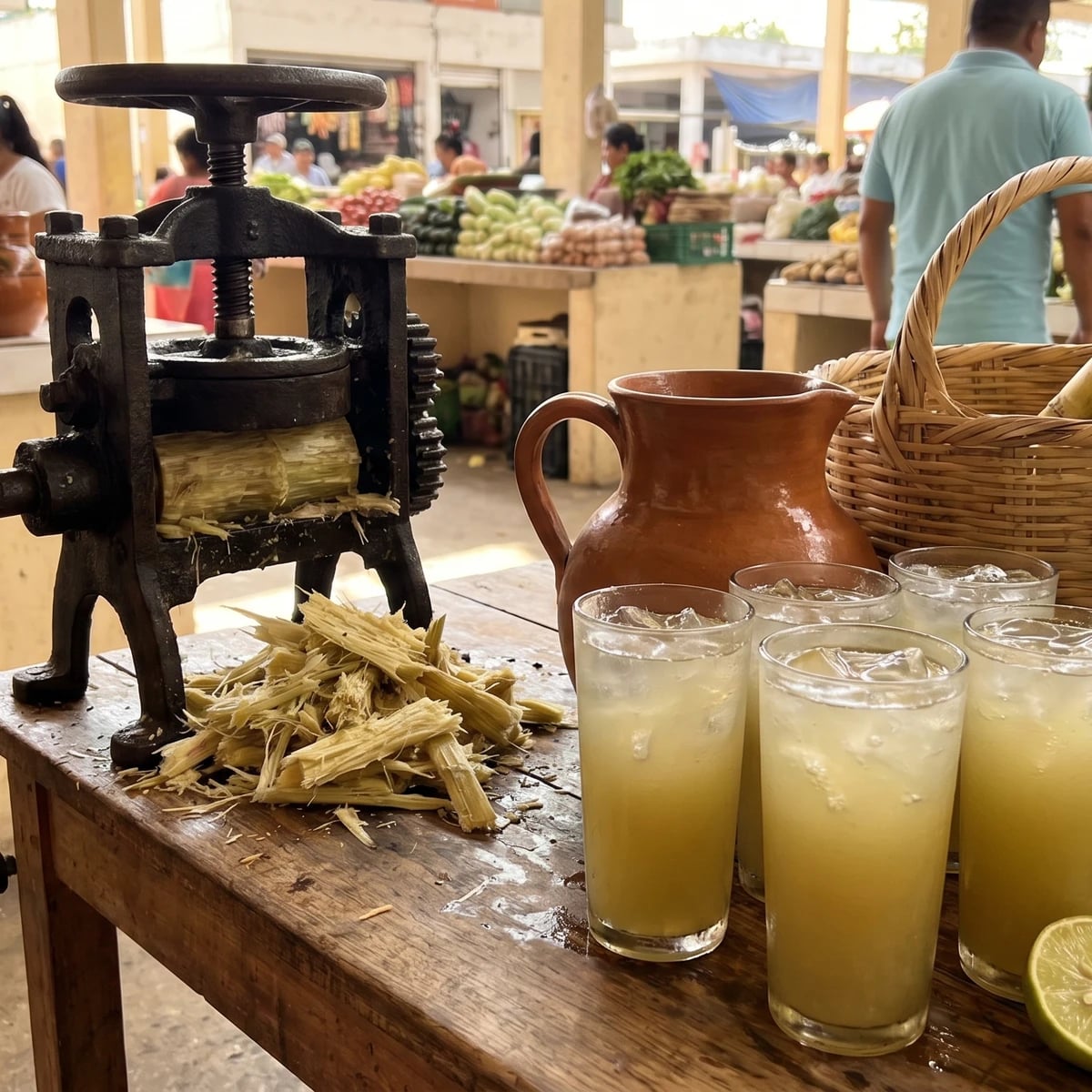
Tabasco's fresh sugarcane juice, pressed through a trapiche in the humid lowlands of La Chontalpa, served cold with limón before fermentation turns it into guarapo.
Tabasco, especially La Chontalpa and the cane-growing lands around Cárdenas, Comalcalco, Cunduacán, and Huimanguillo, knows sugarcane as more than sweetness. This is wet, green country. Cane grows tall in the heat, and when the stalk is pressed fresh, the juice tastes grassy, mineral, and clean in a way bottled sugar never will.
Jugo de caña lives at the trapiche, the cane press, where the stalks go in scraped and split and come out as pale green-gold juice. In the markets I visited in Villahermosa, the señoras selling refrescos did not complicate it. Good cane, clean press, plenty of ice, limón criollo if the market had it. That is the recipe. No chile. No syrup. No decorations. Not every Mexican drink needs to burn your mouth. This is a 32-state cuisine, and Tabasco's heat asks for refreshment, not performance.
The discipline is sanitation and speed. Cane juice ferments quickly in that humidity. Fresh, it is a refresher. Leave it too long and you are starting guarapo. That can be its own thing, but don't confuse the two. Serve it cold, drink it the same day, and respect the ingredient. Saber cocinar es saber vivir, and saber beber in Tabasco means knowing when the juice is alive and when it has already moved on.
Ingredients
fresh sugarcane stalks
Quantity
3 pounds
scrubbed, peeled, and cut into pieces that fit the press
fresh limón criollo juice, or Mexican lime juice
Quantity
1/2 cup, plus more to taste
ice
Quantity
4 cups
| Ingredient | Quantity |
|---|---|
| fresh sugarcane stalksscrubbed, peeled, and cut into pieces that fit the press | 3 pounds |
| fresh limón criollo juice, or Mexican lime juice | 1/2 cup, plus more to taste |
| ice | 4 cups |
Where cooking meets culture.
Culinary guides, cultural storytelling, and the editorial depth that makes cooking meaningful.
Discover Culinary Explorer