
Chef Jeong-sun
Agwi-jjim (Braised Monkfish with Bean Sprouts)
Firm monkfish buried under crisp soybean sprouts, minari, and a red gochugaru sauce thickened at the end; Masan's market dish asks for heat, timing, and a steady hand.
A cooking platform built around craft, culture, and the stories behind what we eat.
Created by
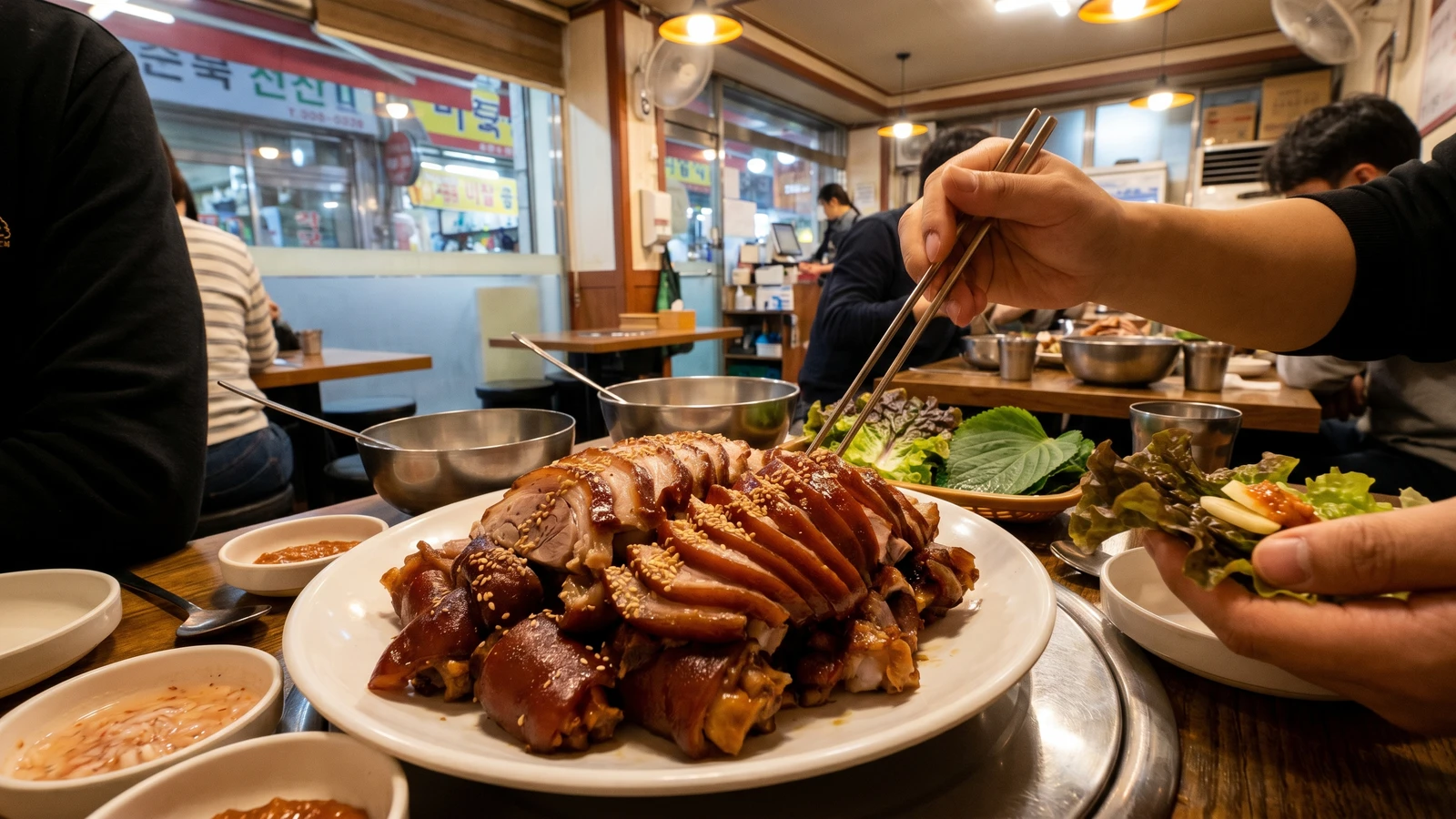
A Seoul market favorite of soy-braised pig's trotters, cooked long enough for the skin to turn glossy and tender, then sliced and eaten with saeujeot and fresh ssam.
Jokbal lives or dies before the soy sauce ever goes in. Clean the trotters badly and the pot will tell on you for three hours. Clean them properly, blanch them hard, rinse them well, and the same cut people avoid becomes glossy, tender, and generous enough for a table of friends.
This is not quiet food. Jokbal belongs to the market and the late table, sliced thick on a platter, wrapped in lettuce with garlic, green chili, ssamjang, and a little saeujeot (salted shrimp sauce). The skin should be soft and springy, the meat seasoned through but not salty, and the fat clean enough that you want one more piece. Too much sugar turns it sticky and dull. Too much spice makes it taste borrowed. Let pork taste like pork, held by soy, ginger, garlic, and time.
My teacher made me write down the blanching water separately from the braising water. I was annoyed then. Notebook 18 says she was right. The first pot removes what you do not want; the second pot gives the meat its name. 손맛 is real, the hand-taste your grandmother trusted, and I still measure it so it can be handed on.
Jokbal became strongly associated with Seoul's Jangchung-dong area in the decades after the Korean War, when inexpensive pork cuts fed workers, students, and late-night drinkers near markets and theaters. Older Korean cooking had long used pig's feet in boiled and braised preparations, but the glossy soy-braised platter served with saeujeot, lettuce, garlic, and chili is a modern restaurant and market-table form. Its usual sauce pairing is practical as much as traditional: fermented salted shrimp cuts the richness of the gelatinous skin and pork fat.
Quantity
2.5 to 3kg
split lengthwise by the butcher, cleaned
Quantity
as needed
for soaking and rinsing
Quantity
2 tablespoons
for scrubbing
Quantity
1/2 cup, divided
Quantity
10 slices, divided
Quantity
8 cloves, divided
Quantity
2
cut into 3-inch lengths, divided
Quantity
1 small
halved
Quantity
1/2
quartered
Quantity
1 cup
Quantity
1/4 cup
for deeper color
Quantity
1/3 cup
Quantity
2 tablespoons
Quantity
2 tablespoons
Quantity
1 tablespoon instant coffee or 1 small cup
for color
Quantity
2
Quantity
1 stick, about 3 inches
Quantity
2
Quantity
1 teaspoon
Quantity
1
Quantity
10 cups, or enough to mostly cover the trotters
Quantity
1 tablespoon
for serving
Quantity
1 head
leaves separated, for serving
Quantity
8
for serving
Quantity
4
sliced, for serving
Quantity
6 cloves
thinly sliced, for serving
Quantity
to serve
Quantity
to serve
| Ingredient | Quantity |
|---|---|
| pig's trotterssplit lengthwise by the butcher, cleaned | 2.5 to 3kg |
| cold waterfor soaking and rinsing | as needed |
| coarse saltfor scrubbing | 2 tablespoons |
| soju or rice wine | 1/2 cup, divided |
| fresh ginger | 10 slices, divided |
| garlic | 8 cloves, divided |
| scallionscut into 3-inch lengths, divided | 2 |
| onionhalved | 1 small |
| Korean pear or Asian pear (optional)quartered | 1/2 |
| soy sauce | 1 cup |
| dark soy sauce (optional)for deeper color | 1/4 cup |
| brown sugar or jocheong (rice syrup) | 1/3 cup |
| doenjang (fermented soybean paste) | 2 tablespoons |
| oyster sauce (optional) | 2 tablespoons |
| instant coffee or strong black coffee (optional)for color | 1 tablespoon instant coffee or 1 small cup |
| dried jujubes (optional) | 2 |
| cinnamon stick | 1 stick, about 3 inches |
| bay leaves | 2 |
| whole black peppercorns | 1 teaspoon |
| dried red chili (optional) | 1 |
| water | 10 cups, or enough to mostly cover the trotters |
| toasted sesame seedsfor serving | 1 tablespoon |
| red leaf lettuce or green leaf lettuceleaves separated, for serving | 1 head |
| perilla leaves (optional)for serving | 8 |
| green chiliessliced, for serving | 4 |
| garlicthinly sliced, for serving | 6 cloves |
| ssamjang | to serve |
| saeujeot dipping sauce | to serve |
Rinse the split trotters under cold running water, rubbing away any bone dust. Soak them in a large bowl of cold water for 45 minutes, changing the water once, then scrub the skin with the coarse salt and rinse again. This is not fuss. Blood and bone dust muddy the braise and give the pork a heavy smell.
Put the trotters in a large pot and cover with fresh cold water. Add 1/4 cup soju or rice wine, 4 slices ginger, 3 garlic cloves, and 1 scallion. Bring to a hard boil and boil 10 minutes, uncovered. Drain, then rinse the trotters and scrub the pot clean before you use it again. The first pot is for removing; the second pot is for seasoning.
Return the rinsed trotters to the clean pot. Add 10 cups water, the soy sauce, dark soy sauce if using, brown sugar or jocheong, doenjang, oyster sauce if using, coffee if using, onion, pear if using, remaining ginger, remaining garlic, remaining scallion, jujubes, cinnamon stick, bay leaves, peppercorns, and dried chili. Stir until the doenjang dissolves. The liquid should mostly cover the pork; add a little more water if the upper skin sits dry.
Bring the pot to a boil, then lower the heat to a steady simmer. Cook uncovered or half-covered for 2 hours, turning the trotters every 30 minutes so the skin colors evenly. Skim the surface when foam rises. Do not rush this with a violent boil. Collagen needs time to soften into that clean, springy skin people come to jokbal for.
Keep simmering 45 to 75 minutes more, until a chopstick slides through the thickest skin and meat with only a little resistance. The meat should hold to the bone but not fight you. If the liquid drops below halfway up the trotters before they are tender, add 1 cup hot water and continue.
Lift out the aromatics you can reach, then raise the heat slightly and spoon the braising liquid over the exposed skin for 10 to 15 minutes. The surface should turn deep brown and glossy, not sticky like candy. Too much reduction makes the seasoning harsh, so stop when the skin shines and the liquid tastes savory, sweet, and pork-rich.
Move the trotters to a tray and let them rest 25 to 30 minutes, until they are warm but not too hot to handle. This rest matters. Slice too soon and the skin slips away from the meat; wait too long and it tightens. Cut the meat and skin across the grain into 1/4-inch slices, keeping skin, fat, and lean meat together where you can.
Arrange the sliced jokbal on a large platter and scatter with toasted sesame seeds. Serve with lettuce, perilla leaves, sliced garlic, green chili, ssamjang, and saeujeot dipping sauce. Each wrap wants one slice of pork, a little salted shrimp sauce, one piece of garlic, and a chili slice if the table likes heat. The sauce should sharpen the pork, not bury it.
1 serving (about 330g)
Culinary guides, cultural storytelling, and the editorial depth that makes cooking meaningful.
Discover Culinary ExplorerChef Jeong-sun
Firm monkfish buried under crisp soybean sprouts, minari, and a red gochugaru sauce thickened at the end; Masan's market dish asks for heat, timing, and a steady hand.

Chef Jeong-sun
A quick Korean rice bowl built on contrast: warm rice, cold popping flying-fish roe, chopped vegetables, gim, sesame oil, and the crisp rice bottom a hot stone bowl gives you.

Chef Jeong-sun
Andong's guest noodles, wheat and roasted soybean flour rolled thin, boiled and rinsed cold, then set in a clear chilled anchovy broth with careful strips of beef, egg, and cucumber.

Chef Jeong-sun
Andong's ritual-table rice served on an ordinary day: separate soy-sesame namul, warm rice, and clear radish soup, mixed without gochujang so every vegetable keeps its own voice.