
Chef Jeong-sun
Aehobak-bokkeum (Korean Stir-Fried Zucchini)
Tender Korean zucchini half-moons cooked quickly over real heat, seasoned with salted shrimp so the squash tastes deeper than oil and still clean enough for a weeknight table.
A cooking platform built around craft, culture, and the stories behind what we eat.
Created by
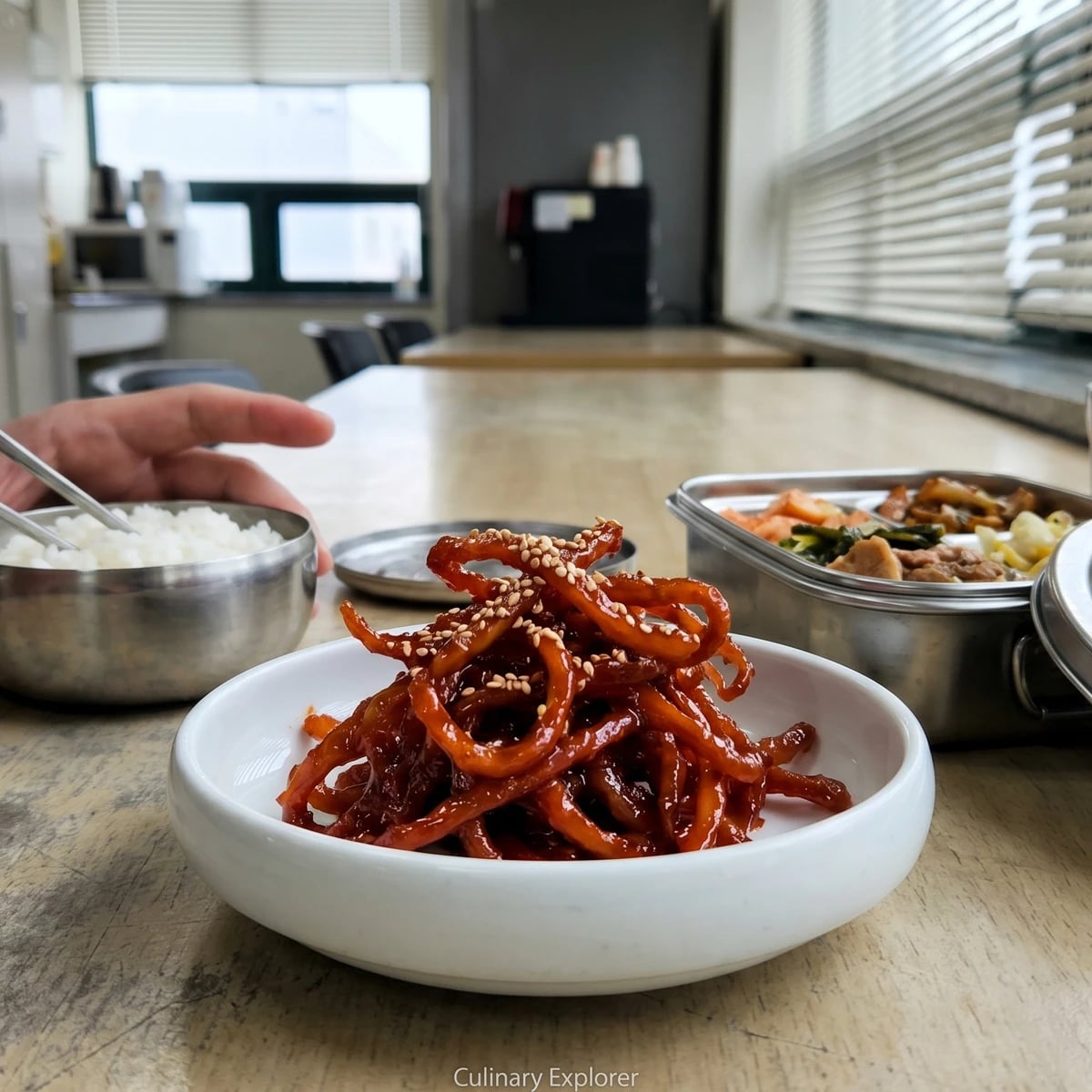
The lunchbox banchan made from shredded dried squid, softened first and tossed off the heat in a sweet-spicy gochujang glaze so it stays chewy instead of turning tough.
Jinmichae-bokkeum lives or dies by what you do not do to it. Don't fry the dried squid hard in the pan. Don't boil it in sauce until it stiffens. Cook the glaze first, turn off the heat, and toss the squid through it like you're dressing a salad with discipline.
This is convenience-store banchan, lunchbox banchan, the small red dish tucked beside rice and rolled omelet. People treat it as too ordinary to measure, then wonder why one batch is tender and the next is like chewing string. The squid is already dried and seasoned. Your job tonight is not to cook it again; your job is to soften it, coat it evenly, and stop.
My teacher's correction was simple: sauce first, squid last. Notebook 29 says 100 grams of jinmichae (shredded dried squid) takes 1 1/2 tablespoons mayonnaise and no more than 2 tablespoons rice syrup. More than that and the squid disappears under sweetness. Let it taste like itself, the sea still present under the gochujang.
Write it down. Memory is a borrowed bowl. This dish keeps well because it was made for busy tables, but it still deserves proper hands.
Jinmichae, also sold as ojingeochae, is shredded dried squid, a modern pantry ingredient that became common as Korea's dried seafood industry and packaged banchan culture expanded in the late twentieth century. Jinmichae-bokkeum belongs to the dosirak (packed lunch) and mitbanchan (make-ahead side dish) table rather than palace cooking: inexpensive, shelf-stable, and built to sit beside rice for several meals. The mayonnaise-softened version is a newer home and lunchbox habit, used because a thin fat coating helps the dried squid stay pliable after the gochujang glaze cools.
Quantity
100g
Quantity
1 1/2 tablespoons
Quantity
1 1/2 tablespoons
Quantity
2 tablespoons
Quantity
1 tablespoon
Quantity
1 tablespoon
Quantity
1 teaspoon
Quantity
1 teaspoon
Quantity
1 teaspoon
minced
Quantity
1 teaspoon
Quantity
1 tablespoon, plus more for finishing
| Ingredient | Quantity |
|---|---|
| jinmichae or ojingeochae (shredded dried squid) | 100g |
| mayonnaise | 1 1/2 tablespoons |
| gochujang (Korean red chili paste) | 1 1/2 tablespoons |
| rice syrup or corn syrup | 2 tablespoons |
| mirim or rice wine | 1 tablespoon |
| water | 1 tablespoon |
| soy sauce | 1 teaspoon |
| gochugaru (Korean chili flakes) (optional) | 1 teaspoon |
| garlicminced | 1 teaspoon |
| toasted sesame oil | 1 teaspoon |
| toasted sesame seeds | 1 tablespoon, plus more for finishing |
Pull apart the jinmichae with your fingers and cut any long strands into 2 to 3 inch lengths. This is not decoration. Shorter strands coat evenly, fit on a spoonful of rice, and don't drag sauce across the lunchbox.
Put the squid in a bowl and toss it with the mayonnaise until every strand is lightly coated. Let it sit 5 minutes. The mayonnaise softens the dry fibers and protects them from the hot glaze, so the finished banchan stays chewy, not tough.
In a small skillet, stir together the gochujang, rice syrup, mirim, water, soy sauce, gochugaru if using, and minced garlic. Set it over medium-low heat and cook 1 to 2 minutes, stirring, just until the glaze loosens, bubbles at the edges, and looks glossy. Cooking the sauce briefly takes the raw edge off the garlic and gochujang.
Turn the heat off completely before the squid goes in. This is the step people rush, and it is why their jinmichae turns stiff. The residual warmth is enough to coat the squid; direct heat keeps drying it.
Add the softened squid to the skillet and toss with tongs or chopsticks until every strand is red and glossy. Work gently but thoroughly, lifting from the bottom so the glaze does not sit in one clump. If the sauce feels too thick to spread, add 1 teaspoon warm water, no more.
Stir in the sesame oil and toasted sesame seeds off the heat. Taste one strand when it has cooled for a minute. It should be sweet-spicy and savory, still tasting clearly of dried squid. Let it cool before storing, because trapped warmth makes condensation and shortens its keeping life.
1 serving (about 45g)
Culinary guides, cultural storytelling, and the editorial depth that makes cooking meaningful.
Discover Culinary Explorer
Chef Jeong-sun
Tender Korean zucchini half-moons cooked quickly over real heat, seasoned with salted shrimp so the squash tastes deeper than oil and still clean enough for a weeknight table.

Chef Jeong-sun
Tender Korean summer zucchini softened gently in the pan with saeujeot for salt and depth, finished with sesame so the vegetable stays sweet, green, and plainly itself.

Chef Jeong-sun
A bittersweet spring green from the southern shore, blanched just until pliant, then seasoned lightly so its clean coastal bitterness stays alive on the rice table.

Chef Jeong-sun
Torn king oyster or shiitake mushrooms, browned until their own water disappears, then finished with soy, garlic, sesame oil, and onion for a quiet banchan that earns its place.