
Chef Takumi
Aji Fry (アジフライ, panko-fried horse mackerel)
Aji fry is weeknight fish with no mystery: fresh horse mackerel opened cleanly, breaded lightly, and fried until the panko crackles while the flesh stays sweet.
A cooking platform built around craft, culture, and the stories behind what we eat.
Created by
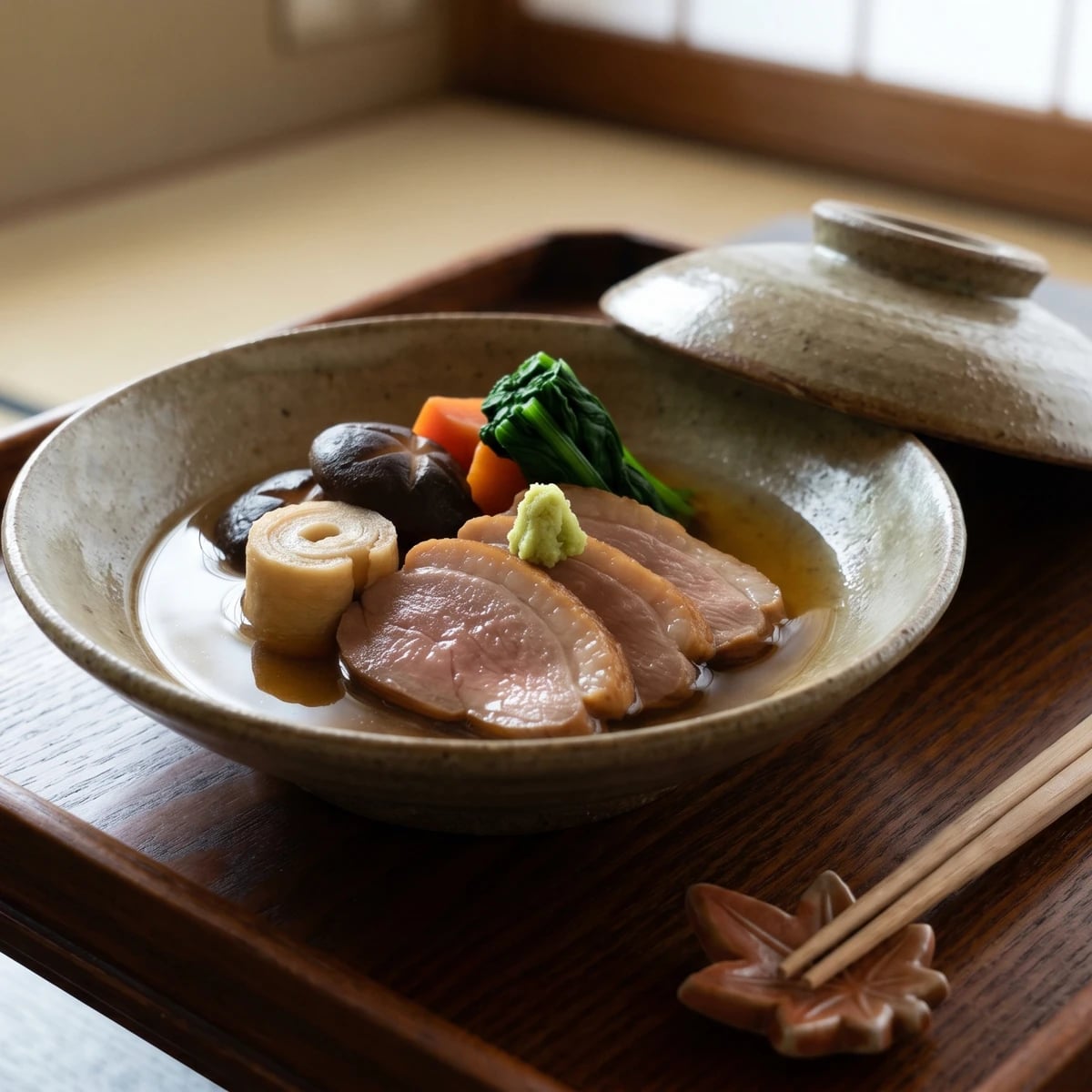
Kanazawa's famous simmered dish is simpler than it looks: good poultry, clear dashi, a light dusting of flour, and wasabi added only at the end.
Jibuni looks like a dish that belongs behind a sliding door in Kanazawa, handled by someone with a better knife and calmer sleeves than yours. Don't be fooled. The heart of it is plain: slices of duck, or chicken if that's what you can buy well, dusted with flour and simmered briefly in seasoned dashi.
That flour is the detail that decides the dish. It coats the meat, keeps the juices from fleeing into the broth, and gives the simmering liquid a soft thickness without turning it heavy. Stir too much and the coating rubs off. Boil too hard and the meat tightens. Keep the simmer quiet, the way we do it here, and the broth clings lightly to every piece.
Use duck breast when you can find it glistening fresh, with firm flesh and clean fat. Chicken thigh is a sensible stand-in, not the old Kaga expression, but it makes an honest home version when the sourcing is better. Sudare-fu, the ridged wheat gluten from Kanazawa, matters too: it drinks the broth and brings the dish back to its place.
And the wasabi waits. Never put it in the pot. Heat steals its fragrance and turns its clean bite dull, so set a small dab on the finished bowl and let each person stir it in at the table. Jibuni is celebration food, yes, but the first secret is restraint. Nothing hidden, nothing hurried.
Jibuni is a representative dish of Kaga ryōri, the cuisine of the old Kaga Domain centered on Kanazawa in present-day Ishikawa Prefecture. Its name is often linked either to the gentle jibu-jibu sound of simmering or to Okabe Jibuemon, a figure said in local tradition to have brought a related method to the Maeda domain, though the sound theory is more widely repeated. The use of sudare-fu, a ridged wheat gluten specialty of Kanazawa, marks the dish as local rather than simply another simmered poultry dish.
Quantity
1 piece (about 10g)
Quantity
20g
Quantity
4 cups
Quantity
400g
skin and excess sinew trimmed
Quantity
3 tablespoons
for dusting
Quantity
4 pieces
soaked if dried
Quantity
8 small
stems trimmed
Quantity
1 small
cut into flower shapes or thin rounds
Quantity
1 small bunch
trimmed
Quantity
2 1/2 cups
Quantity
3 tablespoons
Quantity
3 tablespoons
Quantity
1 tablespoon
Quantity
1 tablespoon
Quantity
1/4 teaspoon
plus more as needed
Quantity
to taste
grated just before serving
| Ingredient | Quantity |
|---|---|
| konbu (dried kelp) | 1 piece (about 10g) |
| katsuobushi (bonito flakes) | 20g |
| cold water | 4 cups |
| duck breast or boneless chicken thighsskin and excess sinew trimmed | 400g |
| all-purpose flour or potato starchfor dusting | 3 tablespoons |
| sudare-fusoaked if dried | 4 pieces |
| fresh shiitake mushroomsstems trimmed | 8 small |
| carrotcut into flower shapes or thin rounds | 1 small |
| spinach or seritrimmed | 1 small bunch |
| dashi | 2 1/2 cups |
| soy sauce | 3 tablespoons |
| mirin | 3 tablespoons |
| sake | 1 tablespoon |
| sugar | 1 tablespoon |
| sea saltplus more as needed | 1/4 teaspoon |
| fresh wasabigrated just before serving | to taste |
Wipe the konbu with a damp cloth, but don't wash it. Put it in the cold water and bring it up slowly over low heat. Pull the konbu just before the water boils, when small bubbles climb the sides; boiling kelp makes the stock cloudy and faintly bitter. Add the katsuobushi, take the pot off the heat, and let the flakes sink for two or three minutes. Strain through cloth or a fine strainer and let it drip on its own. Don't squeeze, or the clear stock takes on a rough, oily taste.
If using dried sudare-fu, soak it in warm water until pliable, then press it gently between your palms to remove excess water. If using fresh nama-fu, slice it into four neat pieces. This step lets the fu drink the seasoned broth later instead of tasting watery in the bowl.
Bring a small pot of water to a boil, salt it lightly, and blanch the spinach or seri just until the color brightens. Rinse under cold water, squeeze gently, and cut into short lengths. The cold rinse fixes the color and keeps the greens from muddying the simmering broth.
Slice the duck or chicken across the grain into pieces about 1/4 inch thick. Keep the pieces broad and even so they cook at the same pace. Dust them lightly with flour or potato starch, then pat off the excess. You want a thin coat, not armor; too much flour makes the broth pasty.
In a wide shallow pot, combine 2 1/2 cups dashi, soy sauce, mirin, sake, sugar, and salt. Bring it to a gentle simmer and taste. It should be balanced and a little stronger than a soup, because the poultry, fu, and vegetables will soften it as they cook.
Add the carrot, shiitake, and sudare-fu to the seasoned broth. Lay a wooden drop-lid, otoshibuta, directly on the surface, or use a circle of parchment with a small hole in the center. Simmer gently for 8 to 10 minutes, until the carrot is tender and the fu looks glossy. The drop-lid keeps everything just under the broth without rough stirring.
Slide the floured poultry slices into the quiet simmer one by one, keeping them separate. Cook for 3 to 5 minutes, turning once, until chicken is cooked through or duck is just firm and still tender. Do not let the pot boil hard. The flour will thicken the broth softly, and a hard boil would tighten the meat and shake off the coating.
Add the blanched greens to the pot only long enough to warm them. Arrange each bowl with a few slices of poultry, one piece of fu, shiitake, carrot, and greens, building a little height and leaving space around the edges. Spoon over the glossy broth. Set a small dab of freshly grated wasabi on top or beside the meat, never in the pot, because heat dulls its fragrance.
1 serving (about 335g)
Culinary guides, cultural storytelling, and the editorial depth that makes cooking meaningful.
Discover Culinary Explorer
Chef Takumi
Aji fry is weeknight fish with no mystery: fresh horse mackerel opened cleanly, breaded lightly, and fried until the panko crackles while the flesh stays sweet.

Chef Takumi
Summer horse mackerel, chopped just enough to catch ginger and scallion, becomes a cool, clean main dish with rice. The secret is fresh fish and a knife that does not bruise it.

Chef Takumi
Akashi-yaki is not sauced takoyaki. It is egg-rich batter, tender octopus, and clear dashi, cooked pale and soft so each ball can be dipped like a small custard dumpling.

Chef Takumi
A whole anago looks like a test of nerve. It is mostly good sourcing, a dry skin, cold batter, and oil hot enough to leave the eel sweet under its lace.