
Chef Takumi
Agar Jelly with Anko and Fruit (あんみつ, Anmitsu)
Anmitsu looks like a tray of small tasks, but the work is calm: dissolve the kanten fully, chill the pieces clean, then let fruit, anko, and kuromitsu do the speaking.
A cooking platform built around craft, culture, and the stories behind what we eat.
Created by
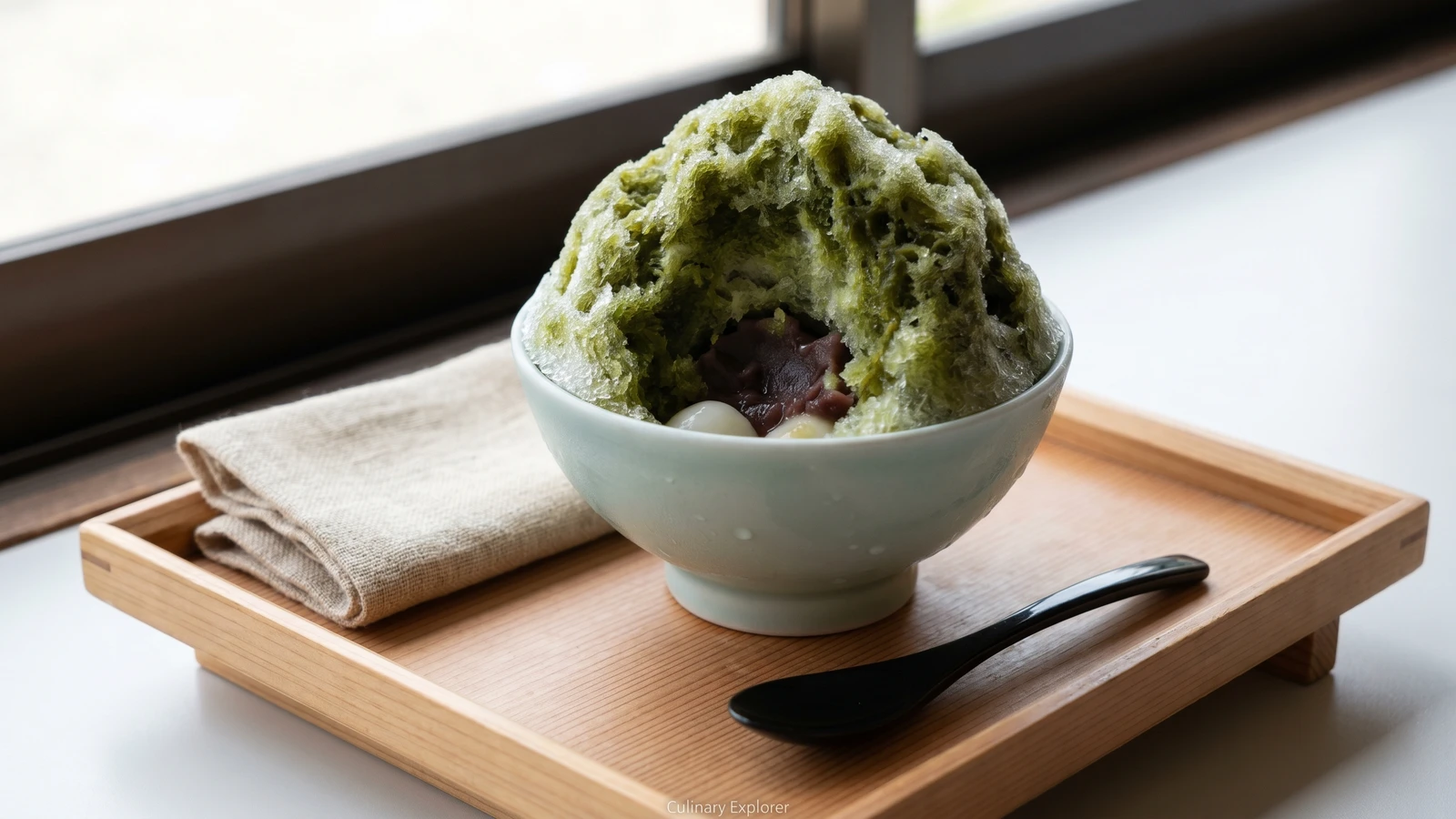
Snowy ice, chilled matcha syrup, and the quiet surprise of mochi and koshi-an below: Akafuku-gōri is Ise summer in a bowl, made reachable by keeping every part cold and soft.
Akafuku-gōri belongs to the part of summer when even rice sounds ambitious. It looks like a small mountain of green snow, but the point is hidden: soft mochi and smooth koshi-an, strained sweet red bean paste, waiting at the bottom. The spoon goes down, not just across. That little discovery is why people line up in Ise when the heat has no manners.
The dish is less difficult than its name makes it sound. Make a bitter, fragrant matcha syrup, keep it cold, shave the ice fine, and tuck the sweet underneath. The one detail that decides it is the mochi. Ordinary firm kiri mochi turns hard and sulky under ice; use fresh Akafuku mochi if you have it, or make a soft gyūhi-style mochi with enough sugar to stay tender when cold.
The matcha syrup should taste slightly strong on its own, because ice dilutes everything. Pour it slowly, and don't drown the mound. We want the first spoon to be cool and bitter, the last spoon sweet with red bean and rice cake. Nothing hidden by heaviness, only hidden for pleasure.
High summer is its shun, at its prime, and the dish knows it. This is a sweet for a festival afternoon, a walk near the shrine, or a tray set outside while the bowl beads with cold. Leave the ice high and loose, with room around it, and serve before the snow remembers it is water.
Akafuku, the Ise confectioner on the route to Ise Jingū, dates its founding to 1707 and is known for Akafuku mochi, rice cakes covered with smooth red bean paste marked in ridges said to suggest the Isuzu River. Akafuku-gōri was introduced in 1961 as a summer-only sweet, pairing matcha syrup and shaved ice with specially prepared mochi and red bean paste hidden inside. Kakigōri itself became an everyday summer treat in modern Japan as manufactured ice and hand-cranked ice shavers spread beyond wealthy households.
Quantity
1 large block, or 1.2kg cubes
Quantity
2 tablespoons (about 10g)
sifted
Quantity
2/3 cup
Quantity
2/3 cup
Quantity
1 pinch
Quantity
80g
Quantity
50g
Quantity
120ml
Quantity
1 tablespoon
Quantity
for dusting
Quantity
1 1/2 cups
Quantity
8 pieces
used instead of homemade mochi and koshi-an
| Ingredient | Quantity |
|---|---|
| filtered-water ice | 1 large block, or 1.2kg cubes |
| matchasifted | 2 tablespoons (about 10g) |
| granulated sugar, for syrup | 2/3 cup |
| water, for syrup | 2/3 cup |
| sea salt | 1 pinch |
| shiratamako (glutinous rice flour) | 80g |
| granulated sugar, for mochi | 50g |
| water, for mochi | 120ml |
| mizuame (Japanese starch syrup) (optional) | 1 tablespoon |
| potato starch (katakuriko) | for dusting |
| smooth koshi-an (strained sweet red bean paste) | 1 1/2 cups |
| Akafuku mochi (optional)used instead of homemade mochi and koshi-an | 8 pieces |
Use a block of filtered-water ice if your shaver takes one, or firm cubes if it doesn't. Keep the ice very cold, then let a solid block stand at room temperature for five minutes before shaving, just until the surface loses its glassy hardness. Ice that is too brittle chips into grit; ice tempered at the surface shaves into soft flakes.
Warm the water, sugar, and salt in a small pan, stirring until the syrup turns clear. Take it off the heat and wait one minute, until the surface is still. Sift the matcha into a bowl and whisk in a few spoonfuls of hot syrup to make a smooth paste, then whisk that paste back into the pan. Strain and chill until fully cold. Boiling matcha makes the green dull and the bitterness coarse; warming the sugar first dissolves it without punishing the tea.
If you are using Akafuku mochi, skip this step and the next; use the shop's pieces the day you buy them. For homemade cold-soft mochi, combine the shiratamako and sugar in a heatproof bowl. Add the water a little at a time, pressing the grains smooth with a spatula, because shiratamako hides dry pearls if you rush it. Stir in the mizuame if using. Set the bowl in a steamer and steam 12 to 14 minutes, stirring once, until the dough turns glossy, translucent, and pulls into one elastic mass. The sugar and syrup keep the mochi tender under ice, which ordinary hard mochi refuses to do.
Dust a tray with potato starch and scrape the hot mochi onto it. Dust the top lightly, pat it into a slab about 1/2 inch thick, and let it cool just until you can handle it. Cut it into 12 small pieces and brush away the extra starch. Too much starch clouds the ice, and large pieces fight the spoon. Small is kinder.
Chill four bowls until cold to the touch. Divide the koshi-an among them in low mounds, then tuck three mochi pieces around each mound. If using Akafuku mochi, set two pieces in the bottom of each bowl instead. Keep the filling low and centered, because the pleasure of Akafuku-gōri is hidden at the bottom, not paraded on top.
Shave the ice directly over each bowl, turning the bowl as you work, until you have a loose dome. Don't press it down. Packed ice melts hard and sends the syrup running off the sides; loose flakes catch the matcha and stay snowy.
Spoon 3 to 4 tablespoons of cold matcha syrup slowly over each mound, letting it fall in narrow ribbons from the top and down one side. Serve at once with a long spoon. The first bite should be cold and green, the last one sweet with red bean and rice cake. Reach to the bottom for the prize.
1 serving (about 560g)
Culinary guides, cultural storytelling, and the editorial depth that makes cooking meaningful.
Discover Culinary ExplorerChef Takumi
Anmitsu looks like a tray of small tasks, but the work is calm: dissolve the kanten fully, chill the pieces clean, then let fruit, anko, and kuromitsu do the speaking.

Chef Takumi
A cool square of almond-scented milk, set softly and served with mikan in thin syrup, is dinner-party food without theater. The only stern demand is restraint with the fragrance.

Chef Takumi
Azuki bar asks for patience twice: once while the beans soften, and once while the frozen bar yields. That hardness is not a flaw. It is the character of the thing.
Chef Takumi
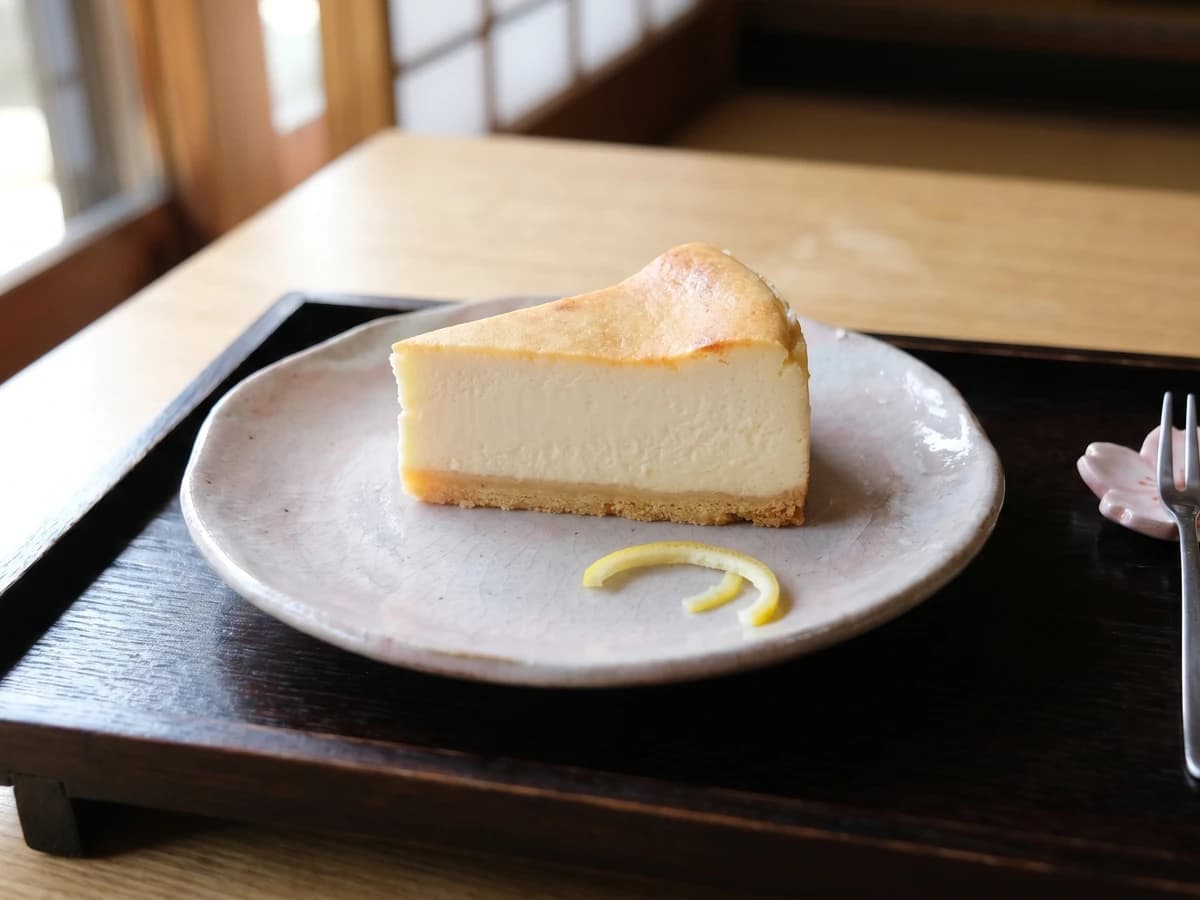
A Japanese baked cheesecake is not trying to float away. It is dense, smooth, and quietly tart, with a clean slice doing the work of decoration.