
Chef Juliana
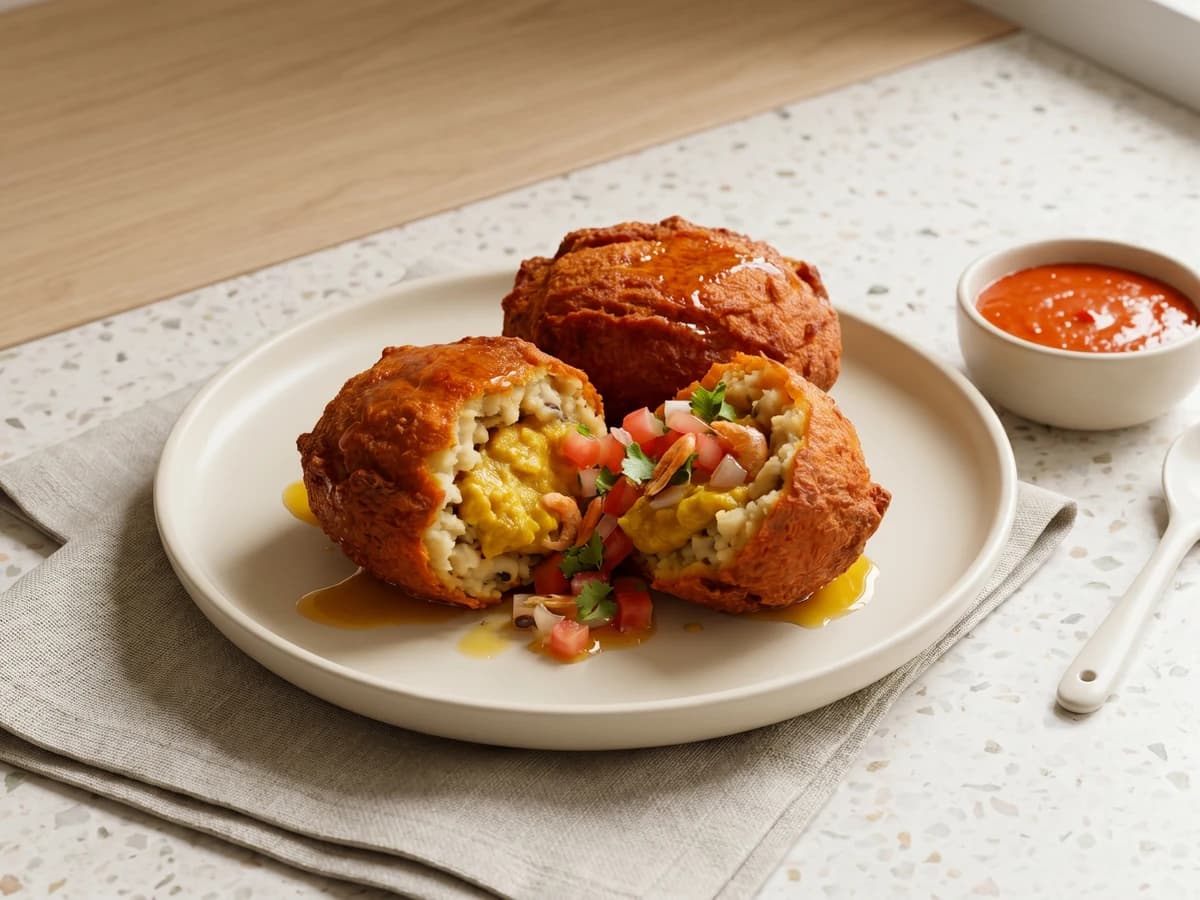
Abará
You think banana leaves and hand-whipped bean massa mean “isso não é pra mim.” Wrong. Soak, peel, beat, wrap, steam. Abará is learned by touch, not inherited by magic.
A cooking platform built around craft, culture, and the stories behind what we eat.

Created by
You thought frying fish was for bars with big fryers. Wrong. Cut it small, season it well, bread it in order, and hot oil will do exactly what you asked.
You know that quiet little voice, isso não é pra mim, that appears the second oil goes into a pan? I know her. She visited me plenty when I was learning as a grown woman, usually right before I dropped something wet into hot oil like a person trying to start a small war.
So anota aí: frying fish isn't courage, it's order. Dry the fish so the seasoning sticks. Flour first so the egg has something to hold. Egg next so the crumbs cling. Crumbs last so the outside goes crisp before the fish overcooks. That's not a gift. Cozinhar não é dom, é um aprendizado.
Iscas de peixe are bar food, yes, but they also belong beautifully beside the pê-efe. Rice, feijão, these golden strips, and couve or a simple salad, and dinner is solved without a packet pretending to be flavor. A gente can have the snack plate for game day and still call it comida de verdade.
The trick is small batches and hot oil. Crowd the pan and the temperature drops, the coating gets heavy, and the fish starts leaking water instead of frying cleanly. Give the strips room, listen for the steady bubbling, and pull them when they're golden. Lime on top. Done.
Iscas de peixe sit in Brazil's boteco tradition, the small-bar table of fried snacks, cold drinks, lime wedges, and shared plates that grew especially strong in cities through the twentieth century. Along the coast and in river regions, cooks use whatever firm local fish is good that day, from pescada to tilapia to dourado, so the dish is less a single regional claim than a practical Brazilian habit: fresh fish, quick seasoning, hot oil, and people eating with their hands.
Quantity
600g
cut into 2 cm strips
Quantity
1 1/2 teaspoons
divided
Quantity
1/2 teaspoon
Quantity
2 cloves
finely grated or minced
Quantity
2 tablespoons
plus lime wedges for serving
Quantity
1 cup
Quantity
2 large
Quantity
2 tablespoons
Quantity
1 1/2 cups
Quantity
1/2 teaspoon
Quantity
3 cups, plus more as needed
for frying
Quantity
2 tablespoons
chopped
| Ingredient | Quantity |
|---|---|
| firm white fish filletscut into 2 cm strips | 600g |
| saltdivided | 1 1/2 teaspoons |
| freshly ground black pepper | 1/2 teaspoon |
| garlicfinely grated or minced | 2 cloves |
| lime juiceplus lime wedges for serving | 2 tablespoons |
| all-purpose flour | 1 cup |
| eggs | 2 large |
| water | 2 tablespoons |
| fine dry breadcrumbs or farinha de rosca | 1 1/2 cups |
| sweet paprika (optional) | 1/2 teaspoon |
| neutral oilfor frying | 3 cups, plus more as needed |
| parsley or cilantro (optional)chopped | 2 tablespoons |
Cut the fish into strips about two fingers wide, then pat them very dry with paper towels. The surface should feel tacky, not slippery. Water is the enemy of a good crust, because it blocks browning and makes the coating slide off like it has somewhere better to be.
Put the fish in a bowl with 1 teaspoon of the salt, the pepper, garlic, and lime juice. Toss gently and let it sit for 10 minutes, no longer than 20. The lime wakes up the fish and cuts the oil later, but too much time in acid tightens the flesh and makes it dry. We are seasoning, not cooking it in a bowl.
Set three shallow bowls in a row. Put the flour in the first. Beat the eggs with the water in the second. Put the breadcrumbs, remaining 1/2 teaspoon salt, and paprika if using in the third. This little assembly line is what keeps your hands calm and the coating even. Chaos is not a cooking technique, though I have tried it.
Lift each strip from the seasoning, let the excess drip off, then coat it in flour, dip it in egg, and press it into the breadcrumbs. Shake off the extra at each stage. Flour gives the egg a dry surface to grab, egg glues the crumbs, and crumbs protect the fish long enough for the outside to go crisp before the inside dries out.
Pour the oil into a heavy pot or deep skillet so it sits about 3 cm deep. Heat over medium-high until a breadcrumb dropped in bubbles right away and turns golden in about 20 seconds. If you have a thermometer, aim for 180°C (350°F). Oil that's too cool gives you greasy fish. Oil that's too hot browns the crust before the fish cooks.
Fry 5 or 6 strips at a time, turning once, until deep golden and firm to the touch, about 2 to 3 minutes per batch. Keep the bubbling lively but not violent. Give the strips room. Crowd the pan and the oil cools, the crust gets heavy, and you lose the clean fried bite you came for.
Move the fried strips to a rack or a paper towel-lined plate and sprinkle with a tiny pinch of salt while they're still glossy from the oil. That last salt sticks now, not later. Serve with lime wedges and chopped herbs if you like. Eat right away, when the crust is crisp and the fish still flakes gently.
1 serving (about 205g)
Culinary guides, cultural storytelling, and the editorial depth that makes cooking meaningful.
Discover Culinary ExplorerChef Juliana
You think banana leaves and hand-whipped bean massa mean “isso não é pra mim.” Wrong. Soak, peel, beat, wrap, steam. Abará is learned by touch, not inherited by magic.
Chef Juliana
You think food of Iansã from the baianas' tabuleiro is not for your stove. Anota aí: soaked feijão-fradinho, real dendê, and hand-whipping make a home version learnable.

Chef Juliana
You think fried salgados belong to the birthday table you buy, not the one you make. Wrong. Learn the dough, seal the cheese, and the freezer starts working for you.

Chef Juliana
You think stuffed fried bolinhos are for the boteco cook, not your kitchen. Wrong. Mash the aipim warm, keep the filling dry, fry in small batches, and the tray disappears.