Culinary Explorer

A cooking platform built around craft, culture, and the stories behind what we eat.
Discover Culinary Explorer
Irish Stew

Irish Stew

Created by Chef Thomas

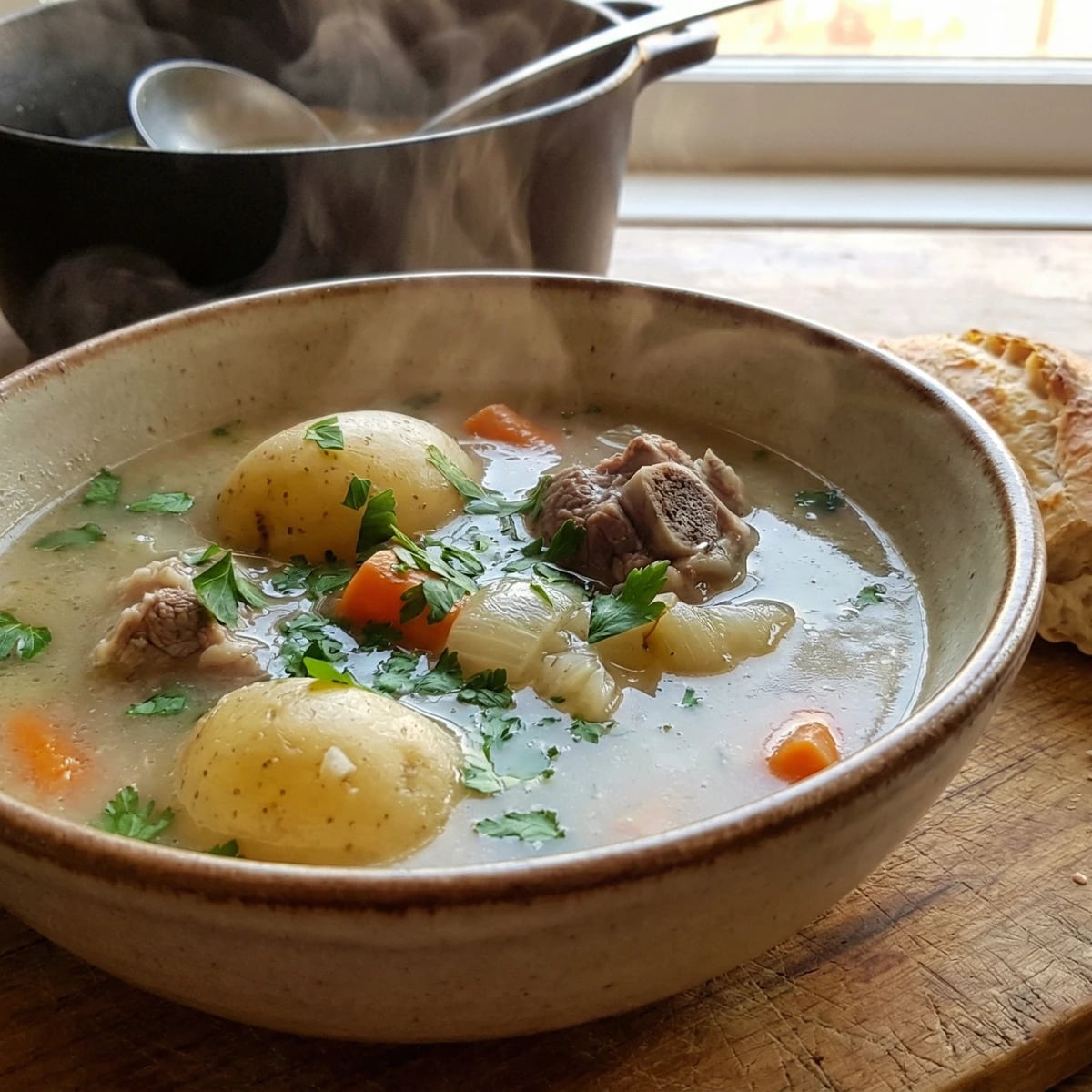
Lamb, potatoes, and onions layered in a pot with thyme, water, and two hours of patience, until the broth thickens itself and the kitchen smells like the kind of evening where nobody is in a hurry.

Soups & Stews
British
Comfort Food
Budget Friendly
20 min
Active Time
2 hr cook2 hr 20 min total
Yield4 servings

February rain on the window and the heating not quite doing its job. That's when you want this stew. Not a sophisticated one. Not the sort with red wine and herbs from three different continents. Just lamb, potatoes, onions, and water, cooked slowly until the potatoes fall apart and thicken the broth into something that clings to the back of a spoon.

I came to this late. For years I made stews the way I'd been taught: brown the meat first, build a base, add stock. All fine. But an Irish stew asks you to forget most of that. The lamb goes in raw. The potatoes do the thickening. There's no browning, no deglazing, no fond to scrape up. You layer everything in a pot, add water, and wait. It felt like doing nothing. It felt like cheating. It was neither.

What comes out, after two hours of the gentlest heat you can manage, is the cleanest lamb broth you've ever tasted. The meat is soft and giving. The potatoes on the bottom have dissolved into the liquid, while the ones on top sit whole and floury, soaked through with the flavour of everything beneath them. I wrote it down in the notebook the first time I made it properly: lamb, potatoes, patience, rain. A recipe is a conversation, not a contract, and this one barely needs words.

There are few better feelings than putting a warm plate in front of someone on a cold night and watching them eat without speaking for a while. This stew does that. We're only making dinner, but sometimes dinner is enough.

The technique, the tradition, and the story behind every dish.

Discover Culinary Explorer

Ingredients

lamb neck or shoulder

Quantity

800g, bone-in

cut into large pieces

onions

Quantity

4 medium

thickly sliced

potatoes

Quantity

6 medium

peeled

carrots

Quantity

3

peeled and cut into thick rounds

water or light lamb stock

Quantity

1 litre

bay leaves

Quantity

2

fresh thyme

Quantity

small bunch

fine sea salt

Quantity

to taste

black pepper

Quantity

to taste

flat-leaf parsley

Quantity

small handful

roughly chopped

Equipment Needed

  • Large heavy-bottomed pot or cast iron casserole with lid
  • Ladle

Instructions

  1. 1

    Build the first layers

    Season the lamb generously with salt and pepper. In a heavy-bottomed pot or casserole, lay half the sliced onions across the base. Set the lamb pieces on top of the onions in a single layer, tucking the bay leaves and thyme amongst the meat. This isn't a dish you brown first. The lamb goes in raw, which feels wrong if you've been taught otherwise, but trust it. The long, slow cooking does all the work.

    Bone-in lamb is essential here. The bones give the broth its body and richness. Boneless meat makes a thinner, less satisfying stew. Ask your butcher for neck or shoulder, and ask them to cut it for you.
  2. 2

    Layer the vegetables

    Cut three of the potatoes into thick slices, roughly a thumb's width, and scatter them over the lamb along with the carrots and the remaining onions. These potatoes will dissolve into the broth as it cooks, thickening it without flour or fuss. Cut the remaining three potatoes in half and place them on top, cut side up. These are the ones you'll eat whole, floury and soft, soaked through with lamb juices.

  3. 3

    Add water and bring to a simmer

    Pour in enough water or stock to come about three-quarters of the way up the pot. You don't want to drown it. Season again with salt. Bring the whole thing to a gentle simmer over a medium heat, then turn it right down to the lowest flame you have. Put the lid on. Now leave it alone.

    If your hob runs hot and you can't get a lazy enough simmer, put it in the oven at 150C/130C fan instead. Same lid, same patience, same result.
  4. 4

    Cook low and slow

    Let it cook for about an hour and a half to two hours. Check it once, halfway through, just to make sure it's barely bubbling and not boiling. A stew that boils is a stew that toughens. You want the surface to tremble, nothing more. The kitchen will start to smell of lamb and thyme and something you can't quite name but recognise from childhood. That's how you know it's working.

  5. 5

    Check and season

    After two hours, lift the lid. The broth should be cloudy and slightly thickened from the dissolved potatoes. The lamb should be yielding and tender, pulling easily from the bone. The whole potatoes on top should be soft all the way through when you press them with a spoon. Taste the broth. It almost certainly needs more salt. Season it properly. Scatter the parsley over the top and bring the pot to the table. This is a dish that belongs in its cooking vessel, not a serving bowl.

Chef Tips

  • The lamb must be on the bone. I know it's easier to buy boneless shoulder, neatly trimmed and cubed, but you'll lose half the flavour. The bones give the broth its depth and body. Neck is best if you can get it. Shoulder works well. Talk to your butcher.
  • Don't be tempted to add too many things. No pearl barley, no turnip, no stock cubes, no Worcestershire sauce. The beauty of this stew is its restraint. Lamb, potato, onion, thyme, water, salt. Everything else is a distraction.
  • The stew improves overnight. Make it on a Saturday and eat it on a Sunday. The broth sets slightly as it cools, then loosens again when reheated, and the flavour deepens into something richer and more settled. Second-day stew is better stew. I've written that in the notebook more than once.
  • Serve it with good bread to mop up the broth. Nothing else on the plate. No side salad, no rice, no complications. A bowl, a spoon, bread, and the pot on the table for second helpings.

Advance Preparation

  • The stew is better made a day ahead. Cool it, refrigerate overnight, and reheat gently the next day. The flavours will have deepened and the broth will have thickened further.
  • Keeps well in the fridge for up to three days. Reheat slowly on the hob, adding a splash of water if the broth has reduced too much.
  • Freezes well for up to three months. Defrost overnight in the fridge and reheat gently on a low heat.

Frequently Asked Questions

Nutrition Information

1 serving (about 700g)

Calories
620 calories
Total Fat
29 g
Saturated Fat
12 g
Trans Fat
1 g
Unsaturated Fat
16 g
Cholesterol
95 mg
Sodium
650 mg
Total Carbohydrates
60 g
Dietary Fiber
10 g
Sugars
12 g
Protein
30 g

Note: Chef personas and recipes are created with AI assistance. Cook with care: follow safe food-handling practices, check doneness with a thermometer when needed, and adapt for allergies and your kitchen.

Where cooking meets culture.

Culinary guides, cultural storytelling, and the editorial depth that makes cooking meaningful.

Discover Culinary Explorer

More from British Stews & Braises

Browse the full collection