
Chef Graziella
Cavolo Cappuccio in Insalata
The cabbage slaw of the Alto Adige, where Austrian traditions meet Italian restraint. Caraway seeds give it character, vinegar gives it brightness, and time gives it depth.
A cooking platform built around craft, culture, and the stories behind what we eat.
Created by
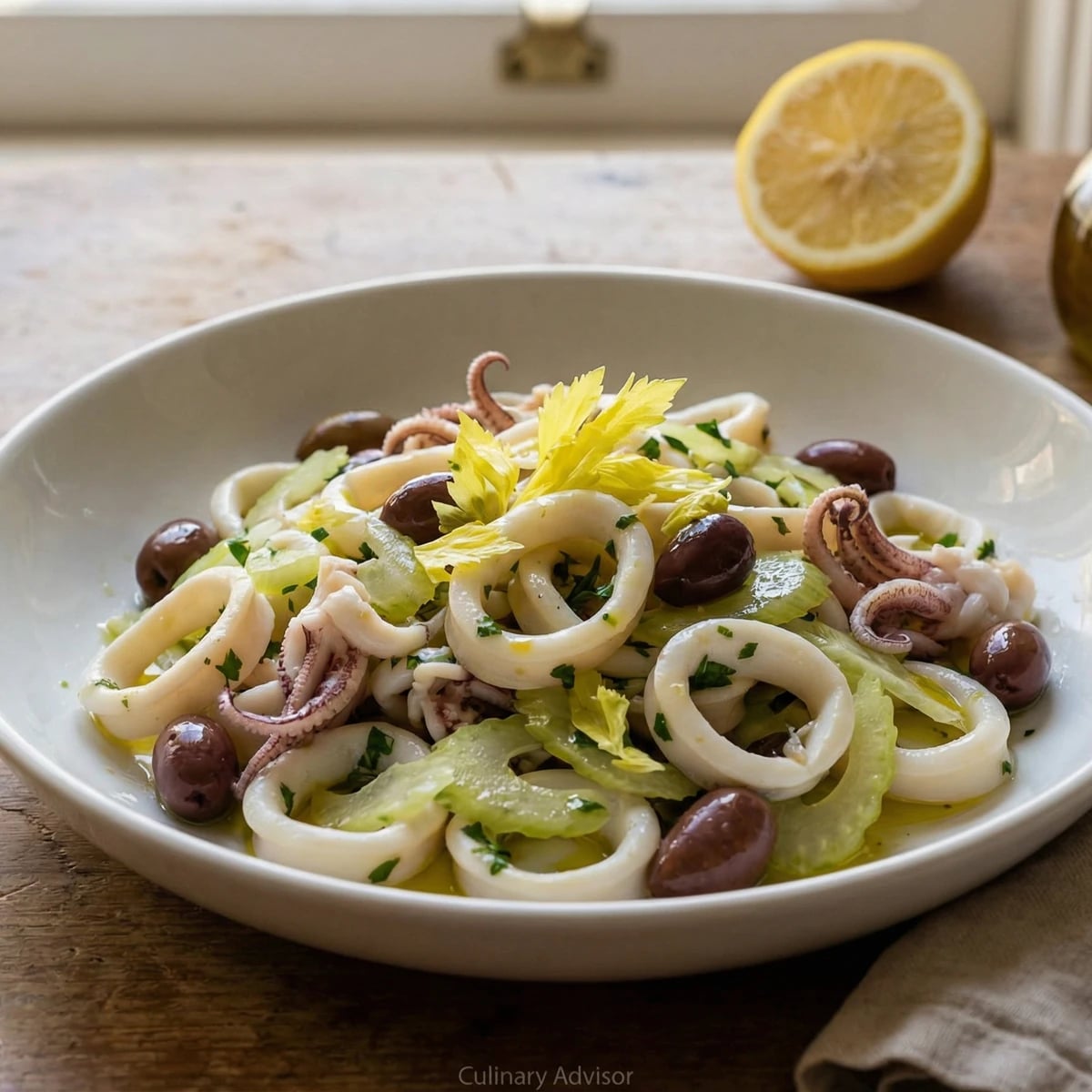
Squid poached for mere seconds, dressed while still warm with good olive oil and lemon, scattered with celery and olives. The restraint of coastal Italian cooking, where the sea provides and the cook does not interfere.
The difference between good squid and rubber bands is about 30 seconds of cooking time. This is the truth that every Italian fisherman's wife knows and that most American cooks have never learned. Squid requires either very brief or very long cooking. Nothing in between.
This salad appears on tables from Naples to Genoa, from Bari to Venice, with small variations that reveal their origins. The Neapolitans might add capers. The Ligurians insist on taggiasca olives. The Venetians serve it with soft polenta in winter. All agree on the essentials: tender squid, sharp lemon, excellent olive oil, and the clean crunch of celery.
What you keep out matters as much as what you put in. There is no mayonnaise here, no overwhelming herbs, no distractions from the pure taste of the sea. The celery provides texture and freshness. The olives add salt and depth. The lemon brightens everything. The olive oil binds it together. That is all you need.
Squid salads have sustained fishing communities along Italy's coastlines for centuries, prepared by wives who knew that the morning's catch required speed and simplicity. The dish gained broader popularity in the trattorias of Naples and the Amalfi Coast in the mid-20th century, where tourists discovered what locals had always known: the best seafood needs almost nothing done to it.
Quantity
2 pounds
cleaned, or 1 1/2 pounds cleaned bodies and tentacles
Quantity
3
from the heart, with leaves
Quantity
1/2 cup
pitted
Quantity
1 small clove
Quantity
1/4 cup
chopped
Quantity
1/3 cup
Quantity
3 tablespoons
Quantity
to taste
Quantity
to taste
freshly ground
Quantity
1 small
crumbled
| Ingredient | Quantity |
|---|---|
| whole squidcleaned, or 1 1/2 pounds cleaned bodies and tentacles | 2 pounds |
| celery stalksfrom the heart, with leaves | 3 |
| Gaeta or Taggiasca olivespitted | 1/2 cup |
| garlic | 1 small clove |
| flat-leaf parsleychopped | 1/4 cup |
| extra virgin olive oil | 1/3 cup |
| fresh lemon juice | 3 tablespoons |
| fine sea salt | to taste |
| black pepperfreshly ground | to taste |
| dried peperoncino (optional)crumbled | 1 small |
If using whole squid, pull the tentacles from the body. Cut below the eyes to separate the tentacles from the head, discarding the head and ink sac. Remove the beak from the center of the tentacles. Pull the transparent quill from inside the body and discard. Rinse the body inside and out under cold water. Slice the bodies into rings about one-third inch thick. Leave the tentacles whole or halve them if large.
Bring a large pot of well-salted water to a vigorous boil. Drop in the squid rings and tentacles. Watch the clock. From the moment the water returns to a boil, cook for exactly 45 seconds to 1 minute. The squid should be just opaque. Drain immediately and spread on a tray to cool. Do not shock in ice water. This dilutes flavor and changes texture.
Slice the celery stalks on a sharp diagonal into pieces about one-quarter inch thick. Reserve the pale yellow leaves. Cut the olives in half lengthwise. Peel the garlic clove but leave it whole.
In a small bowl, combine the olive oil and lemon juice with a fork. Season with salt and pepper. Crush the garlic clove with the flat of your knife and add it to the dressing. The garlic will perfume the oil. You will remove it later. If using peperoncino, add it now.
In a serving bowl, combine the cooled squid, sliced celery, olives, and chopped parsley. Remove and discard the garlic clove from the dressing. Pour the dressing over the salad and toss gently but thoroughly. Every piece of squid should glisten.
Let the salad rest at room temperature for 20 to 30 minutes. Taste and adjust the seasoning. Scatter the reserved celery leaves over the top. Serve at room temperature, never cold. Cold mutes the flavors you worked to develop.
1 serving (about 145g)
Culinary guides, cultural storytelling, and the editorial depth that makes cooking meaningful.
Discover Culinary Explorer
Chef Graziella
The cabbage slaw of the Alto Adige, where Austrian traditions meet Italian restraint. Caraway seeds give it character, vinegar gives it brightness, and time gives it depth.

Chef Graziella
Warm chickpeas drink in olive oil and lemon as cold ones never can. This is the salad of Italian home cooks: five ingredients, honest technique, and nothing to hide behind.

Chef Graziella
The tiny lentils of Umbria's high plateau, cooked until just tender and dressed simply with olive oil, vinegar, and parsley. What you keep out matters as much as what you put in.

Chef Graziella
A salad of substance from the northern Italian tradition, where pearl barley's nutty chew meets sweet roasted vegetables and the bright acidity of a proper vinaigrette. This is not decoration. This is dinner.