
Chef Lupita
Arroz a la Oaxaqueña
Oaxaca's red rice, stained with tomato and fried in lard, steamed with carrots, ejotes, black beans, and epazote. The side that anchors a Oaxacan family meal and earns its place beside the main.
A cooking platform built around craft, culture, and the stories behind what we eat.
Created by
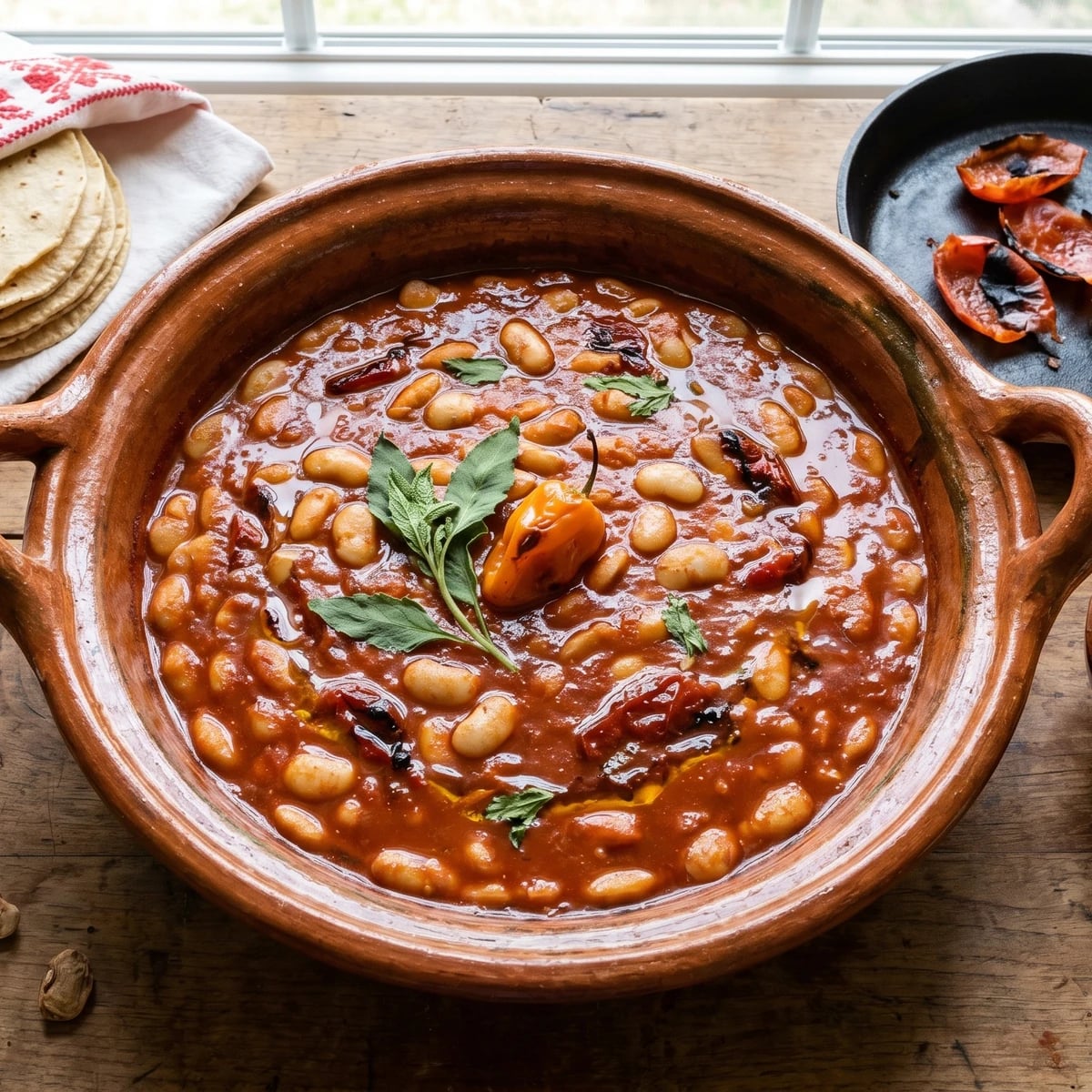
Yucatán's white milpa bean, ibes, simmered with epazote and finished in a fire-roasted chiltomate of charred tomato and whole habanero. The honest weeknight pot of the peninsula.
This is from Yucatán. Not from a generic Mexican kitchen. The ibe is a small white lima bean cultivated in the milpa, the ancient three-sisters planting of corn, beans, and squash that has fed the Maya for more than three thousand years. You will not find ibes in a supermarket in Ciudad de México. You find them at the markets in Mérida, Valladolid, Tekax, sold by women who weighed them out by hand and know the harvest by the field it came from.
Chiltomate is the Yucatecan tomato sauce. Not Italian, not Mexican-national. Yucatecan. The tomatoes go on the comal and char until the skins blister, the habanero goes on whole and stays whole. The smoke from the fire is half the flavor. The other half is the manteca de cerdo it gets fried in. La manteca es el sabor. Use olive oil and you have made something else.
The women of Tekax cook this dish without ceremony. It is weeknight food, milpa food, the kind of pot that holds together for two or three days and gets better each time you reheat it. My notebook from a trip to the southern Yucatán in 2018 has a margin note from doña Felipa, who fed me ibes guisados in her kitchen behind the market: 'el ibe se cocina solo, tú solo lo acompañas.' The ibe cooks itself. You only keep it company. That is the philosophy. Saber cocinar es saber vivir.
The ibe (also spelled ib or ibis in Yucatec Maya) is a regional variety of lima bean, Phaseolus lunatus, cultivated in the Yucatán Peninsula since pre-Columbian times as part of the milpa system alongside maize, squash, and chiles. The word 'chiltomate' is a contraction of the Nahuatl-derived 'chilli' and 'tomatl,' and the dish predates Spanish contact, with archaeological evidence of charred tomato and chile preparations in Mesoamerican cooking sites dating to the Classic Maya period. The use of manteca de cerdo in the finishing step is a colonial addition that the Yucatecan kitchen absorbed without abandoning the underlying Maya preparation, an example of what food historian Ricardo Muñoz Zurita calls the peninsula's 'doble herencia' (double inheritance), where indigenous technique and Spanish fat coexist in the same cazuela.
Quantity
1 pound
picked over and rinsed
Quantity
1 medium
half left whole, half finely chopped
Quantity
6
3 whole and 3 finely chopped
Quantity
4 large sprigs
Quantity
1 tablespoon, plus more to taste
Quantity
2 pounds
Quantity
1
whole and unbroken
Quantity
3 tablespoons
Quantity
1 teaspoon
Quantity
for serving
warmed
Quantity
for serving
Quantity
for serving
| Ingredient | Quantity |
|---|---|
| dried ibes (Yucatecan white lima beans)picked over and rinsed | 1 pound |
| white onionhalf left whole, half finely chopped | 1 medium |
| garlic cloves3 whole and 3 finely chopped | 6 |
| fresh epazote | 4 large sprigs |
| kosher salt | 1 tablespoon, plus more to taste |
| ripe Roma tomatoes | 2 pounds |
| chile habanerowhole and unbroken | 1 |
| manteca de cerdo (pork lard) | 3 tablespoons |
| ground allspice (pimienta gorda) | 1 teaspoon |
| hand-pressed corn tortillas (optional)warmed | for serving |
| crumbled queso fresco or queso de bola rallado (optional) | for serving |
| sliced chile habanero (optional) | for serving |
Place the ibes in a large bowl and cover with cold water by four inches. Leave them on the counter for at least six hours, overnight is better. The ibe is a thin-skinned bean and it drinks water fast. A proper soak shortens the cooking time and keeps the bean intact instead of bursting open in the pot.
Drain the soaked ibes and put them in a heavy pot or clay olla. Cover with fresh cold water by three inches. Add the half onion left whole, the 3 whole garlic cloves, and 2 sprigs of the epazote. Do not add salt yet. Salt early toughens the skin. Bring to a gentle simmer over medium heat, skim any foam that rises, then lower the heat until the water just trembles. Cover partially and cook for one hour to one hour and fifteen minutes, until the ibes are tender but still hold their shape. The pot liquor should taste like beans, not water.
While the ibes simmer, set the tomatoes and the whole habanero directly on a hot comal or under a broiler. Turn them as they char. You want the tomato skins blackened in patches and the flesh softened, about 10 minutes. The habanero should blister but stay whole. This is chiltomate the way they make it across the peninsula, fire-roasted, not boiled. The smoke from the comal is half the flavor.
Pull the stems off the charred tomatoes. Leave the blackened skins on, that is the color and the depth. Set the whole habanero aside. Place the tomatoes in a blender with a pinch of salt and pulse two or three times. You want a chunky, rustic puree, not a smooth sauce. Pregúntale a las señoras del mercado en Mérida and they will tell you the same: chiltomate is not a salsa, it is a textured base.
In a wide cazuela or heavy skillet, melt the manteca de cerdo over medium heat. Add the chopped onion and chopped garlic. Cook until the onion is translucent and the garlic smells sweet, about 4 minutes. Pour in the chiltomate. It will sputter. Stir in the ground allspice. Cook for 8 to 10 minutes, stirring often, until the puree darkens and the fat starts to separate at the edges. La manteca es el sabor. Skipping this step gives you a thin, raw-tasting chiltomate.
Lift the cooked ibes out of their pot with a slotted spoon and add them to the cazuela with the chiltomate. Pour in about two cups of the bean cooking liquid, enough to come halfway up the beans. Tuck the whole charred habanero into the pot and add the remaining 2 sprigs of fresh epazote. Add the tablespoon of salt now. Simmer gently for 20 minutes, uncovered, so the beans take on the color and the perfume of the chiltomate. Stir gently. The ibes are delicate and they will fall apart if you bully them.
Pull out the habanero and discard it. Taste for salt. The pot should look like white beans suspended in a brick-red, slightly chunky sauce, glossy from the manteca. Let it rest off the heat for five minutes so the flavors settle. Serve in shallow clay bowls with warm corn tortillas, a scatter of queso fresco or grated queso de bola, and slices of fresh habanero on the side for whoever wants more heat. Así se hace y punto.
1 serving (about 330g)
Culinary guides, cultural storytelling, and the editorial depth that makes cooking meaningful.
Discover Culinary Explorer
Chef Lupita
Oaxaca's red rice, stained with tomato and fried in lard, steamed with carrots, ejotes, black beans, and epazote. The side that anchors a Oaxacan family meal and earns its place beside the main.

Chef Lupita
Sinaloa's home-cook white rice topped with cold cubes of cream cheese that soften into the warm grain, finished with crema and a sprinkle of chiltepin at the table. The trick that makes a side dish feel like a small luxury.

Chef Lupita
Sonora's white rice, toasted in butter and steamed with sweet corn and tender peas. The clean, quiet partner to a plate of carne asada, not the red rice of central Mexico.

Chef Lupita
Yucatán's white rice with sweet corn kernels, toasted in lard with garlic and onion. The quiet base that holds up against the peninsula's bold achiote-stained stews.