Chef Takumi
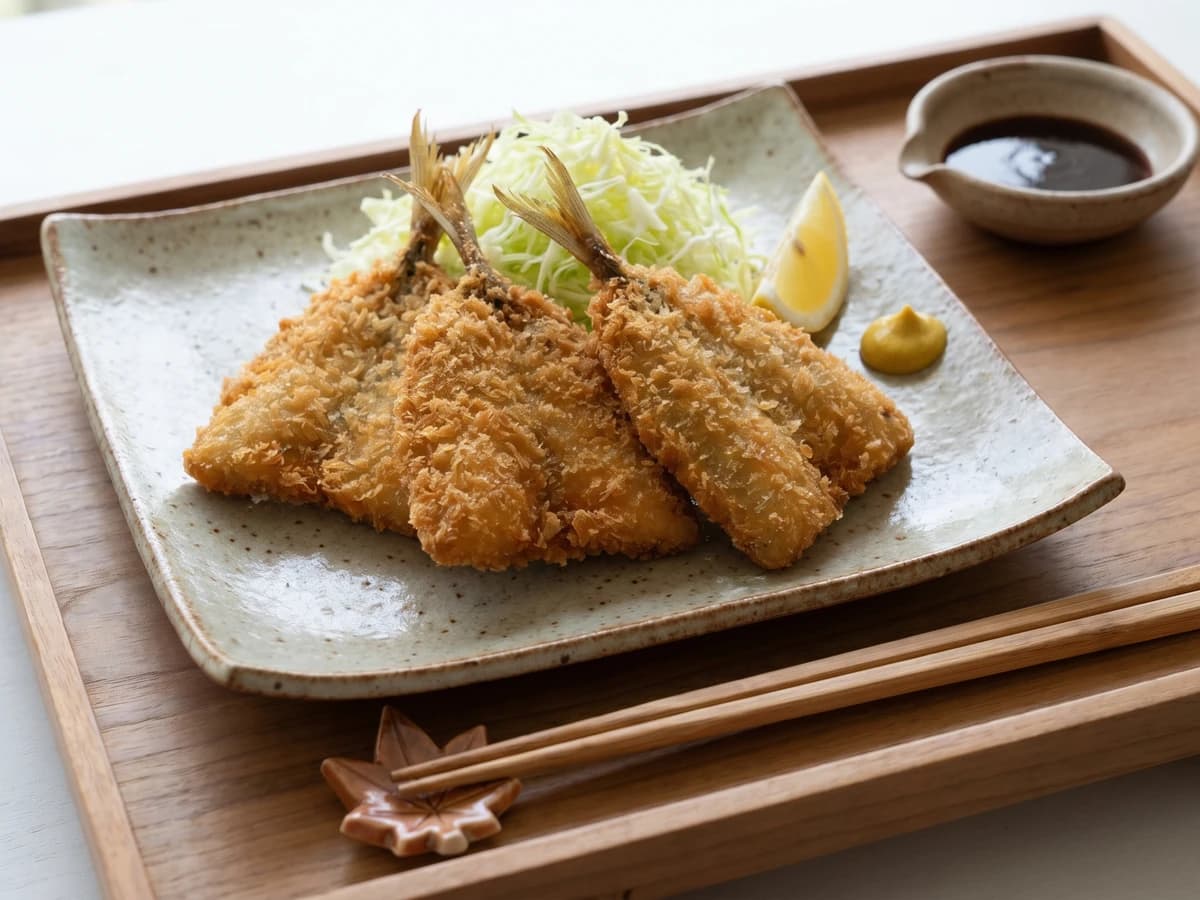
Aji Fry (アジフライ, panko-fried horse mackerel)
Aji fry is weeknight fish with no mystery: fresh horse mackerel opened cleanly, breaded lightly, and fried until the panko crackles while the flesh stays sweet.
A cooking platform built around craft, culture, and the stories behind what we eat.
Created by
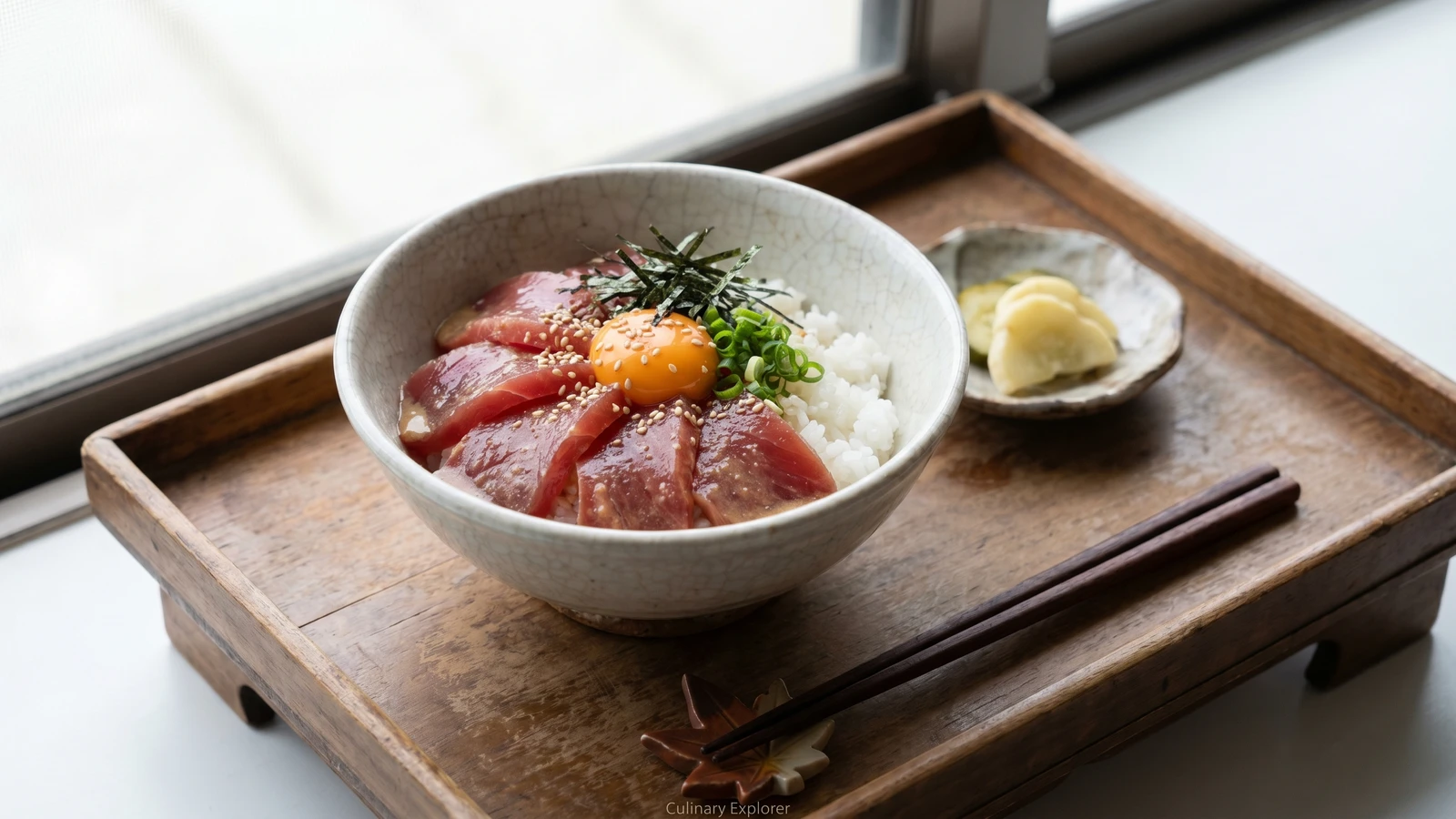
Hyūgadon is fishermen's food at its clearest: cool tuna, warm rice, a sweet sesame-shōyu sauce, and a yolk that turns the bowl rich without hiding the fish.
This bowl lives or dies before the sauce touches it. Hyūgadon asks for tuna good enough to eat raw: firm, clean-smelling, and glistening fresh. If the fish isn't that, change the dish. Nothing hidden. No sauce, however clever, can turn tired tuna into supper worth serving.
The rest is simpler than people expect. Slice the tuna cleanly, grind sesame until it gives up its oil, and let the fish sit in the sweet shōyu sauce only briefly. That short marination seasons the surface and leaves the center tasting of tuna. Leave it too long and the soy tightens the flesh, and suddenly a generous bowl has become a salty one. The first secret is restraint, which is often the secret nobody wants to hear.
Warm rice matters too. Not hot enough to cook the fish at the edges, not cold enough to deaden the sauce. Set the marinated slices over the rice, nestle the yolk in the middle, and eat while the tuna is still cool and the rice is gently warm. This is the method, not the menu: raw, dressed, laid over rice, fast because it was meant to be fast. Honmono does not have to stand on ceremony.
Hyūgadon is identified with Hotojima, a small island in Tsukumi City, Ōita Prefecture, where distant-water tuna fishing shaped local life in the twentieth century. It is remembered as a fishermen's quick meal between hauls: fresh tuna sliced, dressed with sweet sesame-shōyu sauce, and eaten over rice with egg for body. The name is usually written in kana, and explanations of hyūga vary in local telling, so the surer history is the one in the bowl: tuna boat food made fast, filling, and plain.
Quantity
250g
kept cold
Quantity
2 donburi bowls (about 400g cooked)
warm, not hot
Quantity
2 tablespoons
Quantity
1 tablespoon
Quantity
1 tablespoon
Quantity
2 teaspoons
Quantity
2 1/2 tablespoons
Quantity
2 large
separated just before serving, very fresh or pasteurized
Quantity
2
thinly sliced
Quantity
1/2 sheet
cut into fine strips
Quantity
to taste
| Ingredient | Quantity |
|---|---|
| sashimi-quality lean tuna (maguro akami)kept cold | 250g |
| freshly cooked Japanese short-grain ricewarm, not hot | 2 donburi bowls (about 400g cooked) |
| toasted white sesame seeds | 2 tablespoons |
| sake | 1 tablespoon |
| mirin | 1 tablespoon |
| sugar | 2 teaspoons |
| Japanese soy sauce (shōyu) | 2 1/2 tablespoons |
| egg yolksseparated just before serving, very fresh or pasteurized | 2 large |
| scallionsthinly sliced | 2 |
| noricut into fine strips | 1/2 sheet |
| grated wasabi (optional) | to taste |
Keep the tuna cold until you are ready to cut. It should smell clean and faintly sweet, never strongly fishy, and the surface should look moist rather than tacky. If it fails that test, cook it instead. Sourcing first, always.
Use a yanagiba, or the longest sharp knife you own, and slice the tuna across the grain into pieces about 6mm thick. Draw the blade through in one pull instead of sawing. A clean cut leaves a smooth face for the sauce to cling to, and the fish eats softer for it. Let the knife do the seasoning.
Grind the toasted sesame in a suribachi, or a mortar and pestle, until half is paste and half remains in small flecks. Whole sesame tastes pleasant, but ground sesame releases its oil into the sauce. That is what gives Hyūgadon its roundness.
Put the sake and mirin in a small saucepan and bring them to a lively simmer for thirty seconds. Stir in the sugar until dissolved, then cool the mixture before adding the shōyu and ground sesame. This small nikiri step takes off the raw alcohol edge, and cooling the sauce protects the tuna's clean surface.
Fold the tuna slices gently through the sesame-shōyu sauce and refrigerate for 5 to 8 minutes. Do not make it a long soak. Soy firms raw fish as it seasons it, and after fifteen minutes the tuna begins to taste more of the bowl than of itself.
Divide the warm rice between two deep donburi bowls. If the rice is fierce from the cooker, fan it for a minute first. Lay the tuna over the rice in overlapping slices, spoon on a little of the remaining sauce, and set one yolk in the center of each bowl. Finish with scallion, nori, a few sesame flecks, and wasabi if you like it. Serve at once, while the fish is cool and the rice is warm.
1 serving (about 400g)
Culinary guides, cultural storytelling, and the editorial depth that makes cooking meaningful.
Discover Culinary ExplorerChef Takumi
Aji fry is weeknight fish with no mystery: fresh horse mackerel opened cleanly, breaded lightly, and fried until the panko crackles while the flesh stays sweet.
Chef Takumi
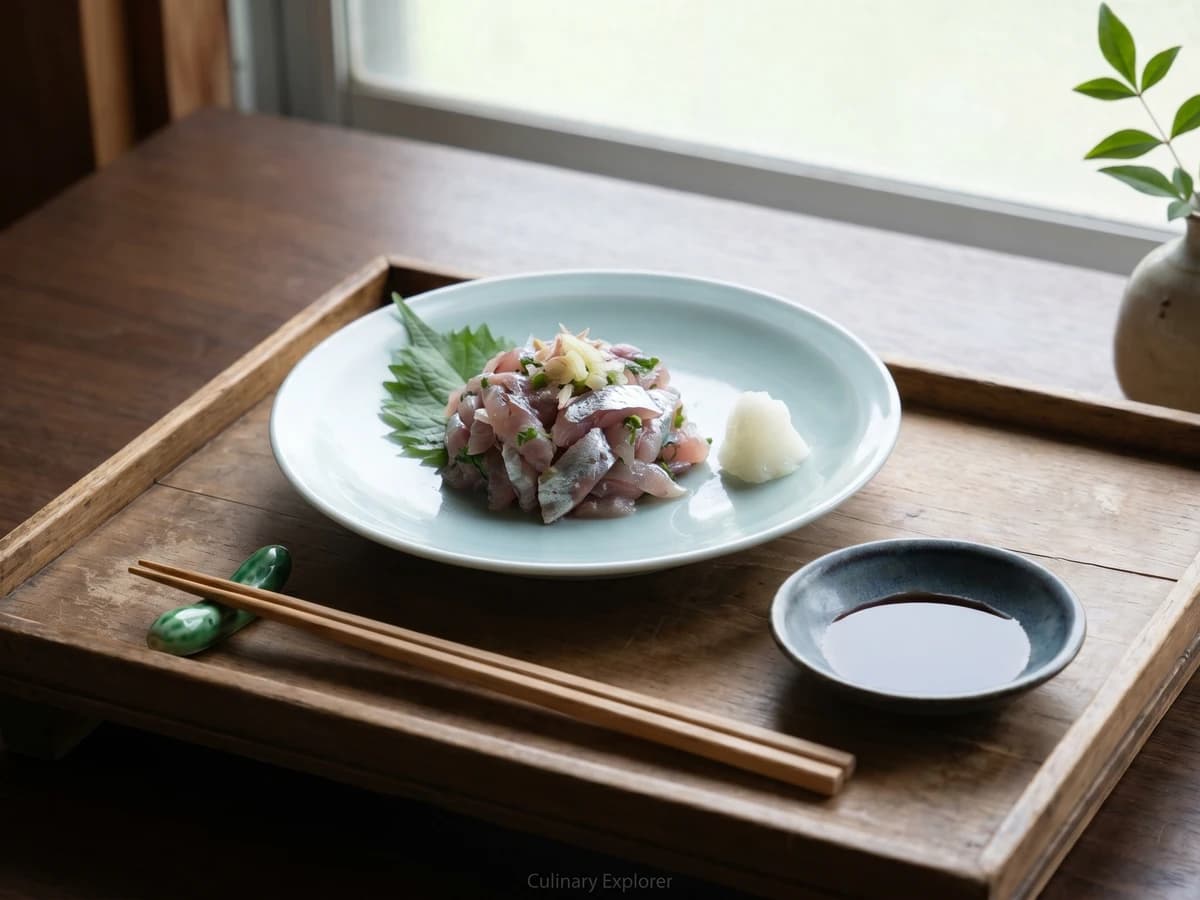
Summer horse mackerel, chopped just enough to catch ginger and scallion, becomes a cool, clean main dish with rice. The secret is fresh fish and a knife that does not bruise it.

Chef Takumi
Akashi-yaki is not sauced takoyaki. It is egg-rich batter, tender octopus, and clear dashi, cooked pale and soft so each ball can be dipped like a small custard dumpling.
Chef Takumi
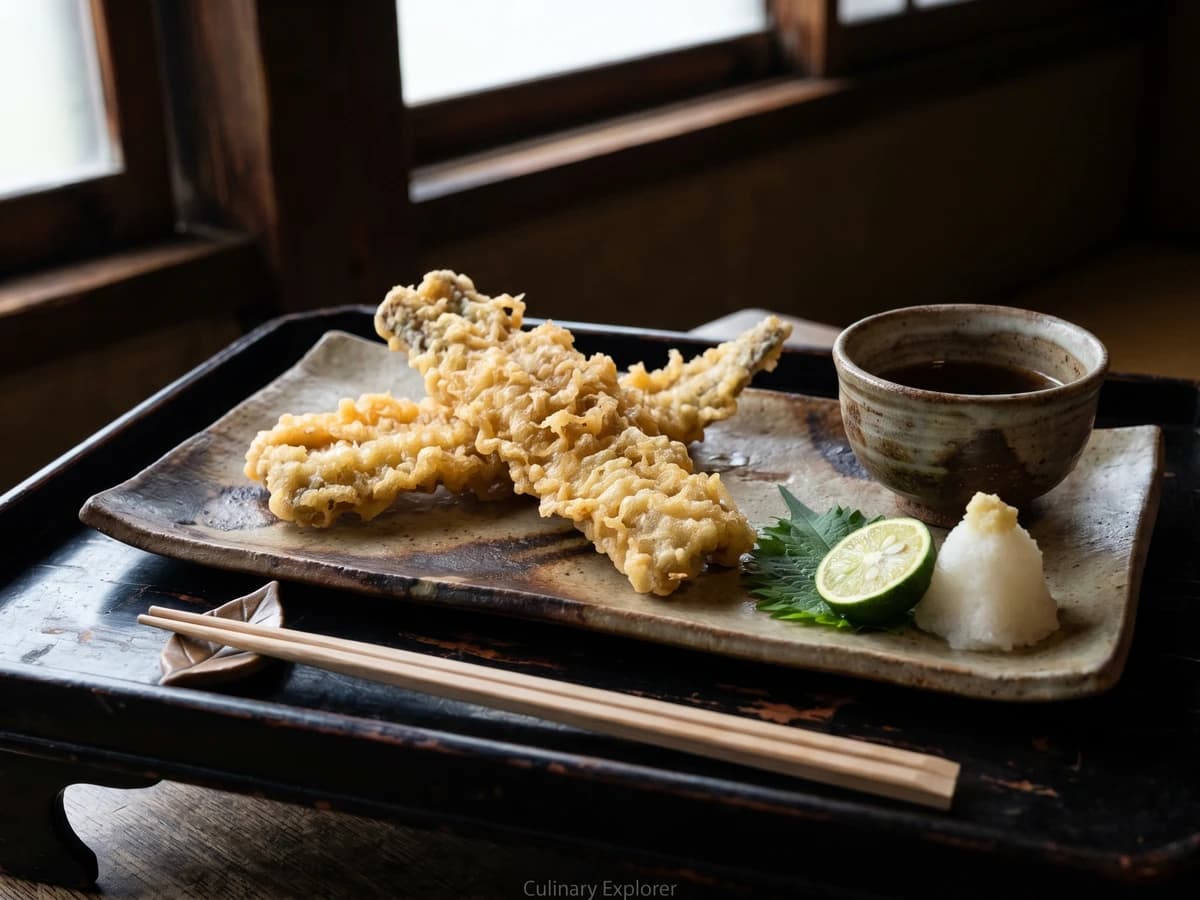
A whole anago looks like a test of nerve. It is mostly good sourcing, a dry skin, cold batter, and oil hot enough to leave the eel sweet under its lace.