
Chef Lupita
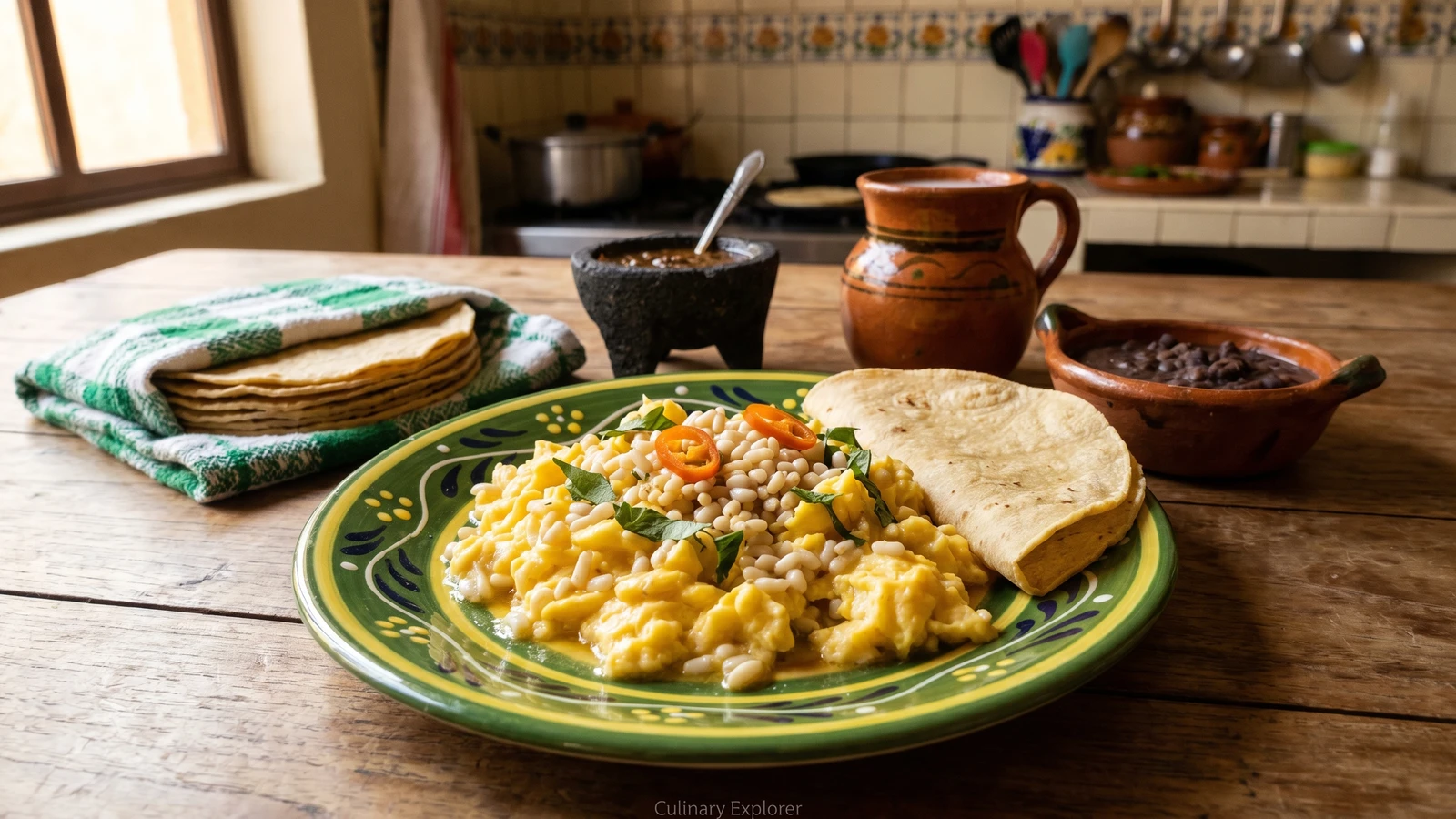
Aporreadillo Michoacano con Huevo
Michoacán's Tierra Caliente almuerzo, where salted beef is softened, pounded, fried in lard, folded with egg and chile perón salsa, then served beside morisqueta like a proper working table.
A cooking platform built around craft, culture, and the stories behind what we eat.
Created by
Hidalgo and Tlaxcala's caviar mexicano: maguey-root ant larvae sautéed in butter with epazote and serrano, folded into eggs. A pulque-belt luxury that costs more than the meat.
Escamoles come from Hidalgo and Tlaxcala. From the high, dry plateaus of central Mexico where the maguey grows in long rows and the pulque has been the daily drink of campesinos for a thousand years. The escamoles are the larvae of the Liometopum ant, harvested from the root system of the maguey between March and May, and they are not cheap. A kilo costs what a kilo of good beef costs three times over. That is why they call them caviar mexicano. The name is not marketing. It is accurate.
This is a dish from the pulque belt, the band of states across central Mexico where the maguey defined the economy and the diet for centuries. The escamoles taste like butter and pine nuts and high desert. They have a barely-there pop between the teeth, an almost cottage-cheese softness, and a flavor so subtle that you do not bury it under anything. Butter, onion, a little serrano for backbone, epazote for that unmistakable central-Mexican green-herb hit. Eggs to stretch the luxury into a meal. That is the whole recipe. No me vengas con atajos.
I ate huevos con escamoles for the first time in a small fonda outside Pachuca, in a town where the man who harvested them in the morning sat at the next table eating them for breakfast. The cook would not give me her recipe. She told me to watch. Half-watched, half-listened, I wrote down what I saw in my notebook and went home and made them four times before they tasted like hers. The fourth time I understood: the secret is restraint. Cook them gently. Do not crowd them with garlic and chiles and cheese. They are already what they need to be. Saber cocinar es saber vivir.
Escamoles have been eaten in central Mexico since pre-Columbian times and appear in the Codex Florentino's catalog of Mexica foods, where they were considered a delicacy worthy of the noble class. The harvest, called escamolera, is a specialized seasonal trade still practiced largely by hand in the states of Hidalgo, Tlaxcala, and parts of México state, where harvesters dig carefully around the maguey roots to extract the nests without destroying the colony, a sustainability practice older than any modern certification. The 20th-century commercial demand from Mexico City restaurants and, more recently, the international fine-dining circuit has pushed prices to extreme levels and threatened the wild populations, leading to growing calls within Mexico for protected harvesting seasons and origin labeling.
Quantity
1 cup
rinsed and drained
Quantity
6 tablespoons
cold
Quantity
1/4 small
finely chopped
Quantity
1 clove
finely chopped
Quantity
1
finely chopped, seeds and ribs left in
Quantity
1 large sprig
leaves only, roughly chopped
Quantity
8
Quantity
1 teaspoon, divided
Quantity
to taste
Quantity
8
warmed on a comal
Quantity
for serving
Quantity
for serving
Quantity
for serving
| Ingredient | Quantity |
|---|---|
| fresh escamoles (ant larvae from maguey roots)rinsed and drained | 1 cup |
| unsalted buttercold | 6 tablespoons |
| white onionfinely chopped | 1/4 small |
| garlicfinely chopped | 1 clove |
| fresh chile serranofinely chopped, seeds and ribs left in | 1 |
| fresh epazoteleaves only, roughly chopped | 1 large sprig |
| large eggs | 8 |
| kosher salt | 1 teaspoon, divided |
| freshly ground black pepper | to taste |
| hand-pressed corn tortillas (optional)warmed on a comal | 8 |
| salsa borracha or salsa verde cruda (optional) | for serving |
| sliced avocado (optional) | for serving |
| refried black beans (optional) | for serving |
Tip the escamoles into a fine-mesh strainer and rinse them under a gentle stream of cold water. Pick out any bits of maguey root, dirt, or stray ant. Spread them on a clean kitchen towel and pat them dry. They should look like tiny pearls of ivory rice. Handle them gently. They are delicate and they bruise. This is the most expensive ingredient in your kitchen today, treat it that way.
Melt 3 tablespoons of the butter in a heavy skillet over medium-low heat. When it foams, add the onion, garlic, and chile serrano. Cook for about three minutes, stirring, until the onion turns translucent and the kitchen smells sweet. Do not brown the butter. You want it golden and nutty, not dark. The escamoles taste of butter and corn and the high desert. Burned butter will bury all of that.
Add the remaining 3 tablespoons of butter to the pan. When it melts, add the drained escamoles. Cook for two to three minutes, stirring carefully with a wooden spoon. They will plump slightly and turn from translucent ivory to opaque cream. Halfway through, scatter the epazote leaves over them and add 1/2 teaspoon of the salt. That is the dish in its essential form: escamoles, butter, epazote. Some señoras in Hidalgo eat them just like this, scooped onto a warm tortilla. You could stop here and serve a taco of escamoles a la mantequilla. Recetas probadas y garantizadas.
Crack the eggs into a bowl. Add the remaining 1/2 teaspoon salt and several grinds of black pepper. Beat with a fork until the yolks and whites are just combined. No more. Overbeaten eggs scramble into a tight, dry curd. You want the texture loose.
With the escamoles still in the pan over medium-low heat, pour the eggs in around the edges. Wait ten seconds without touching them. Then, with the wooden spoon, pull the cooked edges gently toward the center, letting the raw egg flow into the empty space. Keep doing this in slow strokes. The eggs should look custard-soft and a little glossy, not dry. Pull the pan off the heat when the eggs are still slightly underdone. They will keep cooking from residual heat. This is two minutes of work, no more. Overcooked eggs are a sin against an ingredient this rare.
Slide the eggs onto a warm clay or talavera plate. Set the stack of warm tortillas wrapped in a cloth servilleta beside them. Put the salsa borracha, the avocado, and the refried beans in small dishes around the table. Each person makes their own tacos. Eat immediately. Escamoles do not wait. Así se hace y punto.
1 serving (about 360g)
Culinary guides, cultural storytelling, and the editorial depth that makes cooking meaningful.
Discover Culinary ExplorerChef Lupita
Michoacán's Tierra Caliente almuerzo, where salted beef is softened, pounded, fried in lard, folded with egg and chile perón salsa, then served beside morisqueta like a proper working table.

Chef Lupita
Guerrero's Costa Grande aporreado is salted cecina pounded soft, scrambled with egg, and finished in a red guajillo and chile de árbol salsa loud with garlic and cilantro.

Chef Lupita
Los Altos de Chiapas turns two-night fermented white corn into a tart-sweet atole, cooked with canela and piloncillo, then poured hot into jícaras for desayuno.

Chef Lupita
Oaxaca's Mixteca region ferments nixtamalized masa for days until it turns tart and alive, then simmers it with piloncillo and canela into a thick, warm atole served at first light in clay.