
Chef Lupita
Aporreadillo Michoacano con Huevo
Michoacán's Tierra Caliente almuerzo, where salted beef is softened, pounded, fried in lard, folded with egg and chile perón salsa, then served beside morisqueta like a proper working table.
A cooking platform built around craft, culture, and the stories behind what we eat.
Created by
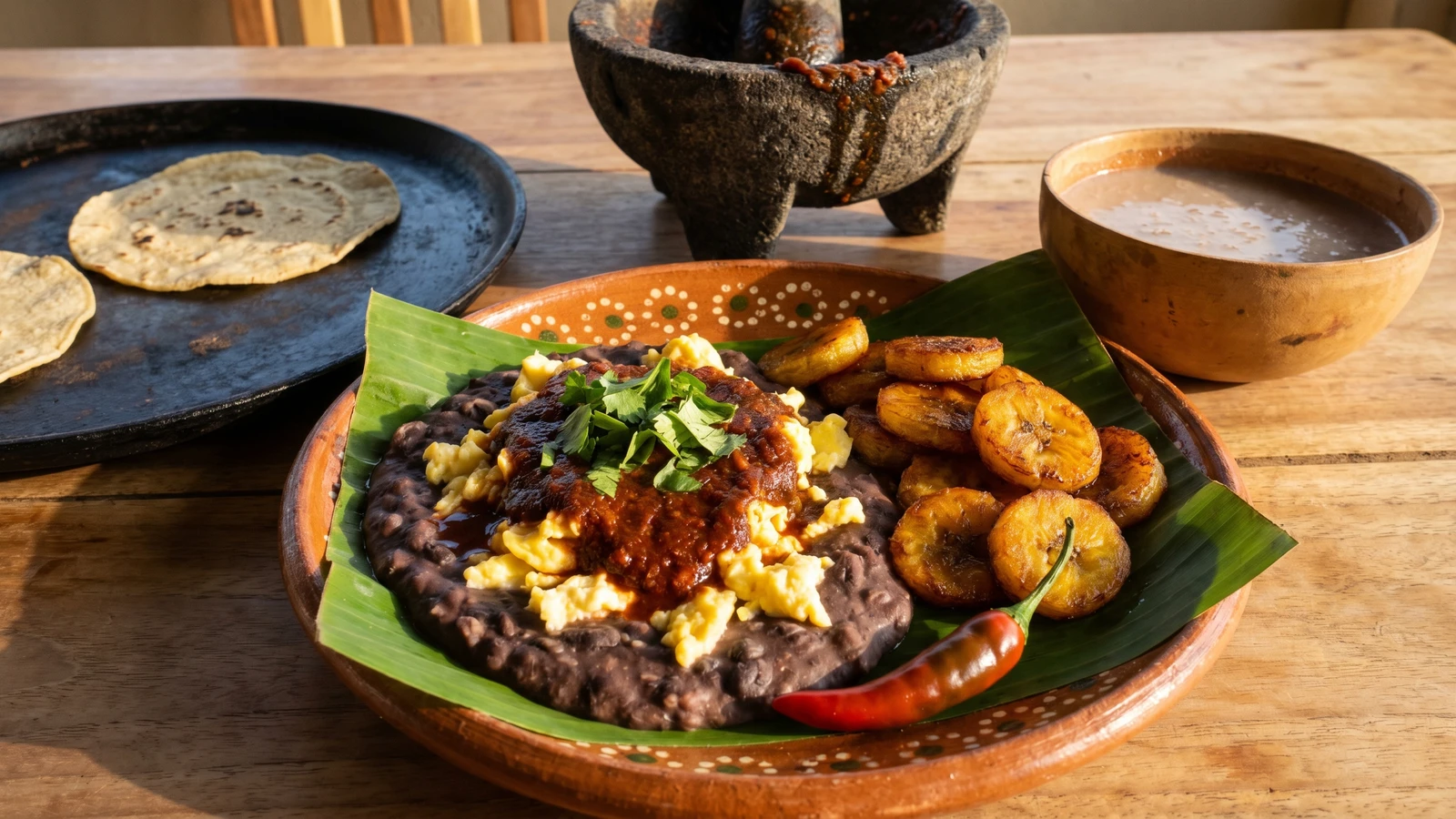
Tabasco's Gulf lowland breakfast folds soft eggs into refried frijol negro, finishes them with cooked chile amashito chirmol, and sets sweet plátano macho beside the plate.
Tabasco comes first, specifically the Chontal lowlands around Villahermosa, Nacajuca, Jalpa de Méndez, and the Grijalva basin. This breakfast belongs to that humid strip where plátano macho grows behind houses, frijol negro waits in the pot, and chile amashito sits in a little dish because one small chile can wake the whole plate.
Do not confuse this with a generic plate of eggs and beans. The beans are refried in manteca de cerdo with hoja de momo so they hold the eggs instead of drowning them. The chirmol is cooked: comal-charred jitomate, onion, garlic, and chile amashito fried until the raw edge disappears. Chirmol is not pico de gallo. Así se hace y punto.
I learned the order in Villahermosa's Mercado José María Pino Suárez, watching women fry the plantains first, while the kitchen was still bearable before the day's heat. Sweet plantain, black bean, egg, chile, tortilla. Nothing is decorative. La cocina no es decoración, es trabajo. Cada estado, su propia cocina, and this one belongs to Tabasco.
Tabasco's cooking sits on older Yokot'an Maya foodways built around corn, cacao, chiles, beans, and river produce, with plantain arriving after the Spanish conquest through Atlantic trade routes and taking root in the humid Gulf lowlands. The chile amashito, a small wild chile eaten fresh, crushed, or cooked into sauces, is one of the state's defining table chiles, especially around Villahermosa and the Chontalpa. Huevos a la tabasqueña belongs to the 20th-century home and market breakfast repertoire: fast eggs, yesterday's frijol negro, ripe plantain, and a cooked chirmol made before the heat climbs.
Quantity
4, about 1 pound
Quantity
3/4 medium
divided between chirmol and beans
Quantity
3
divided
Quantity
6, plus more for serving
stemmed
Quantity
1 teaspoon, divided, plus more to taste
Quantity
1 tablespoon
for frying the chirmol
Quantity
2 tablespoons
chopped
Quantity
2
yellow with black patches, peeled and sliced on the diagonal into 1/2-inch pieces
Quantity
4 tablespoons
for frying the plátano macho
Quantity
2 tablespoons
for refrying the beans
Quantity
3 cups with 3/4 cup cooking broth
Quantity
1 small leaf
torn in half
Quantity
8
beaten
Quantity
for serving
warmed
| Ingredient | Quantity |
|---|---|
| jitomates saladet or Roma tomatoes | 4, about 1 pound |
| white oniondivided between chirmol and beans | 3/4 medium |
| garlic clovesdivided | 3 |
| fresh chile amashitostemmed | 6, plus more for serving |
| sea salt | 1 teaspoon, divided, plus more to taste |
| manteca de cerdofor frying the chirmol | 1 tablespoon |
| cilantro criollo leaves and tender stemschopped | 2 tablespoons |
| ripe plátanos machosyellow with black patches, peeled and sliced on the diagonal into 1/2-inch pieces | 2 |
| manteca de cerdofor frying the plátano macho | 4 tablespoons |
| manteca de cerdofor refrying the beans | 2 tablespoons |
| cooked frijol negro de olla | 3 cups with 3/4 cup cooking broth |
| hoja de momo, also called hoja santatorn in half | 1 small leaf |
| large eggsbeaten | 8 |
| hand-pressed corn tortillas (optional)warmed | for serving |
Heat a dry comal over medium. Put the jitomates, one thick wedge of onion, and 2 unpeeled garlic cloves on the comal. Turn them until the tomato skins blister and the onion has dark spots at the edges, about 8 to 10 minutes. Add the chile amashito only for the last 20 seconds. It is small and fierce, and it burns fast.
Peel the roasted garlic. In a molcajete, grind 1/2 teaspoon salt with the roasted garlic and chile amashito first, then work in the roasted onion and jitomates until the salsa is rough but spoonable. Heat 1 tablespoon manteca de cerdo in a small skillet over medium. Add the chirmol and cook 5 to 7 minutes, stirring, until it thickens and the raw tomato smell is gone. Stir in the cilantro criollo off the heat.
Heat 4 tablespoons manteca de cerdo in a wide skillet over medium. Fry the plátano macho slices in one layer, 2 to 3 minutes per side, until they are deep gold with brown caramelized edges. Move them to a plate and salt them lightly. The plantain should be ripe enough to smell sweet before it touches the pan. Green plantain belongs to another preparation.
Finely chop the remaining onion and mince the remaining garlic clove. Heat 2 tablespoons manteca de cerdo in a 10-inch skillet or clay cazuela over medium. Cook the onion until soft, then add the garlic for 30 seconds. Add the frijol negro de olla with its broth and the hoja de momo. Mash with a wooden spoon until thick and glossy, 6 to 8 minutes. The beans should mound, not run. La manteca es el sabor.
Beat the eggs with the remaining 1/2 teaspoon salt. Lower the heat under the beans to medium-low and pull out the hoja de momo if the leaf is large and tough. Pour the eggs over the beans and fold slowly with a spatula. You want yellow curds streaked through black beans, not dry crumbs. Pull the pan from the heat while the eggs still look soft. The residual heat will finish them.
Spoon the eggs and beans onto a low clay plate, preferably lined with a small piece of banana leaf if you have it. Spoon the cooked chile amashito chirmol over the top and arrange the fried plátano macho alongside. Serve with warm hand-pressed corn tortillas and extra chile amashito at the table. This is the Maya south. No cheddar, no sour cream, no lettuce pretending it belongs here. Así se hace y punto.
1 serving (about 520g)
Culinary guides, cultural storytelling, and the editorial depth that makes cooking meaningful.
Discover Culinary ExplorerChef Lupita
Michoacán's Tierra Caliente almuerzo, where salted beef is softened, pounded, fried in lard, folded with egg and chile perón salsa, then served beside morisqueta like a proper working table.

Chef Lupita
Guerrero's Costa Grande aporreado is salted cecina pounded soft, scrambled with egg, and finished in a red guajillo and chile de árbol salsa loud with garlic and cilantro.

Chef Lupita
Los Altos de Chiapas turns two-night fermented white corn into a tart-sweet atole, cooked with canela and piloncillo, then poured hot into jícaras for desayuno.

Chef Lupita
Oaxaca's Mixteca region ferments nixtamalized masa for days until it turns tart and alive, then simmers it with piloncillo and canela into a thick, warm atole served at first light in clay.