
Chef Isabel
Acedías Fritas de Cádiz
Acedías fritas belong to Cádiz: tiny wedge sole, salted, dusted in frying flour, and dropped into very hot olive oil so the rims crisp while the fish stays tender.
A cooking platform built around craft, culture, and the stories behind what we eat.
Created by
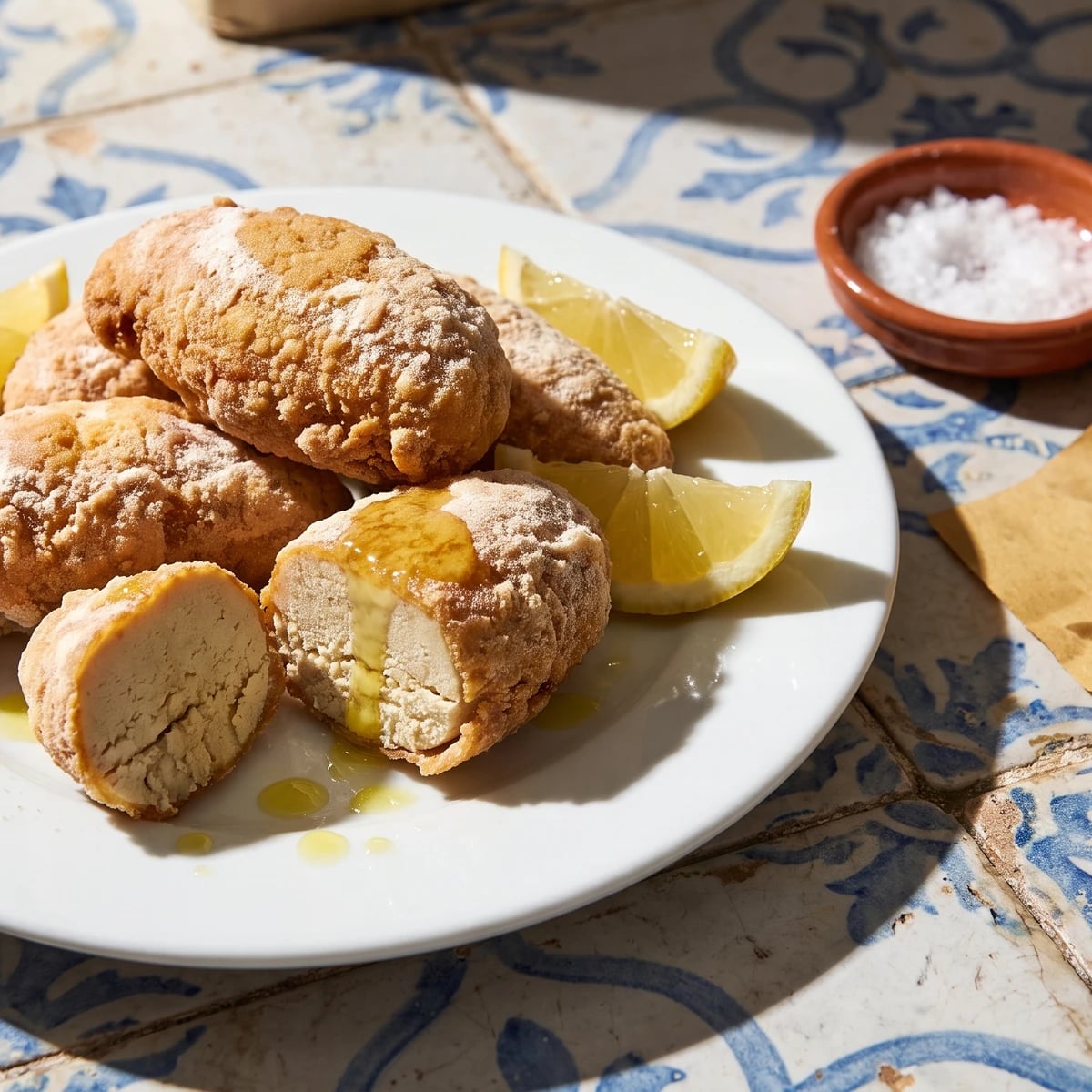
Huevas fritas are Cadiz shore food: fresh fish roe sacks, salted, floured, and fried whole until the outside is golden and the inside sets cleanly.
Huevas fritas de Cadiz belong to the freidurias of the Andalusian coast, where the day's fish is treated plainly: salt, flour, hot oil, and lemon. The roe is usually hake, pescadilla, or another firm white fish roe, kept in its natural sack so it fries as one piece instead of scattering into the pan.
The step that decides it is the heat of the oil. Too cool, and the flour drinks grease before the roe firms. Too fierce, and the sack bursts before the middle is cooked. Hold the oil at 175 C, flour lightly, and lower each piece in with care. No prodding. Let the outside set, then turn once.
If you are far from Cadiz, ask a good fishmonger for whole roe sacks from hake, cod, pollock, or mullet. Cod roe is stronger and firmer, mullet roe is richer, but both will fry well if the sack is intact. No hace falta haber pisado Espana. You need fresh roe, clean oil, and the patience not to fuss with it. Siempre sale, si lo sigues.
Huevas fritas are part of the freiduria tradition of Cadiz and the Bay of Cadiz, where small fish, squid, and roe from the catch were floured and fried quickly for eating by the paper cone or plate. The dish comes from a port kitchen that wasted little: roe that might seem troublesome elsewhere became a prized bite when handled fresh and fried cleanly. In Andalusia the usual flour is harina de trigo or, when available, harina para freir, a fine flour that gives fish a dry golden coat without a heavy batter.
Quantity
500g
rinsed gently and patted very dry
Quantity
8g
Quantity
120g
Quantity
500ml
for frying
Quantity
1
cut into wedges
| Ingredient | Quantity |
|---|---|
| whole fresh fish roe sacksrinsed gently and patted very dry | 500g |
| fine sea salt | 8g |
| harina para freir or plain wheat flour | 120g |
| mild olive oil or sunflower oilfor frying | 500ml |
| lemoncut into wedges | 1 |
Rinse the roe sacks only if they need it, and do it gently under cold water. Pat them very dry with kitchen paper, especially along the seam. Water on roe makes the oil spit, and a wet surface keeps the flour from clinging.
Salt the roe evenly with the 8g salt and leave it 5 minutes while the oil heats. Put the flour on a plate and roll each roe sack through it, coating every side lightly. Shake off the excess. You want a thin dry coat, not a paste.
Pour the oil into a deep frying pan to about 2cm depth and heat it to 175 C. If you have no thermometer, drop in a pinch of flour; it should sizzle at once and float, not darken immediately. This is the whole trick. The oil must set the outside before the roe has time to leak.
Lower in the roe sacks with tongs, leaving space between them. Fry 3 to 4 minutes on the first side, then turn once and fry 2 to 4 minutes more, depending on thickness, until golden outside and firm when pressed gently. Do not stab them with a fork. If one opens a little, leave it alone; stirring only makes it worse.
Lift the roe to a rack or paper-lined plate and rest 2 minutes. Slice thick pieces if the sacks are large, or serve small ones whole. Set lemon wedges beside them and eat while the coating is still crisp and the inside is just set, pale and tender.
1 serving (about 145g)
Culinary guides, cultural storytelling, and the editorial depth that makes cooking meaningful.
Discover Culinary Explorer
Chef Isabel
Acedías fritas belong to Cádiz: tiny wedge sole, salted, dusted in frying flour, and dropped into very hot olive oil so the rims crisp while the fish stays tender.

Chef Isabel
Afuega'l Pitu Roxu is Asturias in a small cheese: cow's milk set slowly to a dense curd, drained without squeezing, then kneaded with pimentón until it turns orange and grips the throat.

Chef Isabel
Albergínies farcides are Mallorca's summer stuffed aubergines: tender boiled shells, a slow pork sofrito with moraduix, and a plain breadcrumb cap baked until the top turns crisp and golden.

Chef Isabel
Carxofes farcides are Catalan stuffed artichokes: tender hearts filled with jamón, slow sweet onion, and breadcrumbs, then baked in a light creamy sauce until the tops turn golden.