
Chef Zohra
Adss (عدس)
Brown lentils cooked down with tomato, garlic, cumin, and paprika until spoon-thick, then finished with olive oil and coriander. This is weekday Moroccan comfort, made for bread and one more bowl.
A cooking platform built around craft, culture, and the stories behind what we eat.
Created by
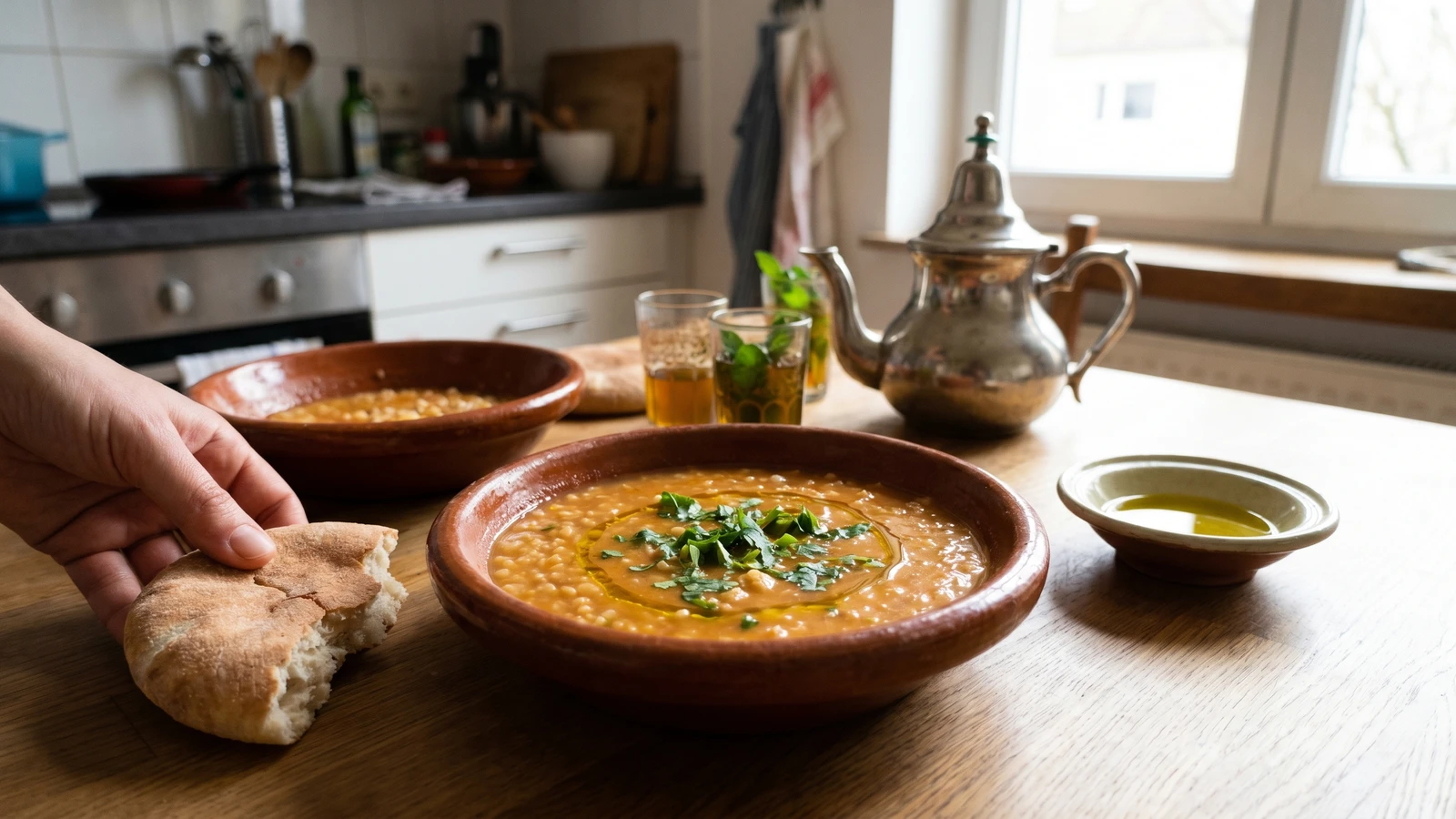
Cracked barley simmered soft with tomato, herbs, and olive oil, the Amazigh winter soup that fills the kitchen early and keeps one more bowl ready.
When the cold comes down from the mountains, belboula is what you want in the pot. Cracked barley drinks slowly, swells gently, and gives the broth its body without asking for meat, money, or ceremony. It is food for dawn, for tired evenings, for the day when the house needs warmth before it needs anything grand.
The gesture that matters is patience with the grain. Rinse it well, let it simmer low, and stir it often enough that it doesn't catch at the bottom. Barley thickens as it cooks, so you keep water nearby and loosen the soup as the pot asks. La balance est dans les yeux, the scale is in the eyes.
Some homes finish hssoua belboula with milk, some keep it red with tomato and herbs. I give you both honestly. The tomato version is bright and clean; the milk version is softer, morning food. Either way, serve it with khobz and olive oil at the table. Une table, c'est une porte qu'on laisse ouverte, and this soup knows how to feed the person who arrived late.
Hssoua belboula belongs especially to Amazigh mountain cooking in the Middle Atlas, High Atlas, and nearby rural regions, where barley was long more dependable than wheat in poor soil and cold weather. Barley has been cultivated in North Africa since antiquity, before the medieval dynasties made Fez and Marrakech centers of courtly cooking, and this soup preserves a household register outside the imperial kitchens. The tomato entered Moroccan cooking after the Columbian exchange, so the grain is older than the red version; milk-based and tomato-based hssoua still live side by side depending on region and household.
Quantity
180g
rinsed
Quantity
1 medium
finely grated or chopped very small
Quantity
2
grated, or use 250g crushed tomato
Quantity
2 tbsp, plus more for serving
Quantity
1 tbsp
Quantity
2
minced
Quantity
1 small bunch
chopped
Quantity
2 tbsp
chopped
Quantity
1 tsp
Quantity
1 tsp
Quantity
1/2 tsp
Quantity
1/4 tsp
Quantity
1 1/2 tsp, plus more to taste
Quantity
1.5 liters, plus more as needed
Quantity
250ml
optional, for a softer breakfast-style finish
Quantity
1 tbsp
optional, for finishing
| Ingredient | Quantity |
|---|---|
| cracked barley (belboula or coarse barley grits)rinsed | 180g |
| onionfinely grated or chopped very small | 1 medium |
| ripe tomatoesgrated, or use 250g crushed tomato | 2 |
| olive oil | 2 tbsp, plus more for serving |
| tomato paste | 1 tbsp |
| garlic clovesminced | 2 |
| fresh corianderchopped | 1 small bunch |
| fresh parsleychopped | 2 tbsp |
| ground cumin | 1 tsp |
| sweet paprika | 1 tsp |
| ground turmeric | 1/2 tsp |
| black pepper | 1/4 tsp |
| sea salt | 1 1/2 tsp, plus more to taste |
| water or light vegetable broth | 1.5 liters, plus more as needed |
| whole milk (optional)optional, for a softer breakfast-style finish | 250ml |
| butter or smen (optional)optional, for finishing | 1 tbsp |
Put the cracked barley in a bowl and rinse it in several changes of cool water, rubbing it lightly between your fingers. Drain it well. This matters because loose starch and dust make the soup heavy before the grain has had time to cook; you want body from simmering, not muddiness from neglect.
Warm the olive oil in a heavy pot over medium heat. Add the onion and cook until it softens and turns sweet at the edges, about 6 minutes. Stir in the garlic, tomato paste, grated tomato, cumin, paprika, turmeric, black pepper, and salt. Let it cook until the tomato darkens slightly and the oil shows at the sides.
Add the rinsed barley and pour in 1.5 liters water or light broth. Bring it just to a boil, then lower the heat so the surface moves gently. Cook uncovered for 35 to 45 minutes, stirring often, especially at the bottom of the pot. The barley should turn tender and swollen, and the broth should thicken enough to coat a spoon while still moving like soup.
As the barley swells, add more hot water by the ladle if the soup tightens too much. Don't be shy. Belboula keeps drinking after you think it's finished, and a good hssoua should be generous in the bowl, not stiff on the spoon.
Stir in the chopped coriander and parsley. If you want the milk version, lower the heat and add the milk now, stirring gently for 3 to 5 minutes without letting it boil hard. Add the butter or smen if using. Taste for salt, then rest the pot off the heat for 5 minutes so the grain settles into the broth.
Ladle the hssoua into deep bowls and finish with a thread of olive oil. Put warm khobz on the table and let everyone tear and dip. This is not a show dish. It is the bowl you make when the day is cold and the table still has room.
1 serving (about 430g)
Culinary guides, cultural storytelling, and the editorial depth that makes cooking meaningful.
Discover Culinary ExplorerChef Zohra
Brown lentils cooked down with tomato, garlic, cumin, and paprika until spoon-thick, then finished with olive oil and coriander. This is weekday Moroccan comfort, made for bread and one more bowl.

Chef Zohra
Brown lentils cooked down until thick and glossy, with garlic, tomato, cumin, paprika, and good olive oil. This is weeknight Moroccan comfort, made for bread and one more bowl.

Chef Zohra
Berkoukes is Oujda's feast bowl for Mawlid and winter evenings: hand-rolled semolina pearls, bigger than couscous, swelling in a tomato-red broth with lamb, chickpeas, saffron, and ras el hanout.

Chef Zohra
My frontier's Mawlid bowl: large hand-rolled semolina pearls swelling in a tomato-lamb broth, scented with saffron and ras el hanout, made to feed one more guest.