
Chef Lesia
Banosh (банош, Carpathian cornmeal porridge)
Cornmeal and sour cream go over the flame pale and separate, then suddenly turn glossy, yellow, and almost stubborn. Stir one way only, the shepherds say, and listen.
A cooking platform built around craft, culture, and the stories behind what we eat.
Created by
Buckwheat tells you when it is ready before the water goes in: the dry triangles darken, tick against the pot, and suddenly smell like nuts in a warm paper bag.
The first thing buckwheat does is change the air. Dry little triangles hit the pot dull and brown, then suddenly they smell like toasted hazelnuts, warm paper, and the edge of a field after sun. That is the moment. Water goes in only after the grain has spoken.
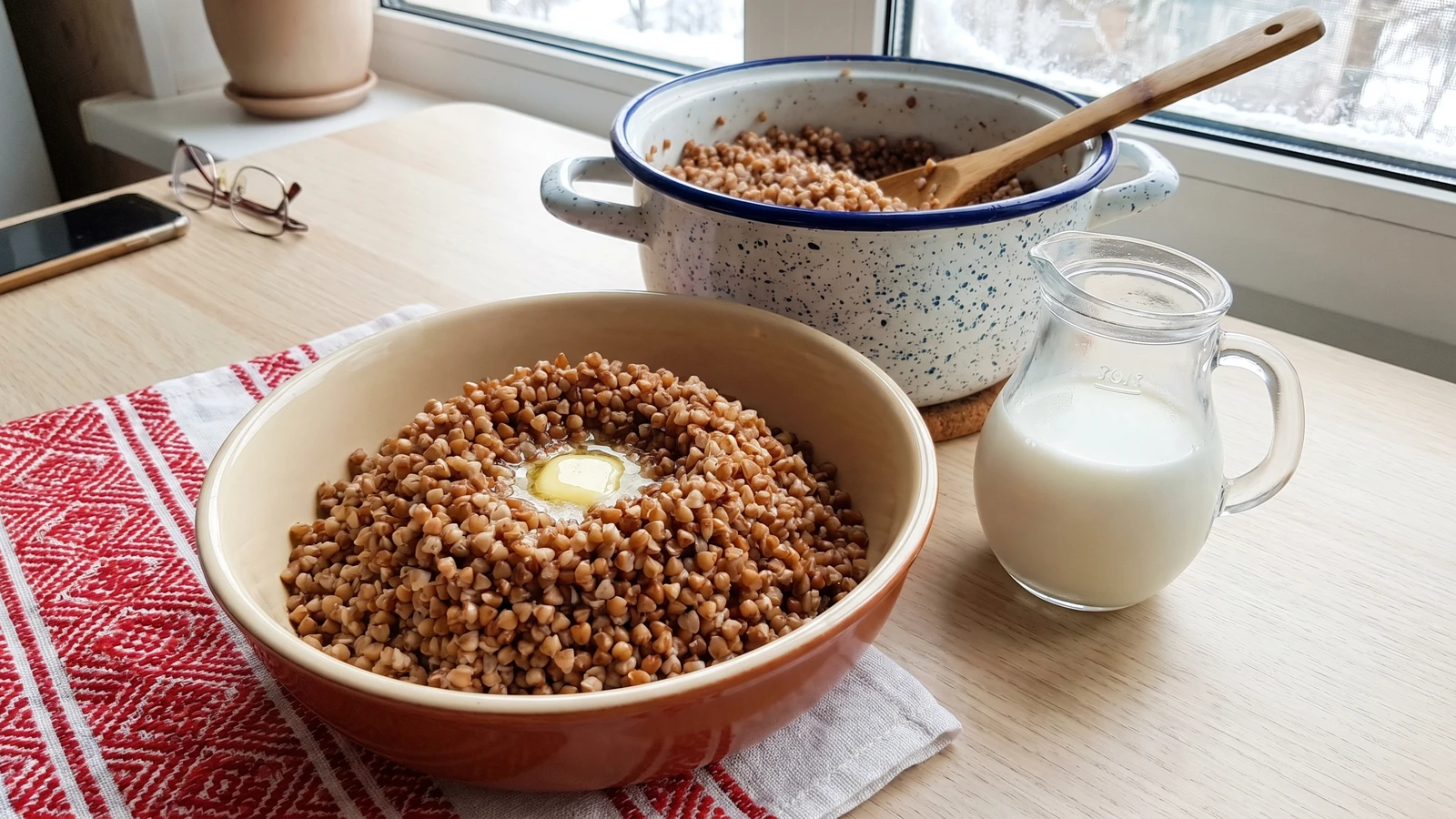
Hrechana kasha sits in the practical part of the Ukrainian table: breakfast before school, supper when money is thin, a pot waiting for the person who comes home late. It is not a bowl of beige punishment. It should be loose, nutty, and glossy with butter, or cooled a little and flooded with cold milk so the grains swim and stay themselves.
The why is simple. Toasting wakes the oil in the buckwheat and drives away the dusty green taste, so the groats cook separate instead of turning gluey. Aunt Nadia's letter says only, "roast until it smells proper," which is exactly the kind of instruction that makes you laugh and then teaches you better than a timer. Wait until the smell changes. You'll know.
Make enough for the next day. In August, I want sliced tomatoes and cucumber beside it from the litnya kuhnia, the summer kitchen; in January, a fermented tomato from the loud shelf. The bowl is plain, yes, but plain is not empty. Somebody still has to make it well.
By the sixteenth century, buckwheat was established across Ukrainian lands after moving west from Asia through medieval trade, and the Ukrainian name hrechka preserves an old association with Greek and Byzantine routes. It mattered especially in Polissia, Podillia, and central Ukraine, where a quick-growing crop could feed households on poorer soils and give the table kasha, hrechanyky, and buckwheat flour for fasting-day dishes. Soviet cafeterias taught too many people to expect buckwheat grey and tired; the home pot is toasted chestnut, salted properly, and glossed with fat.
Quantity
2 cups (340g)
toasted kasha if available, or raw green buckwheat to toast
Quantity
4 cups (950ml)
plus a splash more if needed
Quantity
1 1/4 teaspoons
Quantity
60g
cubed, plus more for serving
Quantity
1 tablespoon
Quantity
to serve
Quantity
to serve
| Ingredient | Quantity |
|---|---|
| buckwheat groatstoasted kasha if available, or raw green buckwheat to toast | 2 cups (340g) |
| freshly boiled waterplus a splash more if needed | 4 cups (950ml) |
| fine sea salt | 1 1/4 teaspoons |
| unsalted buttercubed, plus more for serving | 60g |
| unrefined sunflower oil (optional) | 1 tablespoon |
| cold whole milk (optional) | to serve |
| black pepper (optional) | to serve |
Spread the buckwheat on a tray and run your fingers through it, because every grain crop has its tiny stones and blackened bits. If it looks dusty, rinse it fast in a sieve, then drain hard and let it sit until the surface is dry enough to toast. Wet buckwheat hisses and sulks instead of smelling nutty.
Set a heavy pot over medium heat and add the groats dry. Stir often until the color deepens by a shade and the pot starts to tick softly, like small seeds jumping. The smell should change from raw cupboard to toasted nuts; that is when it is ready for water.
Pour in the just-boiled water, standing back from the first loud rush, then add the salt and stir once. Let it come back to a boil, lower the heat to the smallest steady bubble, and cover. The sound should settle from sharp rain to a low mutter.
Cook until the top looks cratered and no water shines at the edges. Drag the spoon through the centre; if it leaves a clean path and the grain is tender but still shaped, you are there. If it bites chalky, add a splash of boiling water and cover again; if it is wet, leave the lid off and let it breathe.
Turn off the heat. Dot the butter over the surface, lay a clean tea towel under the lid, and let the kasha rest while the table is set. The towel catches condensation so it falls back soft, not watery. Fluff with a fork or spoon; the grains should fall loosely and shine.
Spoon into deep bowls with more butter. For the milk version, let the kasha cool from hot to warm, then pour cold milk around the grains so the contrast stays clean. Add black pepper for a savory bowl, or a green-gold thread of sunflower oil if you keep it dairy-free.
1 serving (about 220g)
Culinary guides, cultural storytelling, and the editorial depth that makes cooking meaningful.
Discover Culinary ExplorerChef Lesia
Cornmeal and sour cream go over the flame pale and separate, then suddenly turn glossy, yellow, and almost stubborn. Stir one way only, the shepherds say, and listen.

Chef Lesia
A benderyk is a crepe taught to hold its corners: soft pancake, peppery meat, egg-dipped edges fried crisp, and the same triangular confidence my hands learned at the varenyky table.

Chef Lesia
Raw potato turns sly the moment you grate it: wet, starchy, already darkening. Deruny reward speed, hot oil, and the courage to leave the edges alone until they crisp.

Chef Lesia
Pumpkin goes into the pot pale and stubborn, then gives itself up slowly to milk and millet until the whole breakfast turns deep orange, sweet, and spoon-thick.