Culinary Explorer
A cooking platform built around craft, culture, and the stories behind what we eat.
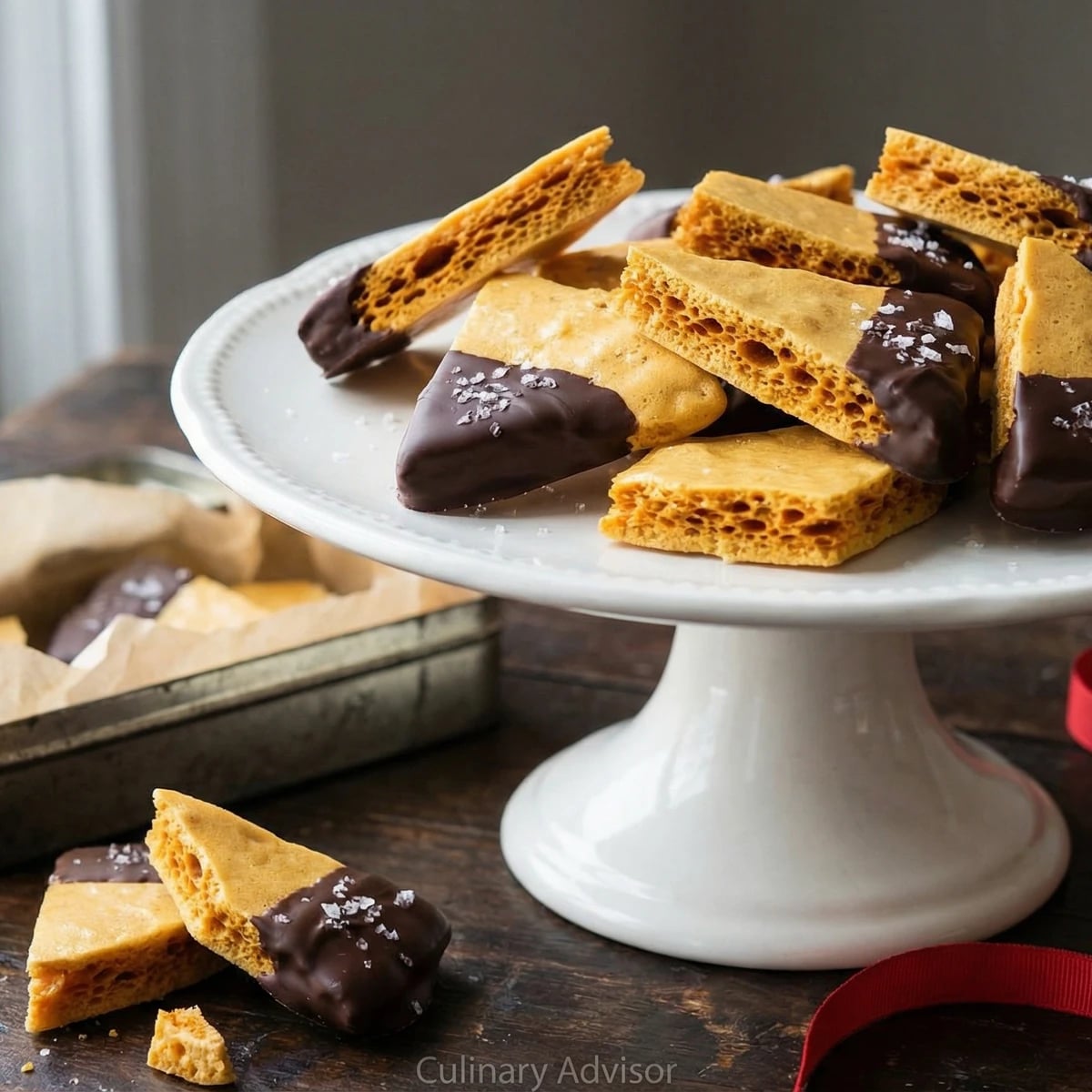
Honeycomb Candy
Created by Chef Dean
Watch simple pantry ingredients transform into a golden, impossibly light confection riddled with tiny air pockets that shatter on your tongue. This is kitchen chemistry at its most theatrical and delicious.
The British call it cinder toffee or hokey pokey. Australians know it as honeycomb. In parts of America, it goes by sponge candy or sea foam. Whatever name you learned as a child, the experience is universal: that first bite through brittle golden shell into an airy interior that dissolves before you've fully registered its sweetness.
The science is simple enough that a child can understand it, though the execution demands respect. Sugar cooked to the hard crack stage meets baking soda, which releases carbon dioxide gas into the molten syrup. Those bubbles get trapped as the candy cools, leaving behind a frozen foam. The whole transformation takes less than five seconds. Blink and you'll miss the moment when syrup becomes cloud.
I've made this candy in professional kitchens and with nervous home cooks convinced they'd fail. The nervous cooks often produce the best results because they follow instructions precisely and don't get cocky. Temperature matters. Timing matters. But the technique itself is forgiving enough that you'll nail it on your first attempt if you simply prepare everything in advance and trust the process.
Dipped in dark chocolate, this becomes the sort of homemade gift that makes people suspicious you secretly run a confectionery. Left plain, it's pure sugar magic that children will remember decades later.
Ingredients
granulated sugar
Quantity
1 cup (200g)
golden syrup or light corn syrup
Quantity
1/2 cup (170g)
honey
Quantity
2 tablespoons
| Ingredient | Quantity |
|---|---|
| granulated sugar | 1 cup (200g) |
| golden syrup or light corn syrup | 1/2 cup (170g) |
| honey | 2 tablespoons |
Where cooking meets culture.
Culinary guides, cultural storytelling, and the editorial depth that makes cooking meaningful.
Discover Culinary Explorer