Culinary Explorer
A cooking platform built around craft, culture, and the stories behind what we eat.
Hogaza de León
Created by Chef Isabel
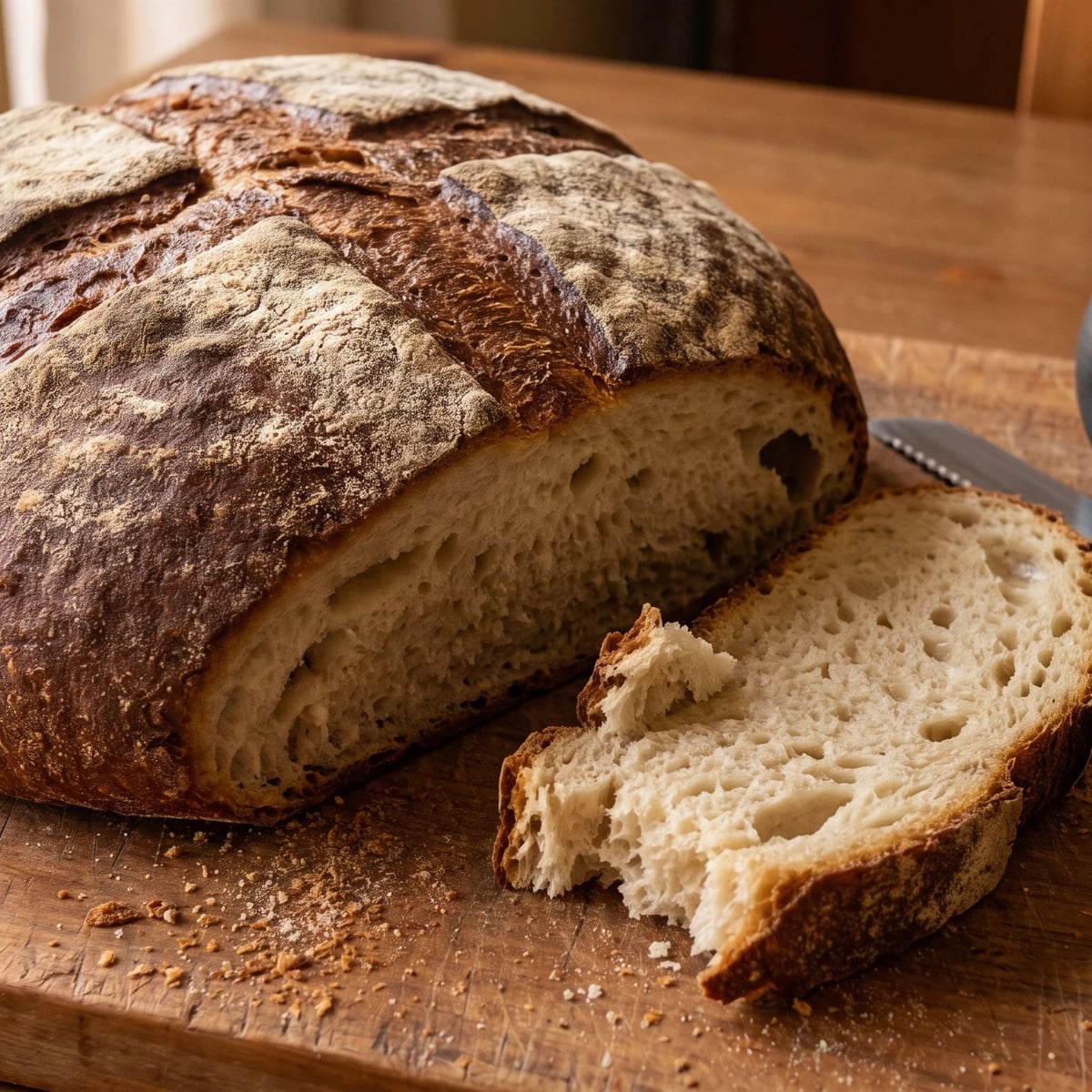
León's great pan de flama is a one-and-a-half-kilo round, slowly fermented and baked dark, with a thick crust that protects its moist, irregular crumb for days.
Hogaza de León belongs to León, in Castilla y León: a broad, heavy pan de flama with a moist, irregular crumb beneath a thick, well-baked crust. Its size matters. This is a loaf of one to two kilos, made to feed a household and remain good for several days. It isn't pan candeal, the firm Castilian bread worked from a drier dough until its crumb becomes close and even. A Leonese hogaza is wetter, airier and rather less obedient.
The method that decides it is simple: keep the dough supple and handle it gently. Its water and slow rise make those uneven holes, while the folds give enough strength to hold the loaf upright. If you bury a sticky dough under extra flour or knock all the air from it during shaping, you get a tight loaf. It may still be bread, but it isn't this bread. Wet your hands, use a scraper, and leave the dough some dignity.
Spanish harina panificable is a moderate-strength wheat flour. Far from León, mix ordinary unbleached bread flour with all-purpose flour rather than reaching for the strongest flour on the shelf; the crust will be just as good and the crumb less rubbery. No hace falta haber pisado España. Let the levain ripen fully, weigh everything, and cool the loaf before cutting. Siempre sale, si lo sigues.
Ingredients
active wheat sourdough starter at 100% hydration
Quantity
30g
unbleached wheat bread flour, for the levain
Quantity
90g
water, for the levain
Quantity
90g
at 22°C
| Ingredient | Quantity |
|---|---|
| active wheat sourdough starter at 100% hydration | 30g |
| unbleached wheat bread flour, for the levain | 90g |
| water, for the levainat 22°C | 90g |
Where cooking meets culture.
Culinary guides, cultural storytelling, and the editorial depth that makes cooking meaningful.
Discover Culinary Explorer