
Chef Jeong-sun
Aehobak-guk (애호박국, Korean Zucchini Soup)
A clean summer soup of Korean zucchini and salted shrimp, built on quick anchovy-kelp broth and finished before the half-moons lose their shape on a weeknight table.
A cooking platform built around craft, culture, and the stories behind what we eat.
Created by
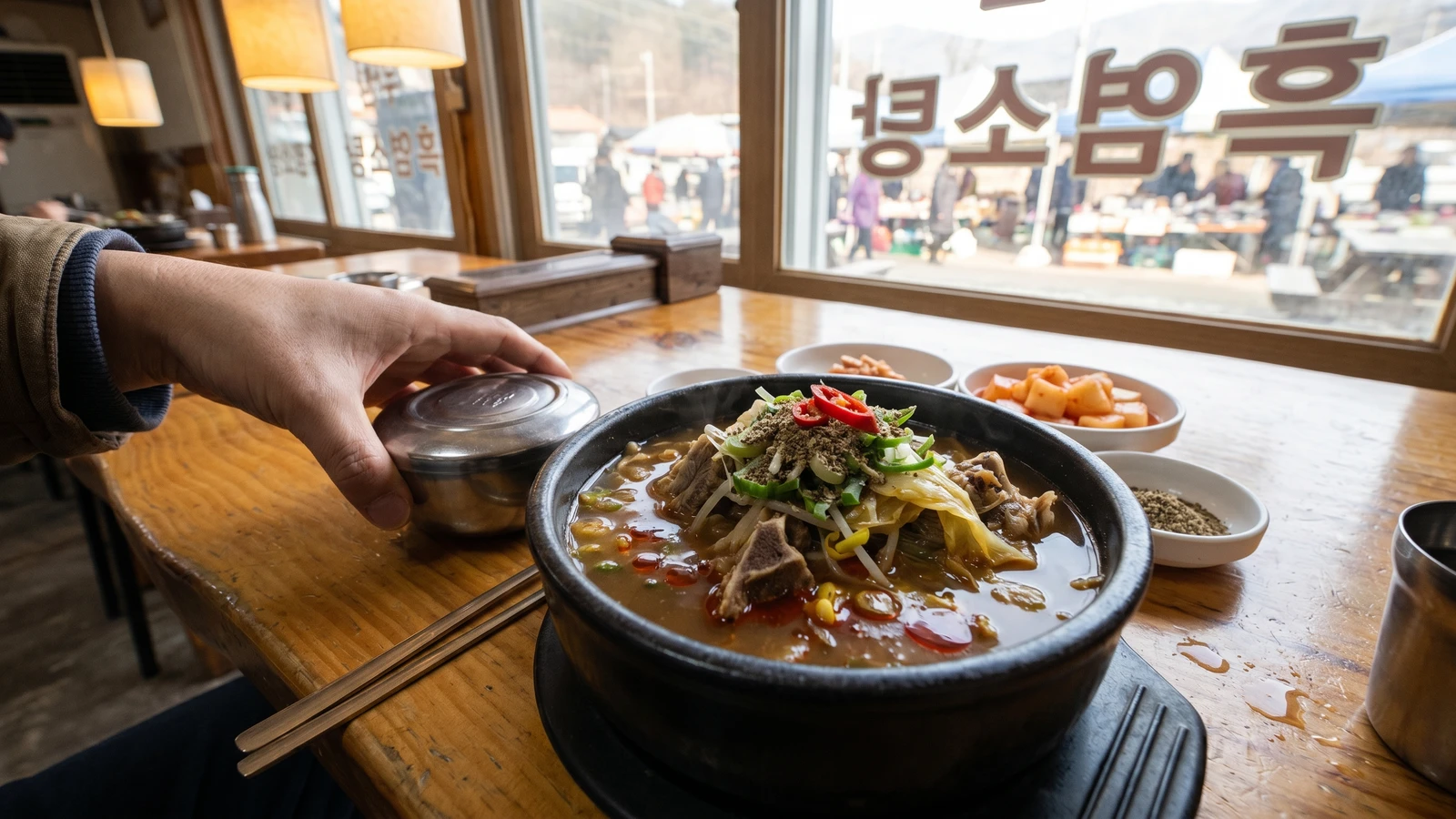
A country tonic of black goat, doenjang, perilla seed, and warming herbs, simmered long enough to quiet the gaminess and leave a deep broth meant for strength.
Black goat soup lives or dies before the real simmer even begins. If you throw the meat straight into the pot and try to cover its scent with chili, garlic, and herbs, you get a loud soup, not a good one. Blanch it hard, rinse it clean, then simmer it patiently. Technique first. The goat should still taste like goat, only clean enough that the broth invites the next spoonful.
Heug-yeomso-tang is a rural Korean restorative soup tied especially to places where goats were raised in small numbers on hillsides and village farms, with strong regional associations in Jeolla and other southern countryside cooking. In modern Korea it is also sold in specialist restaurants as boyang-sik (restorative food), often served to people recovering strength, including new mothers, though that use belongs more to folk food culture than to formal medicine. The black goat itself, heug-yeomso, has been valued because the animal thrives on rough forage where cattle are harder to keep, which is exactly the sort of ingredient country kitchens learned to respect.
Quantity
1.5kg
ribs, shank, or shoulder, cut into 6 to 8cm pieces
Quantity
3 liters, plus more
for soaking, blanching, and simmering
Quantity
2 tablespoons
for soaking
Quantity
120ml
Quantity
1 large
halved
Quantity
1 head
cloves separated and lightly crushed
Quantity
30g
sliced
Quantity
2 large
cut into 10cm lengths
Quantity
2
Quantity
10g
Quantity
5g
Quantity
2 tablespoons
Quantity
2 tablespoons
medium-coarse
Quantity
1 tablespoon
Quantity
1 tablespoon
minced
Quantity
1 tablespoon
Quantity
1 teaspoon
Quantity
1/2 teaspoon
freshly ground
Quantity
4 cups
blanched and squeezed dry
Quantity
250g
rinsed
Quantity
200g
cut into thick matchsticks
Quantity
100g
roughly torn
Quantity
3 tablespoons, plus more
for the soup and serving
Quantity
2
thinly sliced, for finishing
Quantity
1
thinly sliced
Quantity
as needed
add 1/2 teaspoon at a time
Quantity
to serve
| Ingredient | Quantity |
|---|---|
| bone-in black goat meatribs, shank, or shoulder, cut into 6 to 8cm pieces | 1.5kg |
| cold waterfor soaking, blanching, and simmering | 3 liters, plus more |
| coarse saltfor soaking | 2 tablespoons |
| cheongju or soju | 120ml |
| onionhalved | 1 large |
| garliccloves separated and lightly crushed | 1 head |
| fresh gingersliced | 30g |
| scallionscut into 10cm lengths | 2 large |
| dried jujubes (daechu) (optional) | 2 |
| dried milk vetch root (hwanggi) (optional) | 10g |
| Korean angelica root (danggwi) (optional) | 5g |
| doenjang (Korean fermented soybean paste) | 2 tablespoons |
| gochugaru (Korean chili flakes)medium-coarse | 2 tablespoons |
| soup soy sauce (guk-ganjang) | 1 tablespoon |
| garlicminced | 1 tablespoon |
| toasted sesame oil | 1 tablespoon |
| fish sauce or Korean anchovy sauce (optional) | 1 teaspoon |
| black pepperfreshly ground | 1/2 teaspoon |
| napa cabbage leaves or outer cabbage leavesblanched and squeezed dry | 4 cups |
| mung bean sprouts (sukju-namul)rinsed | 250g |
| Korean radish (mu)cut into thick matchsticks | 200g |
| perilla leaves (kkaennip) (optional)roughly torn | 100g |
| roasted perilla seed powder (deulkkae-garu)for the soup and serving | 3 tablespoons, plus more |
| scallionsthinly sliced, for finishing | 2 |
| red chili (optional)thinly sliced | 1 |
| saltadd 1/2 teaspoon at a time | as needed |
| cooked white rice | to serve |
Put the goat pieces in a large bowl with enough cold water to cover by 5cm and stir in 2 tablespoons coarse salt. Soak 30 minutes, changing the water once halfway through. This pulls out loose blood and gives the broth a cleaner start; it will not erase the goat's character, and it should not.
Drain the goat, put it in a large pot, and cover with fresh water. Bring to a hard boil and cook 8 minutes, skimming the gray foam as it rises. Drain, then rinse each piece under warm running water, rubbing away clinging scum and bone grit. Wash the pot before the meat goes back in. This is not fussy work. This is the difference between deep broth and muddy broth.
Return the rinsed goat to the clean pot. Add 3 liters cold water, the cheongju or soju, onion, crushed garlic cloves, ginger, scallion lengths, jujubes, hwanggi, and danggwi if using. Bring to a boil, then lower to a steady simmer. Keep the lid slightly open and cook 2 hours, skimming fat and foam from the surface whenever they gather.
Lift the meat into a bowl and strain the broth through a fine strainer. Discard the spent aromatics and herbs. When the meat is cool enough to handle, pull it into large bite-size pieces, leaving some attached to bone if your table likes to work for the good pieces. Skim off the thick layer of fat from the broth, but leave 2 to 3 tablespoons behind for body.
In a bowl, mix the doenjang, gochugaru, soup soy sauce, minced garlic, sesame oil, fish sauce if using, and black pepper. Add the pulled goat meat and rub the seasoning through it with your hands. Let it sit 10 minutes. Seasoning the meat before it returns to the pot gives the broth depth without forcing you to dump in more paste later.
Tear the blanched cabbage into wide strips and squeeze it dry, then toss it in the same bowl after the meat comes out, catching the seasoning left behind. Keep the mung bean sprouts and radish plain for now. The cabbage can carry seasoning because it is sturdy; the sprouts would lose their clean crunch if you salt them this early.
Return the broth to the pot and add the seasoned meat, seasoned cabbage, and radish. Simmer 45 minutes, uncovered, until the meat yields easily when pressed with a spoon and the radish has given its sweetness to the broth. Taste before you adjust. If it needs salt, add it 1/2 teaspoon at a time, waiting 2 minutes between additions.
Add the mung bean sprouts and simmer 6 minutes with the lid off. Add the torn perilla leaves, if using, and cook 1 minute more. The sprouts should bend but still have a bite, and the perilla leaves should darken without collapsing into the soup.
Stir in 3 tablespoons roasted perilla seed powder and simmer 2 minutes, just until the broth turns slightly thicker and nutty. Do not keep boiling hard after the perilla goes in, or it can turn heavy and chalky. Taste once more. The broth should be deep, lightly earthy, and warm from chili, not sharp or salty.
Ladle the soup into deep bowls with meat, cabbage, sprouts, and radish in every serving. Finish with sliced scallion, a little red chili if you want color, and extra perilla seed powder on the side. Serve with rice and one or two sharp banchan, like kkakdugi (cubed radish kimchi), because this soup wants a clean bite beside it.
1 serving (about 780g)
Culinary guides, cultural storytelling, and the editorial depth that makes cooking meaningful.
Discover Culinary ExplorerChef Jeong-sun
A clean summer soup of Korean zucchini and salted shrimp, built on quick anchovy-kelp broth and finished before the half-moons lose their shape on a weeknight table.

Chef Jeong-sun
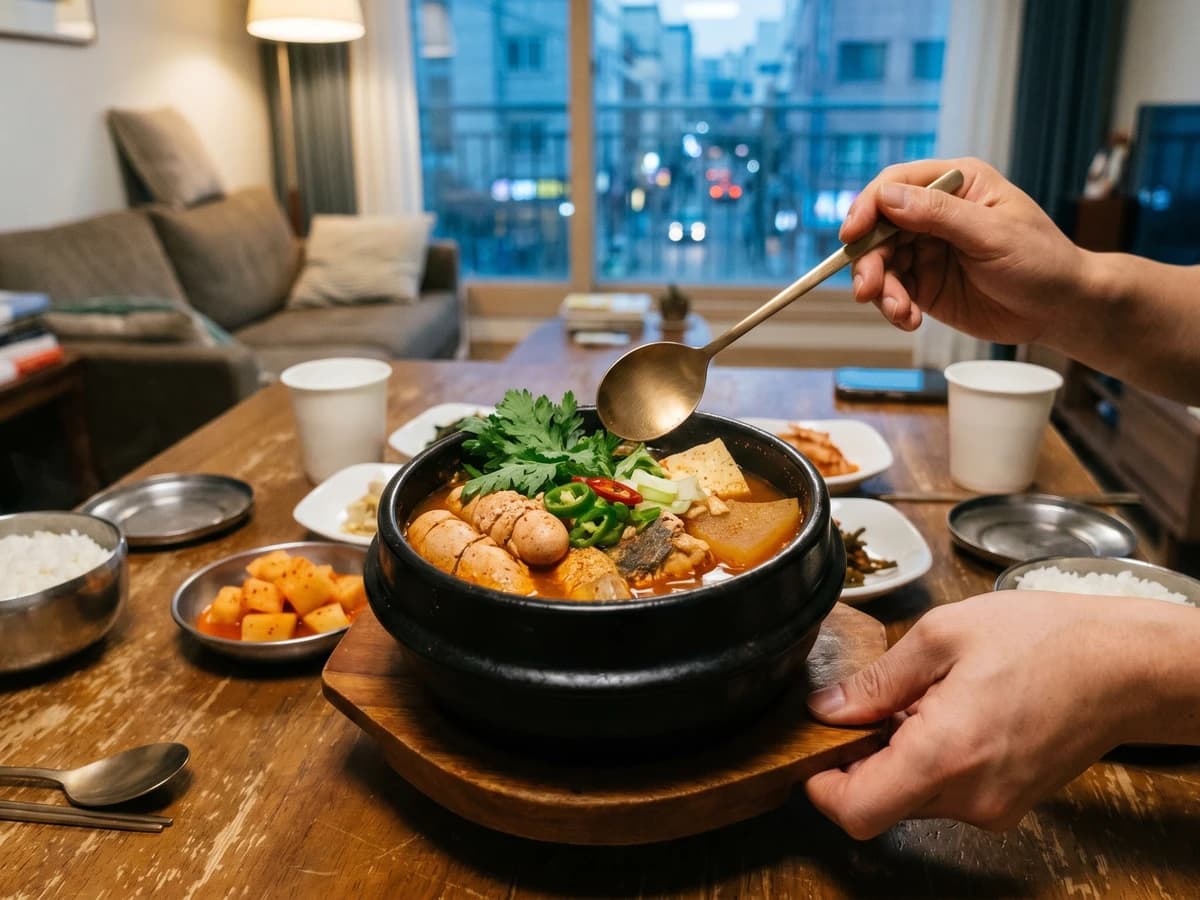
A Masan coast monkfish stew with firm white meat, gelatin at the bones, soybean sprouts for crunch, and a red broth seasoned to carry the fish, not bury it.
Chef Jeong-sun
A weeknight fish roe stew with radish and crown daisy in a clean spicy broth, where the whole success depends on adding the roe late enough that it sets tender, not chalky.

Chef Jeong-sun
Late-summer mallow leaves rubbed with salt until the bitter green water runs off, then simmered in a clean doenjang broth with dried shrimp, the quiet soup a Korean weeknight deserves.