Culinary Explorer
A cooking platform built around craft, culture, and the stories behind what we eat.
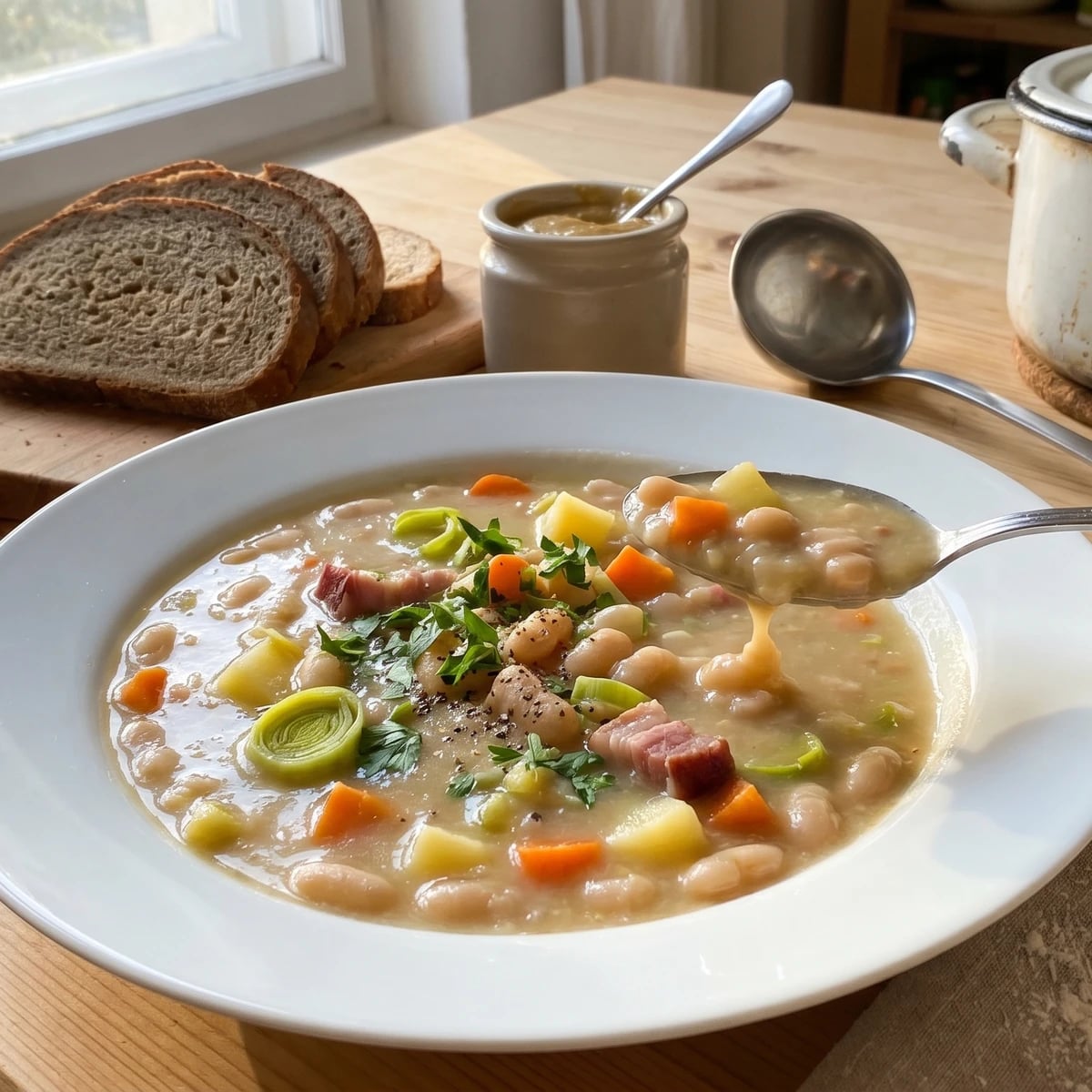
Hepprumer Bohnesupp
Created by Chef Klaus
Heppenheim's bean soup is larder cooking from the Bergstrasse: dried white beans, soup greens, smoked pork, and enough patience that the beans turn creamy without falling apart.
Hepprumer Bohnesupp belongs to Heppenheim on the Bergstrasse, where southern Hesse leans toward Baden and the Palatinate. This is winter and shoulder-season food: dried white beans from the cupboard, soup greens from the cellar, smoked pork from the larder. Weeknight enough if you soaked the beans last night, Sunday enough if you bring rye bread and mustard to the table.
Every bean soup in Germany thinks it's the right one. In the north, green beans go with pear and bacon; in Swabia a pot like this may turn thicker and sit beside Spätzle; around the Rhine and Bergstrasse, the white bean, the smoked pork, and a little vinegar at the end make the argument. Im Norden anders, im Süden anders. Das ist kein Bierzelt.
The technique that decides it is simple: soak the beans overnight and don't salt them hard at the start. The soak lets the skins take water evenly, so the beans cook through before the outside splits. Salt and vinegar go in late because acid tightens the skins and salt slows the softening when the beans are still dry inside. Erst verstehen, dann kochen.
I cook the smoked pork gently, not violently. A hard boil throws cloudy fat through the broth and makes the meat dry before the beans are tender. Runter mit der Temperatur. Let the pot murmur, skim when it asks, and finish sharp with vinegar only after the beans have given you their cream.
Ingredients
dried white beans
Quantity
400g
soaked overnight
smoked pork hock or smoked pork ribs
Quantity
1 hock or 500g ribs
smoked bacon
Quantity
150g
in one piece
| Ingredient | Quantity |
|---|---|
| dried white beanssoaked overnight | 400g |
| smoked pork hock or smoked pork ribs | 1 hock or 500g ribs |
| smoked baconin one piece | 150g |
Where cooking meets culture.
Culinary guides, cultural storytelling, and the editorial depth that makes cooking meaningful.
Discover Culinary Explorer