Culinary Explorer
A cooking platform built around craft, culture, and the stories behind what we eat.
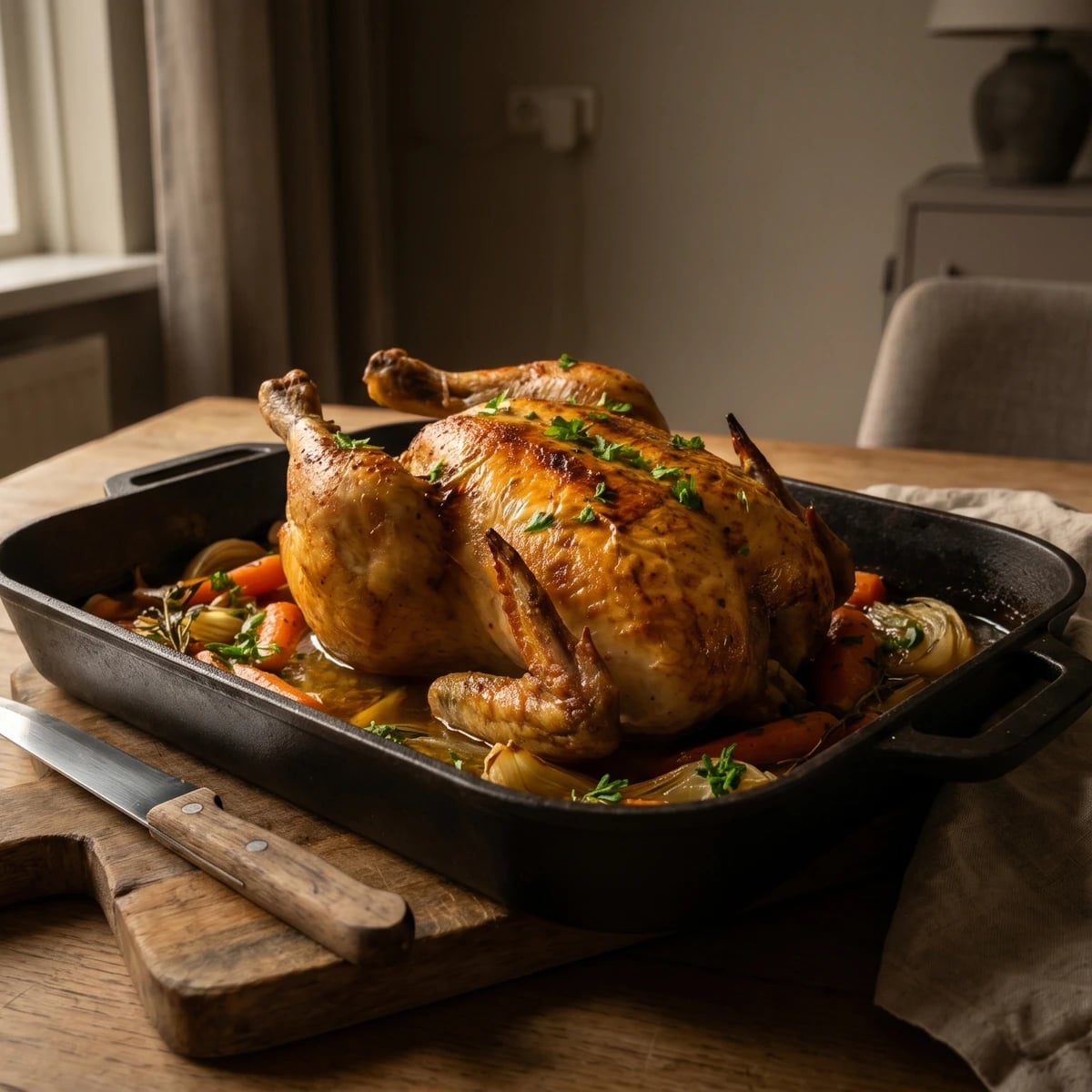
Hele Kip uit de Oven
Created by Chef Joost
A whole chicken from the oven is Dutch household cooking at its most honest: butter, patience, pan juices, and the kind of table that waits for no decoration.
In my grandmother's second notebook, the recipe is almost insulting in its brevity: kip, boter, zout, oven. Chicken, butter, salt, oven. Four words, and yet every Sunday kitchen in the country could read the missing lines: dry the skin, soften the butter, baste when the pan begins to sing, and let the bird rest before anyone is allowed near it with a knife.
But let me tell you a secret. Hele kip uit de oven, whole chicken from the oven, is not grand Dutch cooking because it is complicated. It is grand because it refuses complication. For most households a whole bird once meant company, a birthday, a winter Sunday, or a dinner when the good plates came out without anyone admitting they were the good plates. The name is plain because the dish is plainspoken. No trickery. The oven does the work and the cook pays attention.
The small Dutch turn here is the butter. Not oil, not a dry rub pretending to be more worldly than it is, but butter worked with mustard, thyme, a little lemon, and a whisper of nutmeg, that old VOC cargo now so ordinary in our kitchens we forget how far it sailed. The butter seasons the meat, browns the skin, and gives you the pan juices that matter almost as much as the chicken itself.
Hou het altijd simpel, always keep it simple. Salt the bird properly, start it hot so the skin tightens, then lower the heat so the meat cooks gently. Rest it long enough for the juices to settle. Put the whole thing on the table with potatoes, green beans, or bread for the pan. A dish without its story is half a meal, but a roast chicken without its juices is a small household tragedy.
Ingredients
whole chicken
Quantity
1, about 1.6kg
unsalted butter
Quantity
75g
softened
fine sea salt
Quantity
2 teaspoons
| Ingredient | Quantity |
|---|---|
| whole chicken | 1, about 1.6kg |
| unsalted buttersoftened | 75g |
| fine sea salt | 2 teaspoons |
Where cooking meets culture.
Culinary guides, cultural storytelling, and the editorial depth that makes cooking meaningful.
Discover Culinary Explorer